




English Porcelain Sculpture
English porcelain sculpture brings together three centuries of modelled figures, animal groups and busts shaped in soft-paste, biscuit and parian bodies.
English Porcelain Sculpture
An English porcelain sculpture encompasses modelled figures, pairs, groups and busts produced across the eighteenth, nineteenth and early twentieth centuries. Collectors encounter mythological subjects, allegorical figures representing elements or seasons, and naturalistic studies of animals and human figures.
The selections span distinct periods including Georgian creations from factories like Derby and Bow, Victorian parian pieces, and later works by Royal Worcester. Forms range from small single figures to substantial modelled groups and centrepieces.
The pieces reflect evolving tastes from rococo exuberance and neoclassical restraint to Victorian realism and early twentieth-century modelling. Figures serve as decorative table ornaments, mantle displays and portrait studies.
Materials and Manufacturing Techniques
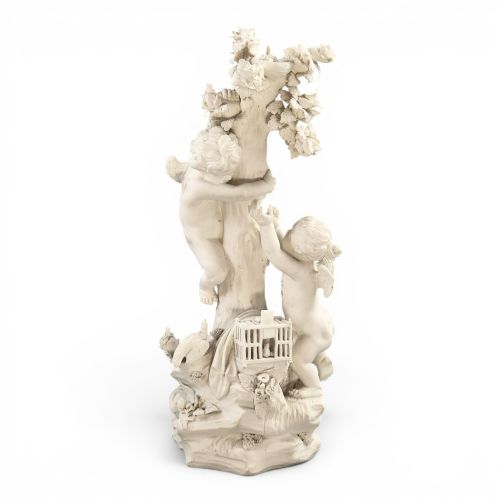
Early works utilise soft-paste porcelain or unglazed biscuit porcelain, often enhanced with enamel colours and gold leaf highlights. Biscuit porcelain achieved a matte finish resembling marble, particularly favoured for classical subjects.
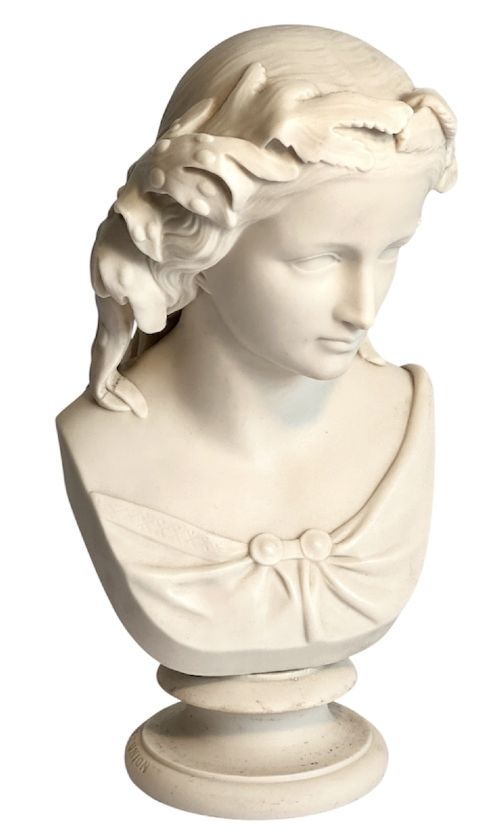
Nineteenth-century manufacturers introduced parian porcelain, a hard-wearing body that captured fine detail without requiring a glossy glaze. Modelled pieces were cast in moulds, assembled from multiple parts, and hand-finished before firing in kilns.
Several figures depict animals participating in human dramas, including wild boars and poodles.
Distinctions in Quality
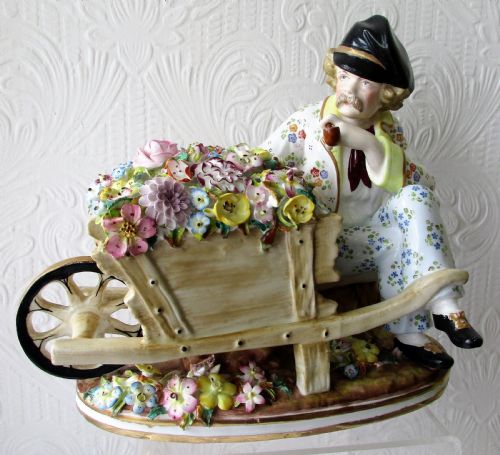
Hand-painting and gilding introduce further variation, where delicate enamel work and precise gold highlights elevate the piece. The complexity of the composition, particularly in multi-figure groups, distinguishes standard production from ambitious sculptural works.
Derby·Bow·Royal Worcester·Copeland·Minton·Royal Dux·John Bevington
The English Porcelain Sculpture Glossary
- Biscuit porcelain
- Unadorned, unglazed fired ceramic that presents a matte, marble-like surface texture. It was widely utilised for eighteenth-century figures and nineteenth-century parian editions.
- Parian porcelain
- A fine-grained, self-glazing ceramic body developed in the nineteenth century to imitate carved marble. It permitted the replication of intricate classical and contemporary sculptures.
- Bocage
- Applied ceramic foliage and floral background work common in eighteenth-century figures. It framed the central subject and provided structural support during the firing process.
- Soft-paste porcelain
- An artificial ceramic paste composed of white clay, glass and frits, fired at lower temperatures than hard-paste. It produced a warm body receptive to enamels.
- Gilding
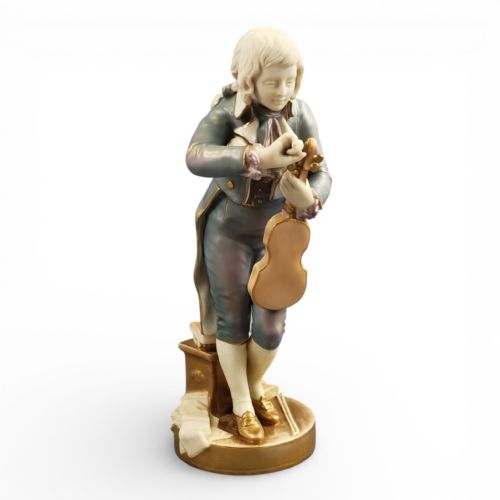
- The application of gold leaf or gold paint to highlight details such as garments, bases and decorative accents. It added richness to porcelain figures and table centrepieces.
English Porcelain Sculpture: Frequently Asked Questions
What periods do these sculptures cover?
The pieces span from the mid-eighteenth century through the Victorian era and into the early twentieth century. Georgian factories established the tradition, while Victorian and Edwardian makers introduced new bodies.
Production evolved from soft-paste table figures to parian portrait busts and tinted decorative figures.
How were porcelain figures used historically?
Figures and groups served as sophisticated table centrepieces for dining rooms and decorative ornaments for mantlepieces. Allegorical sets representing seasons or elements provided conversational decoration.
Portrait busts and literary figures demonstrated the owner's cultural interests and refined taste in domestic spaces.
What is biscuit porcelain?
Biscuit porcelain is ceramic fired without a glossy glaze, leaving a matte surface that resembles carved marble. It became popular for classical subjects because it showed fine details clearly.
Factories like Derby utilised biscuit bodies for mythological figure groups.
How do I care for antique porcelain sculpture?
Display pieces away from direct sunlight to protect enamel colours and gilding from fading over time. Dust gently with a soft, dry brush to prevent accumulation in crevices and modelled details.
Avoid using water or chemical cleaners on unglazed biscuit or parian surfaces.