
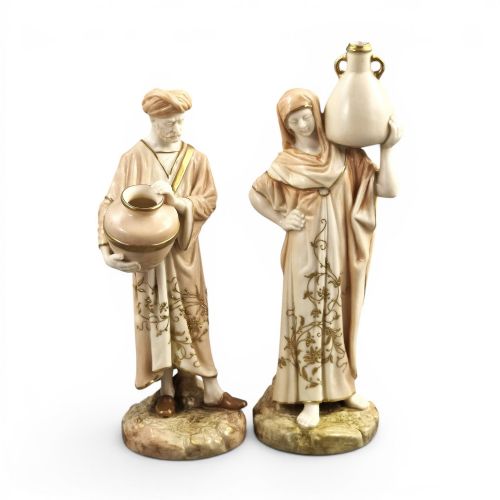


Blush Ivory Figurine
A blush ivory figurine brings subtle warmth and delicate hand-painted detail into a room, capturing late Victorian and Edwardian craftsmanship at its finest.
Blush Ivory Figurine
A blush ivory figurine represents a distinctive ceramic form produced predominantly during the late nineteenth and early twentieth centuries. These decorative figures range from classical maidens and dancers to figures from the Indian Craftsmen Series and Egyptian Musicians. Most examples encountered on this page originate from the Royal Worcester factory, often bearing the mark or design influence of James Hadley.
The selection encompasses various decorative objects alongside standard figurines, including candelabra, jardinieres, and centrepieces. Collectors will find pieces spanning the Victorian, Edwardian, and later periods up to the 1930s. The stylistic influences vary from Victorian Orientalism and Classical Revival to Neoclassical Revival and Art Nouveau.
Materials and Manufacturing Techniques
These pieces are fashioned from porcelain treated with a soft-toned blush ivory glaze, which provides a matte, creamy background that imitates the look of real ivory. Artisans applied delicate hand-painted enamel colours directly onto this porous glaze before firing.
Many items incorporate gilt accents, gold leaf, and gilding to highlight garments, borders, and structural details. Certain pieces also feature gilded enamel embellishments that add rich texture and contrast against the pale porcelain body.
Snake charmers, water carriers, and satyrs with staffs rub shoulders with classical maidens in this delightfully eclectic ceramic gathering.
Factors Determining Quality
The precision and preservation of the hand-painted enamels and gilding dictate the overall visual appeal. Pieces retaining crisp gold leaf and subtle, unfaded blush tones reflect superior initial execution and careful subsequent preservation.
Royal Worcester·James Hadley·Royal Dux
The Blush Ivory Figurine Glossary
- Blush ivory glaze
- A proprietary ceramic glaze that yields a soft, matte, ivory-coloured surface. It serves as the characteristic background for late nineteenth-century Worcester decorative pieces.
- Gilding
- The application of gold leaf or gold paint to ceramic surfaces. It is used extensively on these figures to accentuate decorative trims and structural motifs.
- Enamel
- Vitreous coloured paints applied over the glaze and fired at a lower temperature. They provide the flesh tones, garments, and floral details seen on these figurines.
- Jardinere
- A large ornamental pot or stand for holding plants. Several examples on this page incorporate figural elements modelled by James Hadley.
- Orientalism
- An artistic style drawing inspiration from Middle Eastern, North African, and Asian cultures. It strongly influenced many late Victorian figural subjects.
Blush Ivory Figurine: Frequently Asked Questions
What is a blush ivory figurine?
A blush ivory figurine is a porcelain decorative piece finished with a soft, matte, ivory-toned glaze and hand-painted details. These items were produced primarily in Britain during the late Victorian and Edwardian eras.
They often depict human figures, ranging from classical maidens to musicians and dancers. The style is closely associated with the Royal Worcester factory and designer James Hadley.
How do I date a Royal Worcester blush ivory piece?
Dating relies heavily on factory date codes stamped on the underside of the porcelain. These symbols and letter codes indicate the specific year of manufacture.
Stylistic cues also help narrow down the period. Pieces from the eighteen-eighties and nineties often feature elaborate Orientalist or classical themes, while later pieces move toward simpler Edwardian and art-period aesthetics.
Who was James Hadley?
James Hadley was a prominent modeller and designer working for the Royal Worcester porcelain factory. His work defined much of the distinctive figural output of the late nineteenth century.
Pieces modelled by Hadley often command strong interest from collectors due to their artistic execution and detailed sculptural forms.
How should I clean and display my figurine?
Clean these delicate porcelain pieces using a soft, dry brush to remove dust. Avoid using water, detergents, or abrasive cloths, as these can damage the delicate enamel painting and gilding.
Display them away from direct sunlight and areas prone to heavy foot traffic or vibration. A stable cabinet protects the matte blush glaze and gold leaf from accidental knocks.