
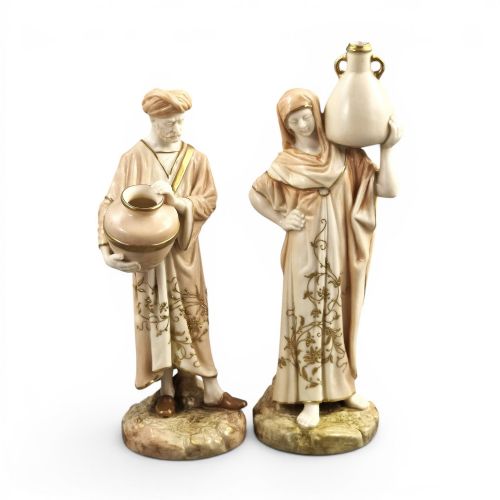


Gold Porcelain Statue
These gold porcelain statue pieces combine porcelain body and gilded ornament to create sculptural figures of deities, maidens and mythological subjects.
Gold Porcelain Statue
When you search for a gold porcelain statue, you encounter sculptural ceramics enriched with gilt, gold leaf, and enamel finishes. These figures range from classical European maidens to Japanese deities rendered in earthenware and porcelain.
The pieces most frequently met on this page span the Victorian and Edwardian periods, alongside earlier eighteenth-century examples and Japanese Meiji productions. They take the form of standing figurines, portrait busts, and mythological representations.
Materials and construction methods
The foundation of each piece is ceramic, utilising soft-paste porcelain, standard porcelain, or earthenware bodies shaped into complex sculptural forms. Potters cast or model these figures before applying initial glazes and firing them in kilns.
Surface decoration relies heavily on gold leaf, gilt, and shot enamel to highlight specific details of costume and hair. Artisans applied these metallic elements by hand, often requiring secondary firings to bond the gold permanently to the ceramic glaze.
Several figures depict venerable gods and water carriers balanced awkwardly against nineteenth-century chemical glazes.
Distinctions in quality
The refinement of the modelled form separates superior pieces from standard production, particularly in the rendering of hands, facial expressions, and falling drapery. Crisp definition in the underlying ceramic ensures that the subsequent gilding sits sharply against the porcelain body.
The application and preservation of the gold leaf or gilt layer dictate the visual impact of the sculpture. Finer examples retain burnished metallic highlights that contrast cleanly with the matte or glossy enamel beneath, showing minimal rubbing from handling.
Royal Worcester·Ernst Wahliss·Chelsea Porcelain
The Gold Porcelain Statue Glossary
- Porcelain
- A ceramic material made by heating raw materials, generally including clay in the form of kaolin, in a kiln. It fires at high temperatures to achieve a vitrified, non-porous body.
- Gilt
- A thin layer of gold applied to surfaces such as ceramics for decoration. This finish provides the metallic sheen seen across the robes and ornaments of the figures.
- Enamel
- Decorative glass-like powder fused to the ceramic surface during firing. It adds permanent colour beneath or alongside the gold leaf highlights.
- Okimono
- A Japanese term for a small decorative statue or ornament. These pieces are typically displayed in traditional interior settings rather than shrines.
- Bisque
- Unglazed porcelain that has been fired once. It possesses a matte texture resembling marble rather than a shiny glass glaze.
Gold Porcelain Statue: Frequently Asked Questions
How should I clean my gold porcelain statue?
Dust the surface gently with a soft, dry brush to prevent accumulation in the crevices of the modelled drapery. Avoid liquid cleaners and abrasive cloths, as moisture and friction can damage delicate gilt and enamel layers.
Keep the sculpture out of direct sunlight to protect painted polychrome details from fading over time. Handle the piece only by its base or main body rather than protruding fingers or delicate accessories.
How do I identify the period of a figurine?
Examine the base of the sculpture for factory marks, impressed numbers, and painted stamps. Reference these against known operational dates for factories such as Royal Worcester or Chelsea to narrow down the decade of production.
Stylistic indicators such as Art Nouveau curves or Neoclassical robes also point toward specific eras. Victorian and Edwardian works often feature patent metallic glazes that differ from eighteenth-century soft-paste formulas.
Were these statues meant for display?
These figures served primarily as interior ornaments for mantelpieces, cabinets, and drawing rooms. European works reflected contemporary classical and revival tastes, while Japanese examples depicted figures from folklore and religion.
Their placement in domestic interiors meant they were handled primarily during cleaning rather than utilised for daily domestic tasks. This preservation has allowed many gilt surfaces to survive in strong condition.
What is the difference between porcelain and earthenware?
Porcelain is fired at higher temperatures until the clay body vitrifies and becomes impermeable to water. This allows for thinner walls and a more resonant, glass-like structure.
Earthenware is fired at lower temperatures, resulting in a more porous and opaque material that requires complete glazing. Figures made from earthenware often feel heavier and thicker than their porcelain counterparts.