

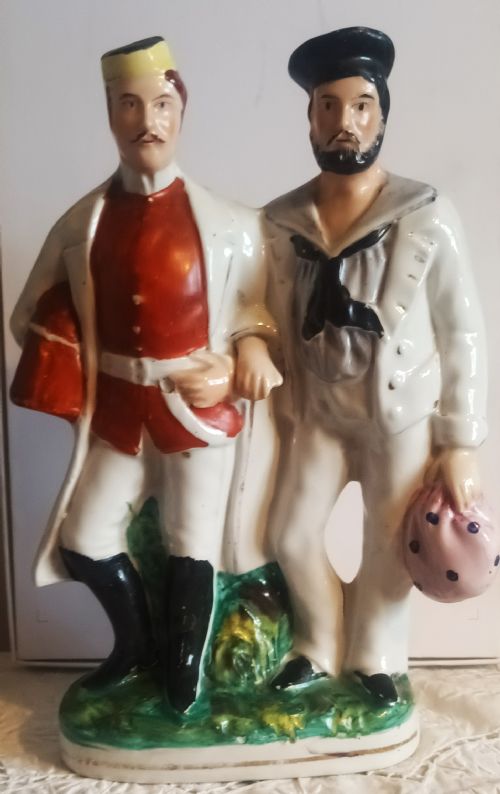
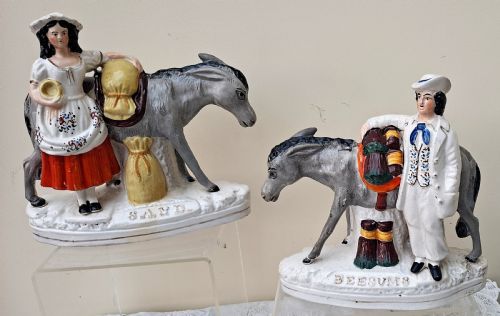


English Flatback Figurine
An english flatback figurine brings the drama of the Victorian parlour to a mantelpiece through moulded ceramic portraiture and theatrical groups.
English Flatback Figurine
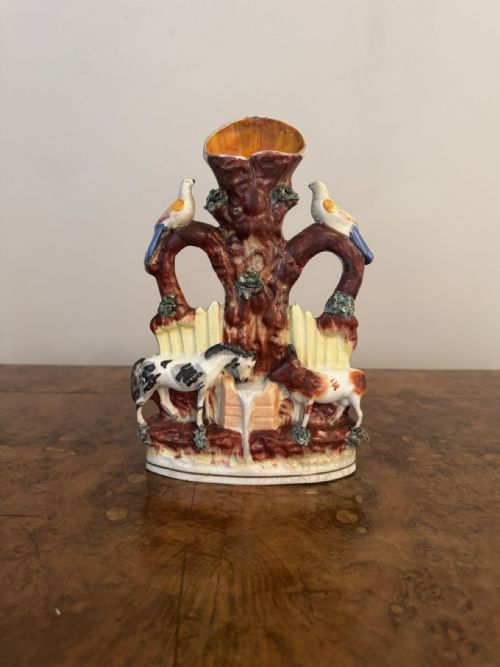
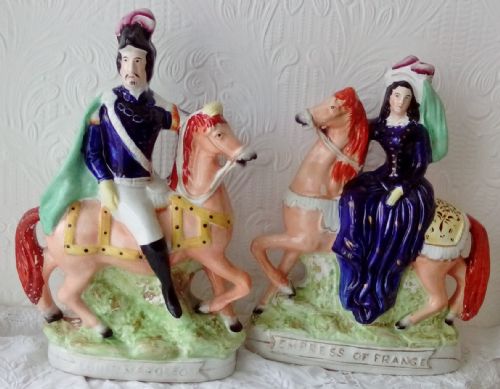
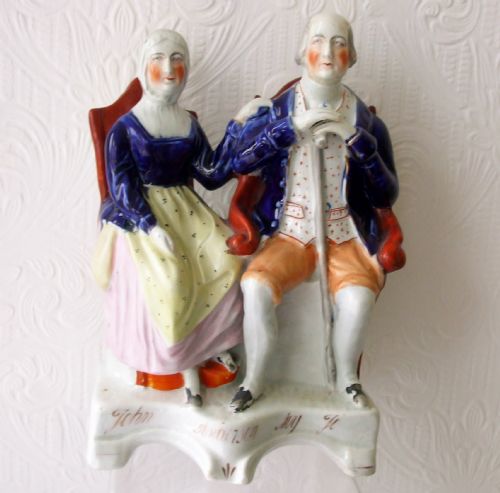
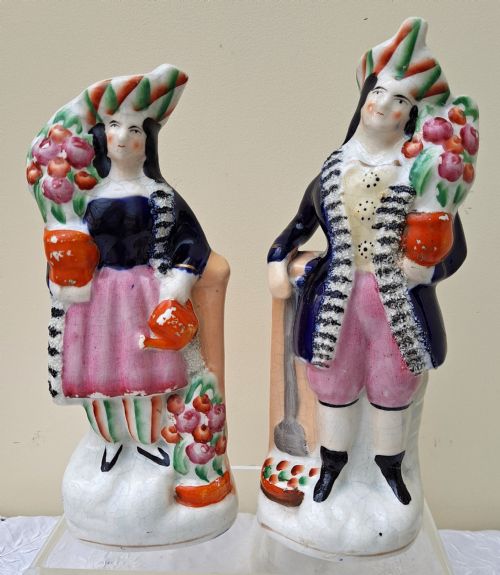
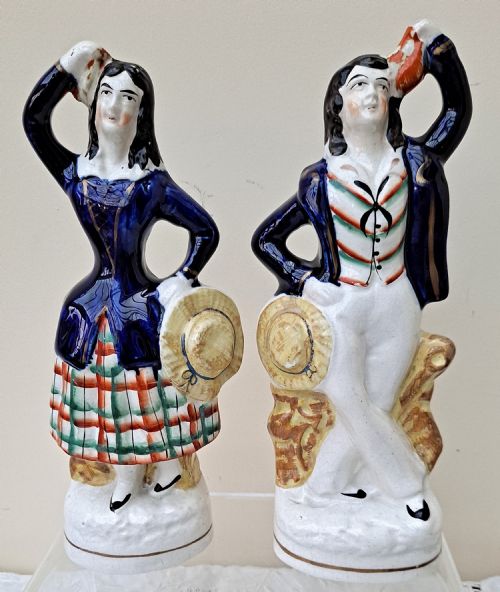
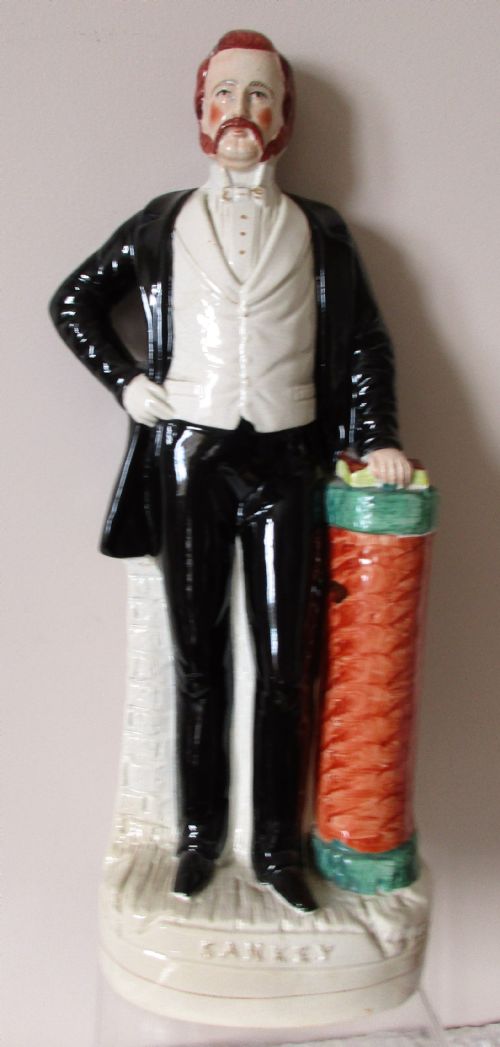
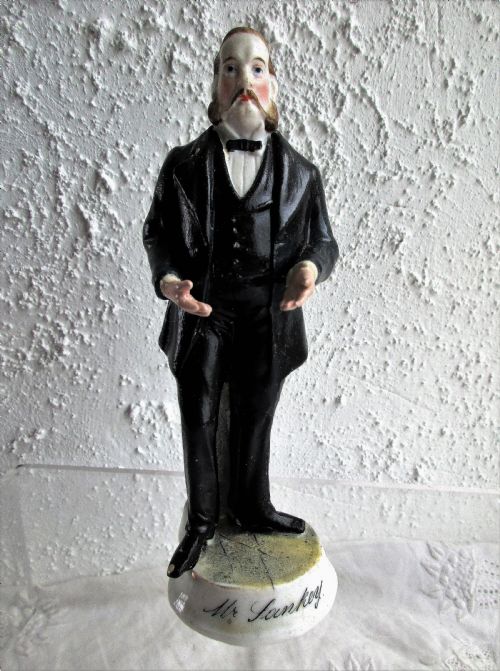
Every english flatback figurine on this page belongs to the nineteenth century, spanning decades from the eighteen-sixties onward. The forms range from royal portrait groups and military commanders to spill vases, animals and theatrical characters designed to be viewed from the front.
Most pieces hail from the Staffordshire potteries, reflecting the Victorian taste for shelf ornaments that depict contemporary news, literature or rustic scenes. Pairs of figures, such as gardeners or harvesters, frequently appear alongside single portrait subjects and watch-holders.
Materials and methods
Ceramic paste provided a sturdy body for complex sculptural groups like castles, zebras, and multi-figure royal portraits. The combination of earthenware and vibrant enamel colours defined the distinct folk art aesthetic of the period.
Listings feature nineteenth-century earthenware and glazed ceramic objects, encompassing Victorian folk art styles, portrait groups, and spill vases.
Evaluating the modelling
Scale and ambition also divide the standard production from superior output. Multi-figure groups, such as military alliances or elaborate royal portraits, require greater technical skill in firing than simple single figures or small animals.
The English Flatback Figurine Glossary
- Flatback
- A ceramic figure moulded with a flat unadorned reverse designed to stand flush against a wall or mantelpiece. This method saved clay and simplified production for mantel ornaments.
- Spill vase
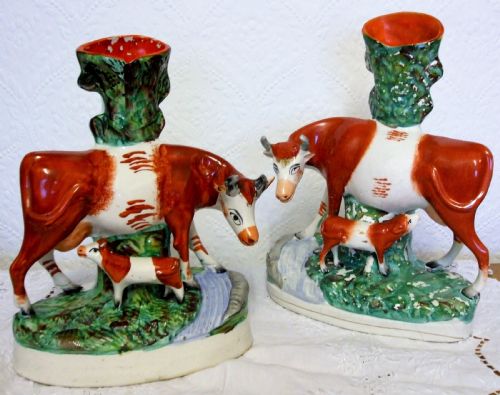
- A hollow cylindrical holder attached to a ceramic figure intended to store wooden tapers for lighting fires or pipes. These dual-purpose objects combine utility with decorative sculpture.
- Earthenware
- A porous pottery body fired at lower temperatures than stoneware or porcelain. It formed the standard substrate for Victorian Staffordshire figures.
- Lead glaze
- A glassy coating containing lead oxide applied to pottery before firing to give a glossy finish. It protected the painted enamel decoration beneath.
English Flatback Figurine: Frequently Asked Questions
Where did flatback figures sit in a Victorian home?
These ornaments typically decorated mantelpieces, sideboards and parlour shelves where viewers could admire them from the front. Because the backs were flat and unpainted, they rested securely against walls.
Pairs often flanked clocks or centrepieces, creating a balanced display that matched Victorian interior design preferences.
How do I identify royal portrait subjects?
Makers often inscribed the names of monarchs, generals and political figures directly onto the ceramic base in raised lettering. Figures such as Queen Victoria, Napoleon III or the Prince of Wales also wore recognisable period dress.
Matching costume details and group arrangements with historical events helps confirm the specific identity of the subjects.
Why do some figures have holes at the top?
Those hollow sections function as spill vases designed to hold wooden tapers near a fireplace. People pulled a spill from the vase to transfer a flame from the hearth to candles or pipes.
Potters integrated these holders into pastoral scenes, animal groups and literary subjects to add practical use to the sculpture.
Are these figures glazed on the back?
Most pieces feature an unglazed or thinly glazed flat reverse because they were intended to face forward on a shelf. Leaving the back unglazed prevented the pieces from sticking to kiln shelves during firing.
Inspectors look at the flat rear surface to check the texture of the original earthenware body.