

English Fireplace Accessories
English fireplace accessories gather the functional iron, brass and copper required to tend a hearth.
English Fireplace Accessories
English fireplace accessories encompass the metalwork and hearth furniture utilised for managing domestic fires, ranging from Georgian and Regency eras through the Victorian and Edwardian periods.
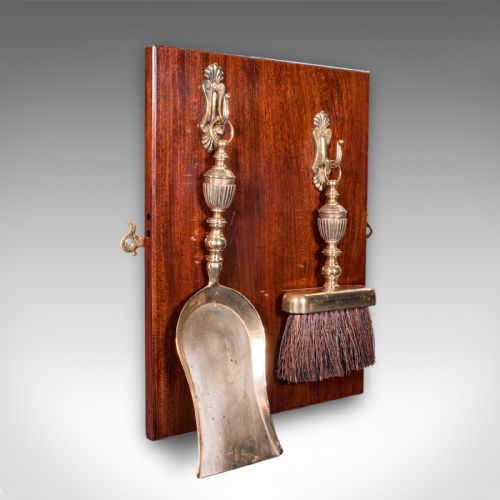
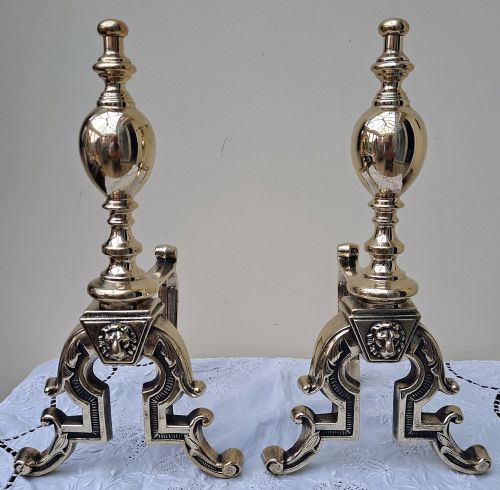
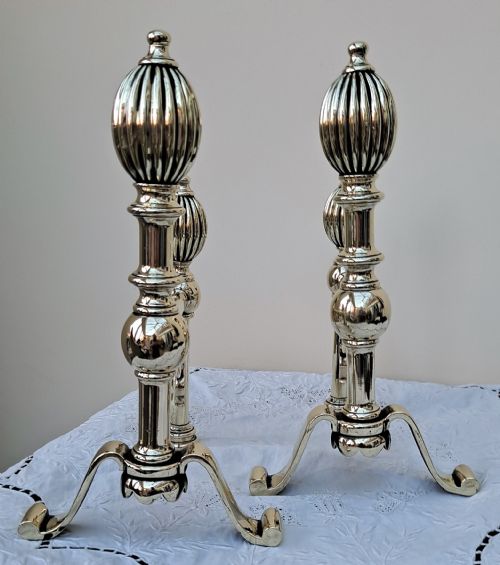
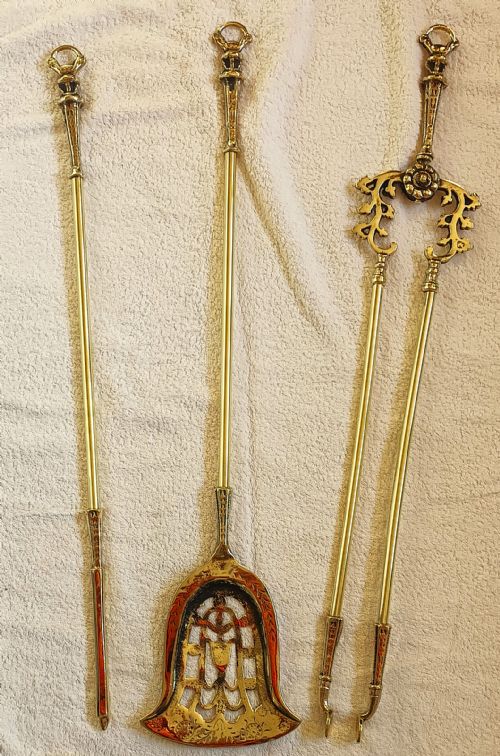
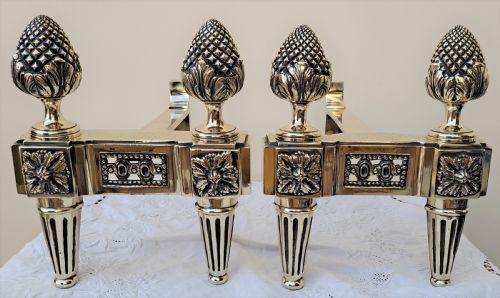
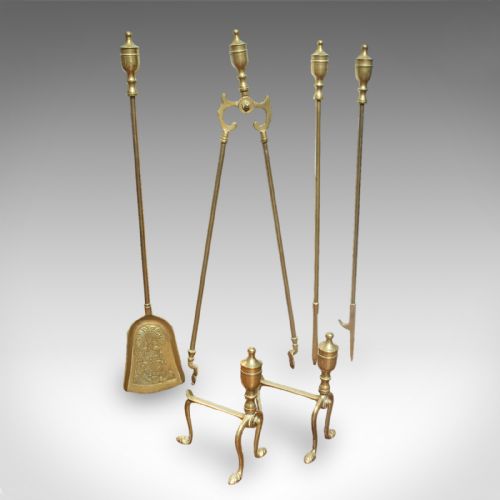
The objects encountered most frequently on this page include brass andirons, fire dogs, coal scuttles, and matching sets of fireplace tools such as pokers, shovels, and tongs.
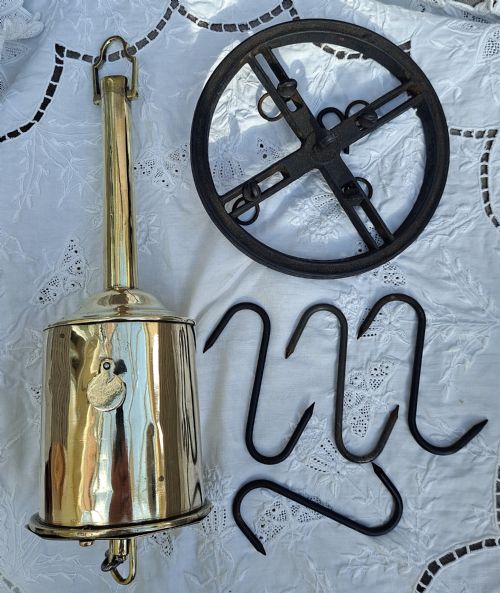
Beyond the standard companion sets, utilitarian items like footmen, spit jacks, and coal purdoniums appear, reflecting the diverse metalworking output of 19th-century workshops.
Materials and Construction
Makers utilised brass, wrought iron, cast iron, and copper, frequently combining steel components for elements requiring structural strength under heat.
Forming these pieces involved casting molten metal into moulds for decorative brass andirons, alongside hand-finishing and forging wrought iron for fire dogs and tool sets.
Wooden elements such as mahogany and walnut occasionally supplement metal bodies in items like coal purdoniums and log stores.
Materials recorded across current inventory include brass, wrought iron, copper, cast iron, steel, mahogany, and walnut.
Judging Quality
Superior examples display crisp casting detail and robust gauge metal, ensuring that structural parts like fire bars and tool shafts withstand regular thermal exposure.
Subtle hand-finishing, such as filed joints on wrought iron and well-turned brass handles, distinguishes standard utilitarian output from pieces bearing deliberate decorative ambition.
Material thickness dictates longevity, separating solid brass and heavy cast iron items from thinner sheet metal alternatives.
John Linwood of Birmingham
The English Fireplace Accessories Glossary
- Andirons
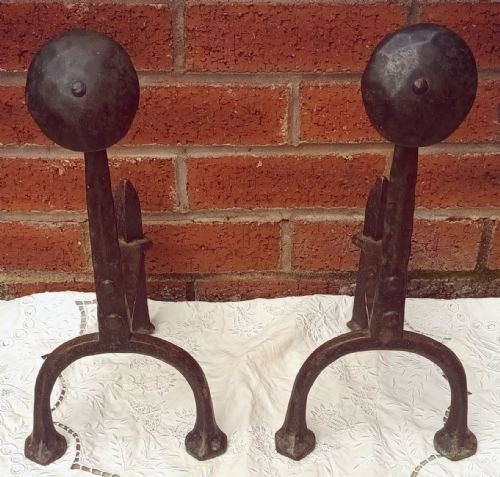
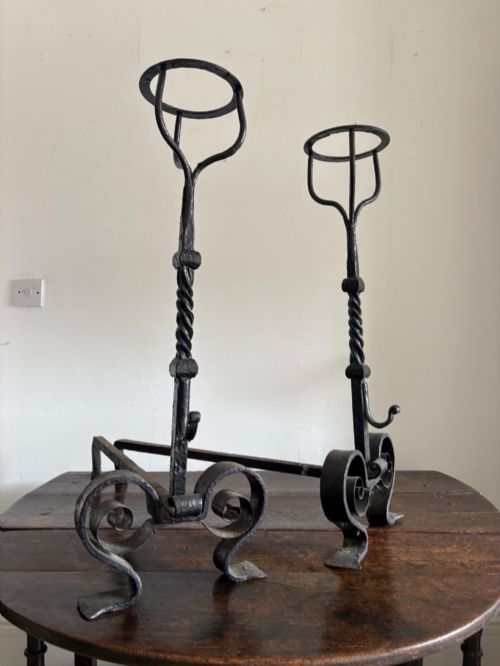
- Supports designed to hold logs within a fireplace, keeping the fuel elevated to allow air circulation underneath. They frequently incorporate decorative brass finials or wrought iron shafts.
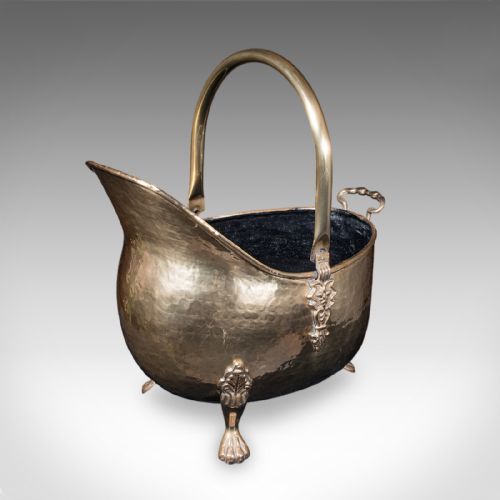
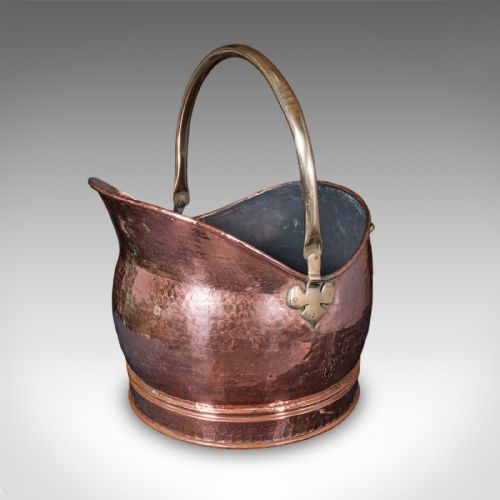
- Coal Scuttle
- A lidded container or bucket used for holding solid fuel near the hearth. Copper and brass versions often feature swing handles and lined interiors.
- Footman
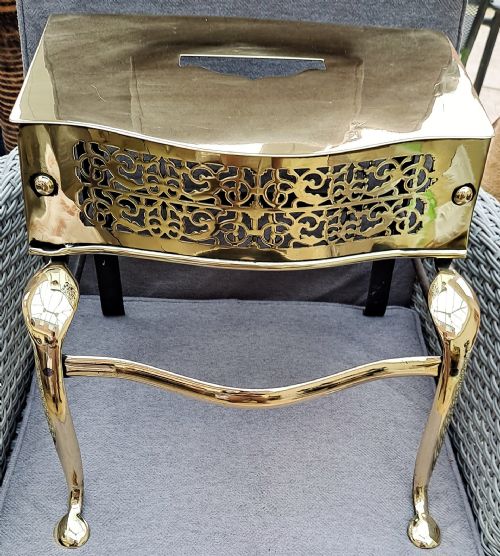
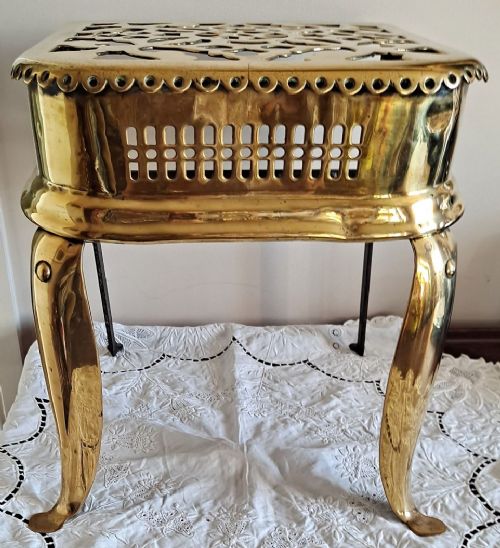
- A low metal stand placed in front of the fire to keep food or kettles warm. They typically combine a brass top plate with sturdy steel legs.
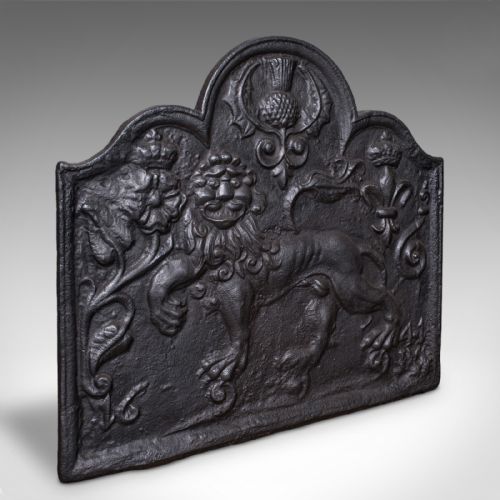
- Fire Back
- A heavy metal plate placed against the rear wall of a fireplace to reflect heat into the room and protect the masonry. They are cast in iron with decorative relief scenes.
- Purdonium
- A specialised cabinet or box for storing coal, often constructed from timber with a metal liner and a sloping drop-front lid.
English Fireplace Accessories: Frequently Asked Questions
What are English fireplace accessories?
English fireplace accessories comprise the functional metalwork and hearth furniture produced in Britain across the Georgian, Victorian, and Edwardian periods. This category includes tools for tending fires, containers for fuel, and structural supports for logs.
Items range from simple iron fire dogs to elaborate brass and copper coal scuttles and complete companion sets.
How were andirons used?
Andirons sit inside the fireplace hearth to support logs above the floor of the grate. Raising the fuel improves airflow beneath the fire, which helps wood burn more efficiently.
They also serve a decorative function, presenting finished brass or wrought iron fronts to the room when the hearth is unlit.
How do I identify a footman?
A footman is a low, four-legged metal stand placed directly in front of the fire to hold kettles or dishes. They feature a flat top surface, often pierced with decorative patterns, supported by steel or brass legs.
Georgian and Victorian examples frequently combine a brass face with structural steel components.
What is a coal purdonium?
A coal purdonium is an enclosed wooden box designed to store domestic coal beside the hearth. Unlike open buckets, they feature a hinged lid or drop front to conceal the fuel.
Most surviving examples pair a polished timber body, such as walnut or mahogany, with a metal interior liner and brass handles.