




English Equestrian Artwork
English equestrian artwork captures the enduring bond between horses, riders and the British countryside across centuries of fine craftsmanship.
English Equestrian Artwork
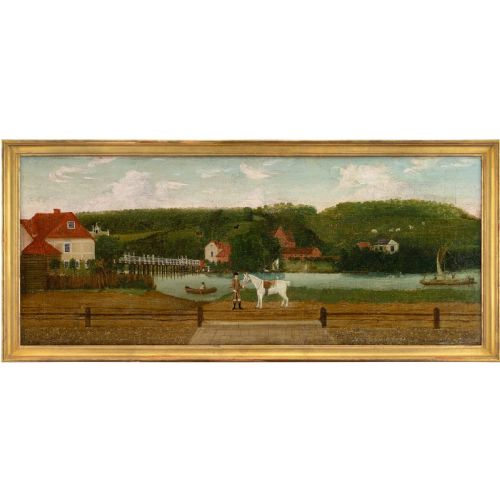
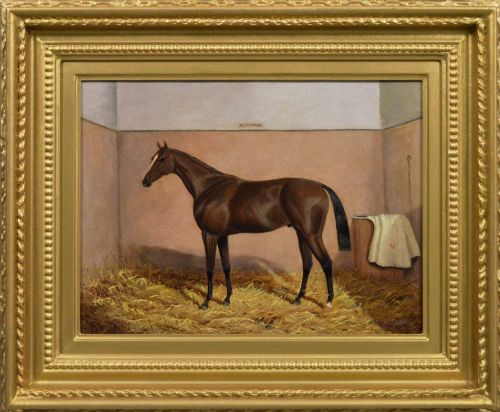
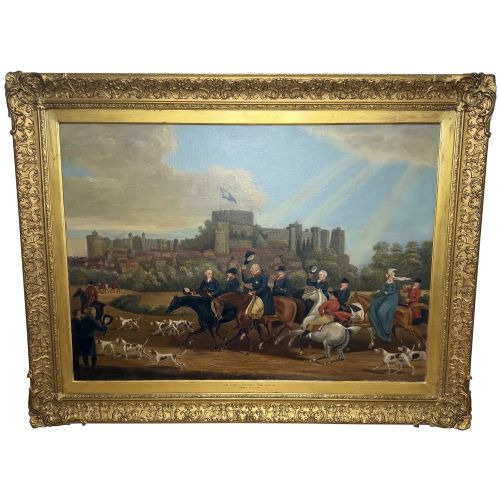
When you search for english equestrian artwork, you encounter a rich variety of oil paintings, watercolours, prints, drawings and needleworks that celebrate horses, hunting, racing and coaching scenes. These works range from intimate rural portraits of individual racehorses and farm ponies to sweeping panoramic landscapes detailing historic hunts and coaching journeys across regional estates.
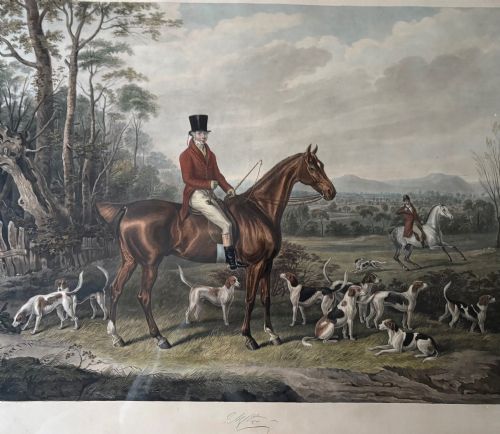
The selections span distinct periods including Georgian, Regency, Victorian, Edwardian and mid-twentieth-century eras, reflecting the evolving tastes of British patrons and collectors. On this page, you are most likely to meet nineteenth-century oil paintings on canvas or board, alongside detailed hand-coloured engravings and framed watercolours depicting countryside stables and sporting meets.
How they were made
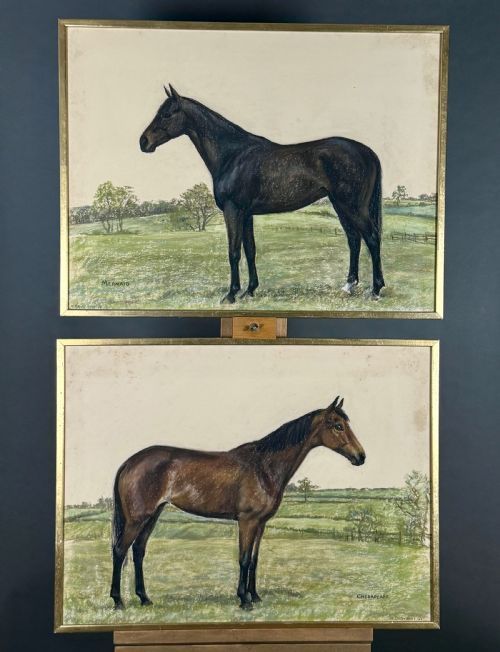
Artists utilised traditional oil paints on canvas or prepared wooden boards, building rich layers of pigment to capture the gloss of a horse coat and the varied tones of rural landscapes. Watercolour paintings and pastels on paper offer a lighter touch, often heightened with pencil or chalk to delineate the musculature and movement of animals in motion.
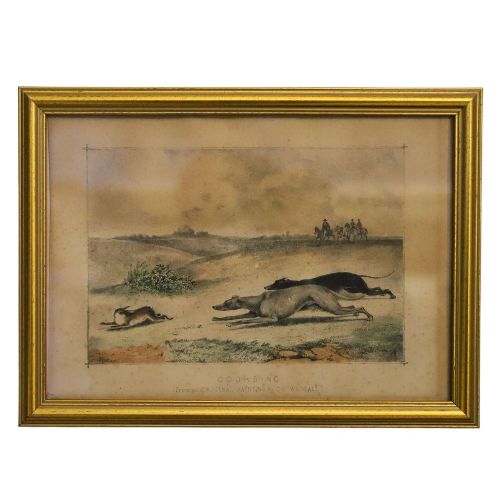
Many historical prints and engravings were painstakingly hand-coloured after publication, bringing vibrancy to scenes of field sports and coaching. Framing traditionally involved carved wood and giltwood surrounds, sometimes enhanced with gold leaf to complement the rich tones of the artwork within.
The listings feature oil on canvas, paper, wood, glass, and gold leaf across periods from the Georgian era through the mid-twentieth century.
What varies in quality
Quality rests primarily upon the artist ability to render equine anatomy with precision, capturing accurate perspective, bone structure and the tense energy of a horse in movement rather than a static silhouette. Superior works demonstrate a confident handling of light and atmosphere, integrating the animal naturally into its surrounding landscape or stable interior.
The handling of secondary elements such as human figures, hounds and architectural details distinguishes accomplished studio pieces from more formulaic output. Furthermore, the survival of original framing, clear artist attribution and the crispness of detail in prints and engravings elevate the standing of a piece within its period.
Albert Clark·C. H. Weigall·Herman S Melville·George Morland·John Rattenbury Skeaping·Charles Walter Simpson·Harry Freckleton·John Arthur Lomax·John Sanderson Wells·Michael Lyne·Arthur Longley Vernon·Samuel Spode·John Alfred Wheeler·Clifton Tomson·Gilbert Scott Wright·Samuel Henry Alken·John Charles Tunnard·Charles Clifford Turner·Philip Blacker·Henri Schouten·John Atkinson·John Charles Maggs·Vernon Stokes
The English Equestrian Artwork Glossary
- Aquatint
- A printmaking technique that produces tonal effects resembling watercolours by using acid to etch resin-coated copper plates. It allowed artists to achieve subtle gradients in pastoral prints.
- Lithograph
- A planographic printing method based on the chemical repulsion of oil and water on a limestone slab or metal plate. This technique became popular for reproducing detailed sporting drawings in the nineteenth century.
- Giltwood
- Wood that has been coated with a thin layer of gold leaf or gold paint. It frequently frames nineteenth-century oil paintings to enhance their visual weight.
- Silk needlework
- A textile picture stitched with silk threads onto a fabric foundation, often depicting rural scenes or horse racing tracks. These detailed works required immense patience and skill from the maker.
English Equestrian Artwork: Frequently Asked Questions
What subjects appear in english equestrian artwork?
These works feature a diverse array of subjects centred around horses, including individual portraits of named racehorses, hunting scenes, coaching inns and rural fairs. Artists also documented blacksmith visits, farm work with heavy horses and panoramic countryside views.
Scenes often highlight regional hunts such as the Berkeley Hunt, alongside depictions of historic racecourses like Epsom Park and Newcastle.
How do I identify the period of a painting?
Dating relies on stylistic clues, clothing fashions of the human figures, framing materials and any inscribed signatures, dates or archival labels on the reverse of the canvas or board. Georgian and Regency works often show softer lighting and classical composition, while Victorian pieces lean towards detailed narrative realism.
Mid-twentieth-century examples introduce modernist brushwork and broader interpretations of movement, seen in works by artists active into the 1960s.
Where were these artworks displayed historically?
Historically, these pieces hung in the country houses, hunting lodges and town residences of British landowners, squires and patrons who commissioned portraits of their prize livestock and hunting dogs. They also decorated coaching inns and clubs frequented by sporting enthusiasts.
Today, they translate easily into various interiors, adding character to libraries, studies and living rooms with traditional or eclectic decor.
What is the difference between a study and a finished portrait?
A study is typically an observational drawing or quick painting in pastel, chalk or oil, executed to capture the posture, mood or muscle tone of a horse before a larger composition is undertaken. These pieces often reveal a more immediate, expressive hand.
A finished portrait is a formal, highly detailed commission intended for display, showing the subject with polished backgrounds and precise anatomical rendering.