

Horse Portrait Painting
Horse portrait painting captures the physical character and spirit of prized equines, appealing to collectors of sporting art and animal portraiture.
Horse Portrait Painting
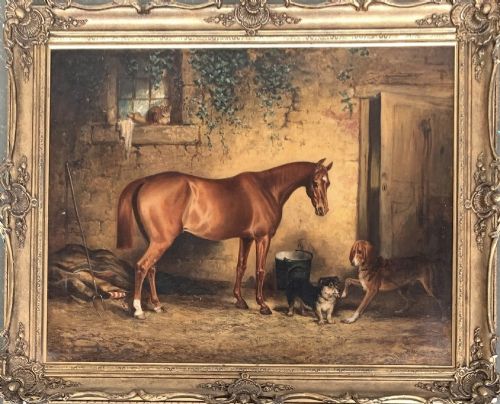
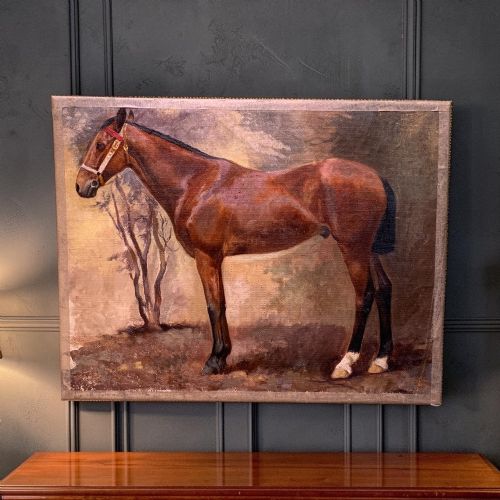
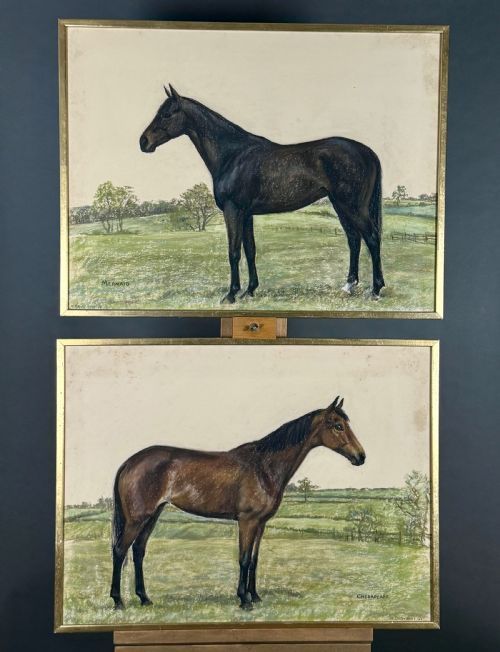
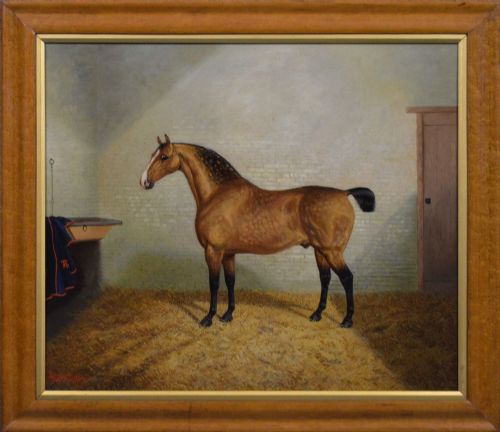
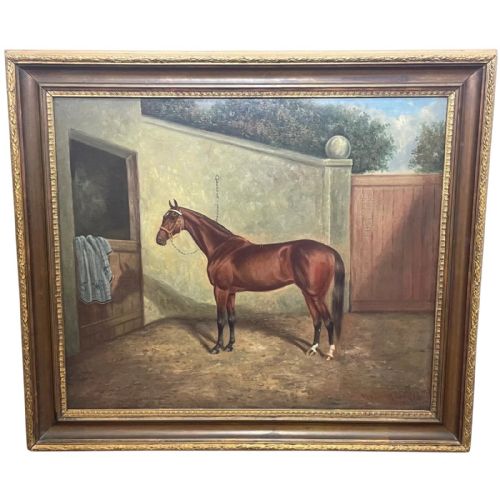
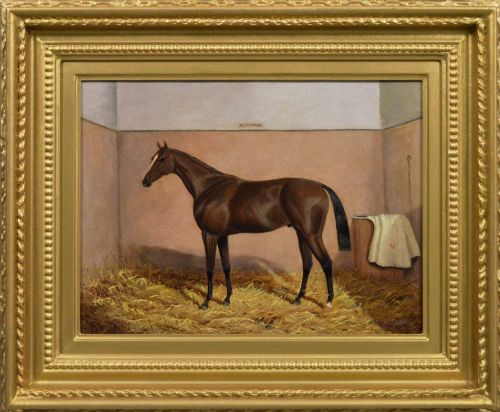
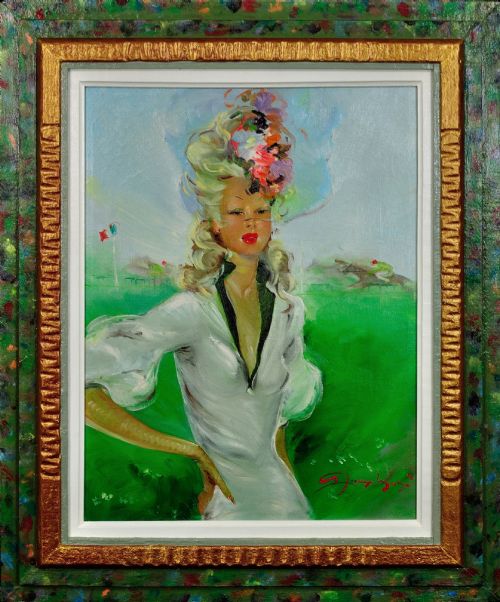
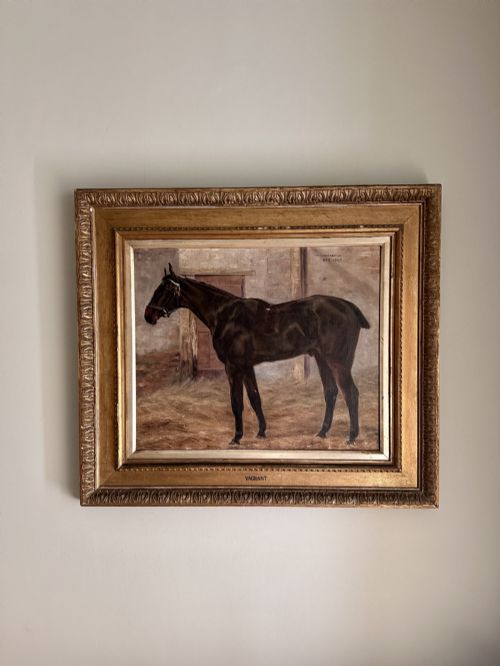
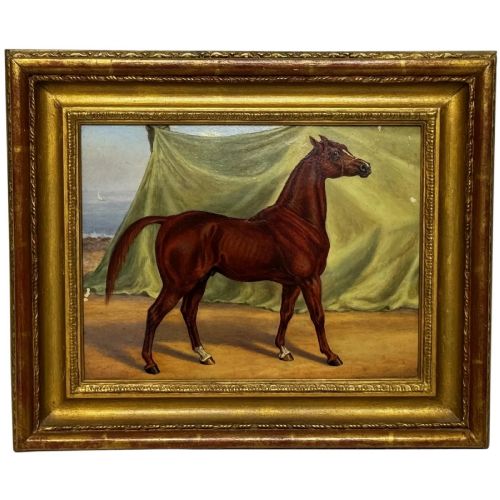
A horse portrait painting records individual animals, ranging from named racehorses and hunters to working farm animals and stable companions. These works span several centuries, with nineteenth-century examples and Victorian sporting art forming a significant part of the selection.
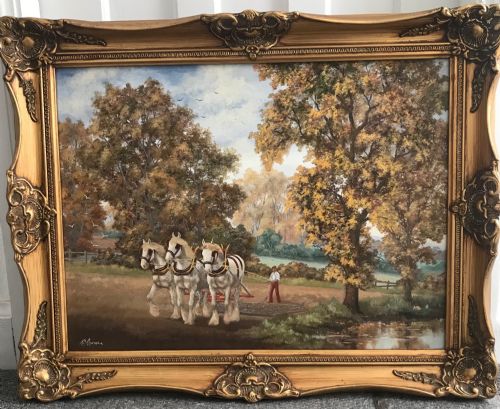
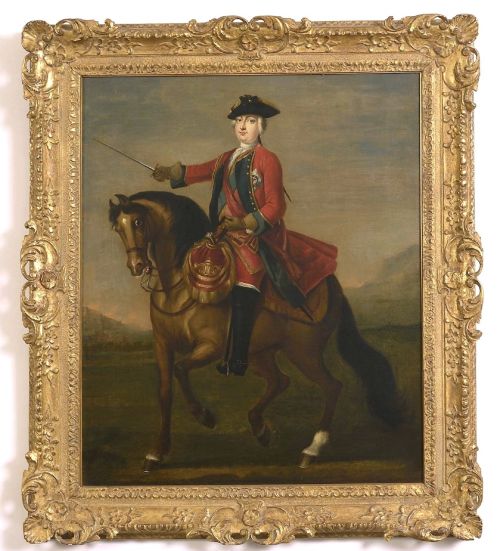
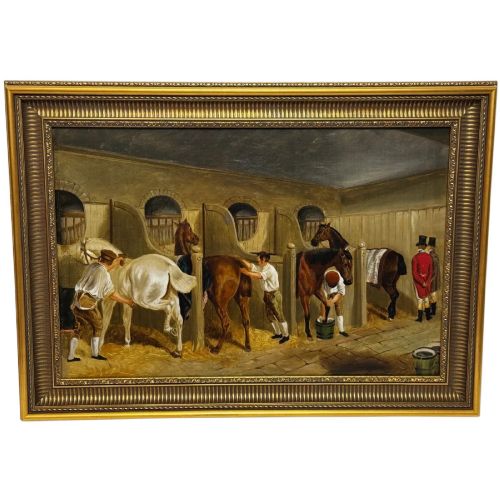
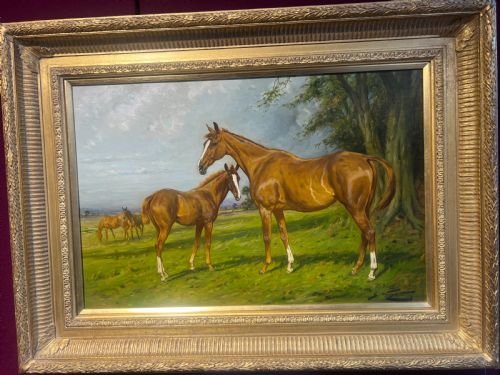
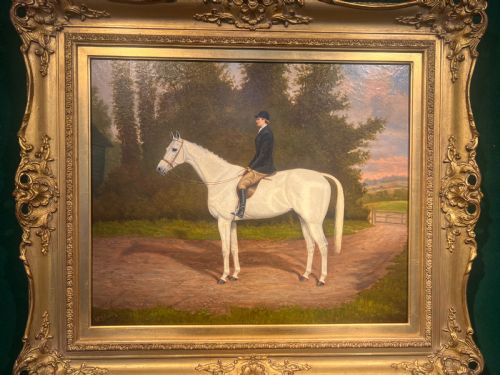
Compositions vary from intimate head studies to full-length depictions in stables, paddocks, or open landscapes. Some canvases record specific winners of historic racing events, while others depict rural scenes involving ploughing, hunting, and coaching.
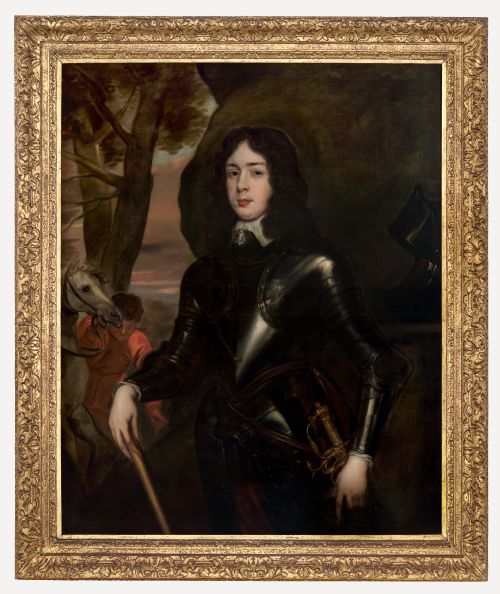
The tradition encompasses works by named animal painters as well as anonymous English, French, and German school pieces. Buyers encounter both large-scale framed oils and smaller works executed on panel or paper.
Materials and methods
Painters relied primarily on oil paint applied to stretched canvas, oak panels, or board, building up layers to render the sheen of a coat and the musculature of the animal. Pastel on paper appears in specific studies, offering a softer texture for capturing light on hair.
Many period works retain their original giltwood or decorative frames, which complement the darker palettes typically used in nineteenth-century equine art. Grounds were prepared to receive oil paint, allowing artists to work up rich tones of bay, chestnut, grey, and black.
Listings feature oil on canvas, pastel on paper, and wood panel supports across the eighteenth, nineteenth, and twentieth centuries.
Assessing the works
Quality rests on the artist's anatomical precision and ability to convey the individual temperament of the horse rather than a generic template. Superior pieces demonstrate careful handling of light across the animal's coat and a convincing integration of the figure into its landscape or stable setting.
Provenance and attribution elevate certain canvases, particularly those linked to documented racing victories, named estates, or established sporting artists of the period. The condition of the original paint layer and the harmony of the framing also influence the standing of an individual piece.
Henry Barraud·John Wootton·Thomas Hudson·Albert Clark·John Alfred Wheeler·John Ferneley Senior·David Dalby of York
The Horse Portrait Painting Glossary
- Bay
- A horse coat colour characterised by a reddish-brown body with a black mane, tail, and lower legs. It is among the most frequently recorded shades in nineteenth-century equestrian art.
- Giltwood
- Wood carved and covered with a thin layer of gold leaf or gold paint. This material forms the decorative frames commonly found around period oil paintings.
- Equestrian art
- Depictions of horses and riders or horses alone, encompassing racing subjects, hunting scenes, and individual animal portraits. This genre flourished in Britain throughout the Georgian and Victorian periods.
- Provenance
- The documented history of ownership of an artwork, establishing its authenticity and lineage. Records often link specific paintings to country estates, galleries, or named collections.
Horse Portrait Painting: Frequently Asked Questions
What subjects appear in these paintings?
The works depict named racehorses, hunters, stallions, and working horses such as shires and farm animals. Many canvases place the animal within a landscape, a stable interior, or alongside stable hands and hounds.
Other compositions record specific historical events, racing winners, or rural scenes involving hay wagons and ploughing teams.
How can I tell the period of a painting?
Stylistic clues, framing, and canvas preparation help indicate the era, alongside any visible dates or signatures. Nineteenth-century works often employ rich, dark varnishes and detailed anatomical rendering typical of Victorian sporting art.
Earlier eighteenth-century pieces display different conventions in background landscape treatment and human figures, while twentieth-century examples show shifts in palette and brushwork.
Were these works created as portraits?
Many were commissioned to record prized livestock, successful racehorses, or beloved hunters belonging to landowners and sportsmen. Artists sought to capture specific markings, conformation, and temperament rather than painting an idealized animal.
Archival records and inscriptions on the canvas or reverse often supply the name of the horse, the owner, or the race won.
How do I display an antique oil painting?
These works require placement away from direct sunlight and excessive humidity to protect the oil paint and canvas from degradation. Many pieces are housed in their original giltwood frames, which provide structural support and suit the traditional aesthetic of sporting art.
Stable indoor temperatures help preserve both the wooden panels or canvas supports and the historic framing.