


Stable Scene Oil Painting
A stable scene oil painting captures nineteenth-century equestrian life with remarkable intimacy, offering collectors a direct window into the Victorian sporting world.
Stable Scene Oil Painting
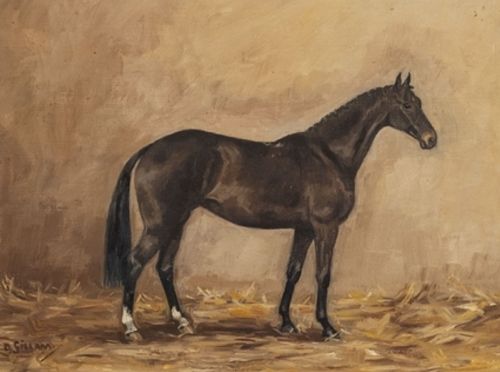
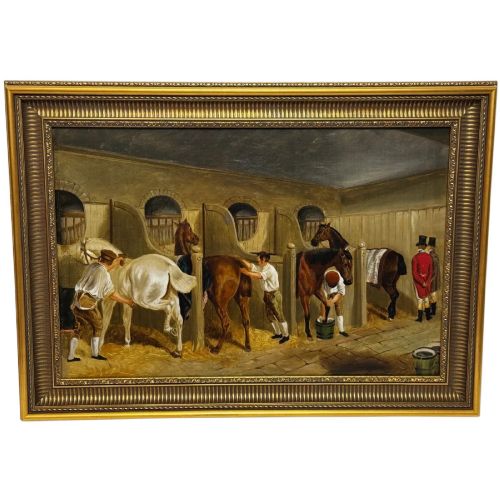
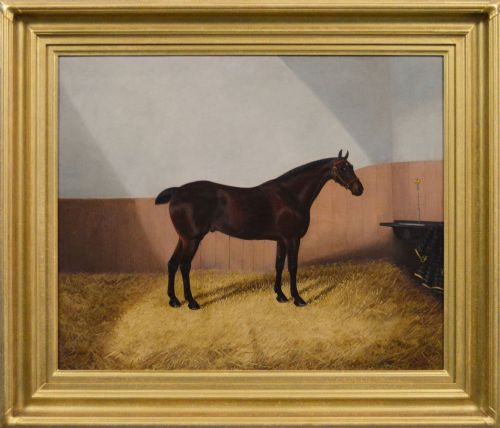
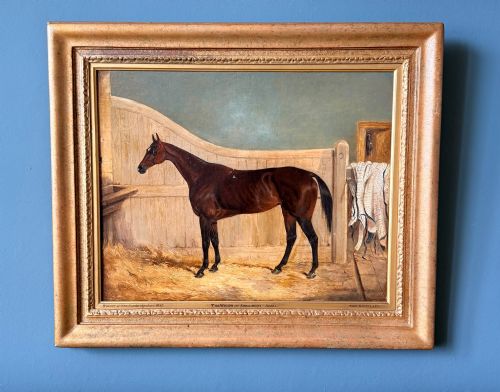
When you search for a stable scene oil painting, you encounter nineteenth-century canvases depicting horses, hunters, and cattle resting inside traditional stable interiors. These works emerge predominantly from the Victorian and Edwardian periods, reflecting Britain's deep cultural ties to equine sports and agriculture.
The pieces on this page span several decades, featuring named mounts like the Cambridgeshire winner alongside naive cattle depictions and intimate portraits of bay and chestnut hunters. Victorian sporting art dominates the selection, anchored by period works on canvas housed in original gilt wood frames.
Materials and construction
Artists painted these works using oil paint on stretched canvas, mounted within wooden frames finished with gilt and plaster details. The physical support relies on traditional wood stretchers that hold the canvas firm, while the frames frequently incorporate decorative gilding typical of the nineteenth century.
Makers applied rich layers of oil pigment to build depth in the horses' coats and the shadowed interiors of the stables. The surviving pieces demonstrate the durability of canvas and oil paint when paired with solid wood and giltwood framing.
Several Victorian hunters share their stable quarters with remarkably small terriers keeping a watchful eye on the canvas.
Distinctions in quality
Quality in a stable scene oil painting rests upon the anatomical precision of the animal and the atmospheric rendering of the interior space. Master hands capture the texture of a bay coat or a roan hunter with convincing musculature and light, whereas simpler works lean towards folk art naivety.
The integrity of the original gilt wood frame and the clarity of the artist's brushwork further separate standard decorative pieces from significant sporting art. Works attributed to recorded painters or circles of known artists carry a distinct depth of composition.
Albert Clark·Thomas Walker Bretland·Edward Lloyd of Ellesmere·George E Sharpe·Samuel Spode·Edwin Frederic Holt·Alfred Moginie Bryant·John Constable
The Stable Scene Oil Painting Glossary
- Gilt Wood
- Wood treated with gold leaf or a gilt finish to create a decorative frame. This material defines the period appearance of many nineteenth-century picture frames.
- Oil on Canvas
- Pigment mixed with drying oil applied to a woven fabric stretched across a wooden frame. It serves as the primary medium for historical painting.
- Victorian Sporting Art
- Artwork depicting equestrian subjects, hunting, and rural sports produced during the reign of Queen Victoria. These pieces celebrate the central role of horses in nineteenth-century society.
- Naive
- A style of art characterised by a childlike simplicity in perspective and proportion. Such pieces offer charming depictions without strict adherence to academic rules.
- Hunter
- A horse bred and trained for fox hunting or general riding. These animals form the central subject of numerous equestrian portraits.
Stable Scene Oil Painting: Frequently Asked Questions
What defines a stable scene oil painting?
These works feature horses, hunters, or cattle positioned inside a stable environment, painted in oil on canvas during the nineteenth and early twentieth centuries.
They capture the relationship between animals and their handlers during the height of the Victorian sporting era.
How do I date a stable scene painting?
Dating relies on the style of the gilt frame, the clothing of any figures, and written inscriptions or signatures on the canvas reverse.
Period markers include Victorian sporting art conventions and the specific pigments utilised by nineteenth-century artists.
Where were these paintings originally displayed?
Landowners and sporting enthusiasts hung these canvases in country houses, estate offices, and hunting lodges across Britain.
They served as tributes to prized racehorses, hunters, and working livestock maintained by the household.
How should I care for an oil painting?
Keep the canvas away from direct sunlight and dramatic shifts in temperature to protect the oil paint and wood stretcher.
Dust the gilt frame gently with a soft, dry brush without applying liquid cleaners to the painted surface.