
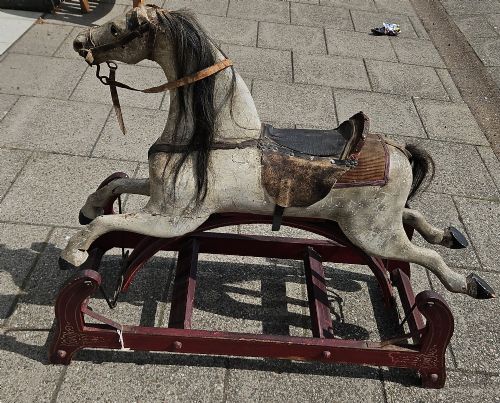


Saddled Horse Painting
These saddled horse painting pieces and associated equestrian works capture equine spirit across centuries, offering collectors a striking window into animal art.
Saddled Horse Painting
A saddled horse painting brings classical equestrian portraiture into interiors, often depicting named animals within traditional English landscapes. The selection on this page also embraces related sculptures, rocking horses, and bronze figures that share the same equine focus.
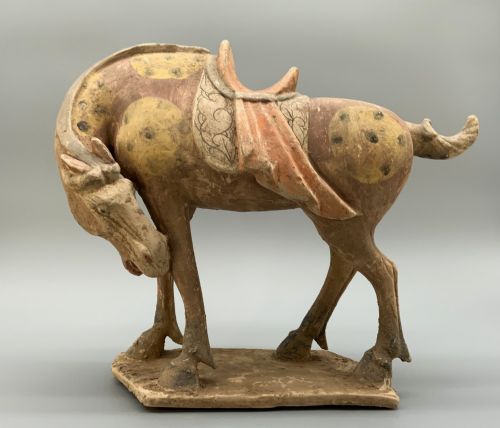
Buyers frequently encounter works from the Victorian and Edwardian eras alongside earlier ceramic figures and mid twentieth century interpretations. These diverse forms share a common dedication to capturing the musculature and spirit of the saddled horse.
Materials and methods behind the works
Paintings in this category utilise oil on board to render detailed portraits of mares and hunters within pastoral settings. Artisans applied pigment with precision to delineate the glossy coats and fitted tack of the animals.
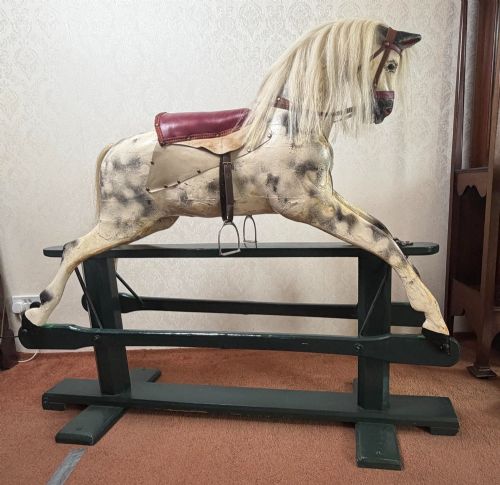
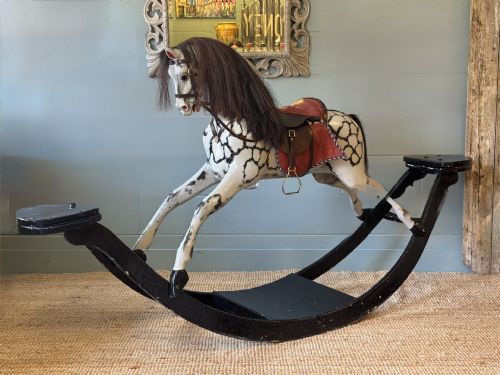
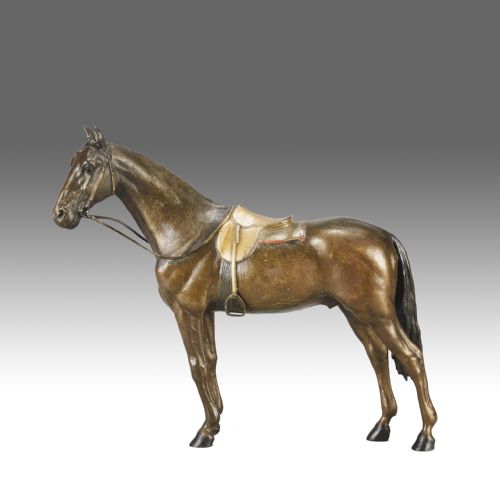
Three dimensional pieces rely on carved pine, wood, leather, and horsehair for traditional rocking horses, whilst metalworks employ bronze and cold-painted techniques. These varied mediums reflect the distinct craft traditions of each period.
Materials recorded across the inventory include bronze, iron, pine, glass, leather, and horsehair.
Distinctions in craftsmanship and execution
Quality rests upon the anatomical accuracy and expressive depth achieved by the artist or maker. Finer examples display meticulous attention to the subtle contours of the animal and the realistic drape of the saddle.
Provenance and original condition elevate particular pieces, especially when works retain their untouched painted surfaces or bear the distinct signature of a known maker. The harmony between the subject and its setting dictates the visual success of the piece.
G & J Lines of London·Franz Bergman·F.H. Ayres·C. Harrison
The Saddled Horse Painting Glossary
- Cold-painted bronze
- A method where bronze figures are painted with oil or enamel paints rather than subjected to high heat firing. This technique allows for intricate polychrome detail on small sculptures.
- Equestrian
- Pertaining to horses, horse riding, or the representation of horses in art. The term describes artworks focused primarily on the horse and its interaction with riders or landscapes.
- Rocking horse
- A children's toy or decorative carving fashioned in the likeness of a horse mounted on curved wooden rockers or safety stands. Many historical examples feature carved wooden bodies with horsehair manes.
- Tang Dynasty
- An imperial dynasty of China noted for its vibrant ceramic arts, including glazed pottery figures of horses. These ancient pieces exhibit distinctive stylistic forms predating later European works.
Saddled Horse Painting: Frequently Asked Questions
How do I care for a painted equestrian work?
Keep paintings and wooden pieces away from direct sunlight and fluctuating humidity to protect the pigments and underlying materials.
Dust surfaces gently with a soft, dry cloth without applying chemical cleaning agents that might damage historical finishes.
Where should I display a bronze horse sculpture?
Position bronzes on stable surfaces where their weight is supported and the intricate cold-painted details can be viewed closely.
Ensure the display area remains dry to prevent any moisture accumulation on the metal surface.
What defines an antique rocking horse?
Antique rocking horses typically feature carved wooden bodies mounted on original curved wooden rockers or safety stands.
They often incorporate genuine leather tack and horsehair manes reflecting the period of their manufacture.
How are different periods identified in these pieces?
Stylistic clues such as the form of the carving, the painting medium, and the materials used point directly to specific eras like the Victorian or Edwardian periods.
Maker marks or signatures inscribed on the works also provide precise chronological reference.