


Antique Horse Hunting Picture
An antique horse hunting picture captures the speed and tradition of the field, bringing rich sporting art into a room.
Antique Horse Hunting Picture
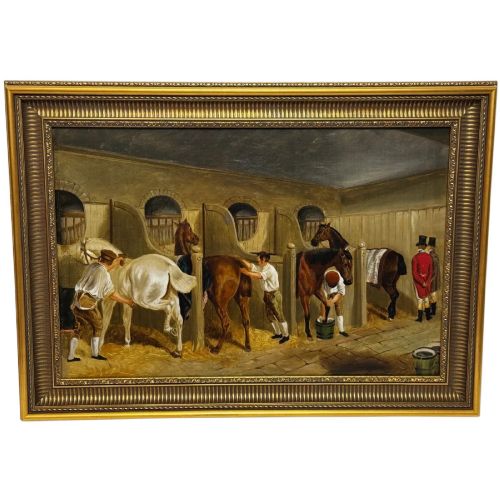
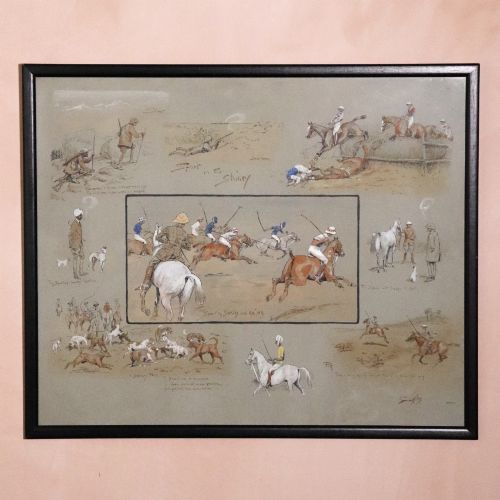
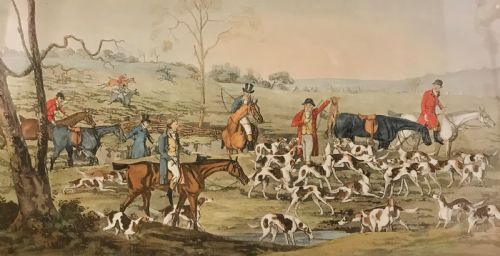
An antique horse hunting picture depicts riders, hounds and horses across various periods, most frequently meeting the eye in the form of oil paintings, watercolours and framed prints. These works span the Victorian era, Edwardian times and the early twentieth century, showing scenes from notable hunts such as the Quorn and the Berkeley. Buyers encounter everything from detailed canvas oils to hand-coloured engravings and original prints.
The subjects range from quiet meets and portraiture of specific mares to full cry pursuits across open countryside. British sporting art dominates the selection, accompanied by occasional French interpretations of the chase. Framed in wood or giltwood, these artworks preserve the atmosphere of historical equestrian life.
How these works were made
Artists painted oil on canvas or worked in watercolour and ink on paper, often finishing pieces with glass protection and wooden or giltwood frames. Lithographs and engravings relied on printmaking techniques, sometimes with hand colouring applied to the paper afterwards.
Reverse silhouette painting on glass represents an alternative technique seen in the period, requiring careful application behind a glass panel. Frame construction typically involved carved or moulded wood, occasionally gilded to complement the visual weight of the art.
The selection includes traditional British sporting art alongside French depictions of huntsmen, captured through engravings, lithographs and original paintings.
What varies in quality
The distinction between works rests on the artist's ability to render the anatomy of horses and hounds with anatomical precision and lively movement. Hand-coloured prints and original watercolours by recognised names command greater attention than standard mass-produced engravings.
The preservation of the paper, canvas and pigment dictates the visual clarity of the scene. Original frames matching the period of the artwork further elevate the integrity of the piece.
Basil Nightingale·Charles Faulkner·John Sanderson Wells·Charles Clifford Turner·Guillaume Urban Regamey·George Goodwin Kilburne·William J Hodgson·Frank Algernon Stewart·Frank Dadd·Wilfred Bailey
The Antique Horse Hunting Picture Glossary
- Oil on Canvas
- Pigment mixed with drying oil applied to a stretched cloth support. This technique allows for rich colour depth and textured brushwork.
- Engraving
- An image cut into a metal plate with a sharp tool to hold ink for printing. It produces crisp, fine lines suited to detailed sporting scenes.
- Chromolithograph
- A colour print produced using multiple lithographic stones, one for each ink hue. This method creates vibrant reproductions of original watercolours.
- Giltwood
- Wood carved and coated with a thin layer of gold leaf or metallic gilt. It provides traditional ornate framing for historical paintings.
- Watercolour
- Paint made of pigments suspended in a water-based solution, typically applied to paper. It yields transparent washes and delicate tones.
Antique Horse Hunting Picture: Frequently Asked Questions
How do I hang a heavy oil painting?
Ensure the wall fixings match the weight of the wooden or giltwood frame and use sturdy picture wire secured directly to the stretcher bars.
Position the artwork at eye level, away from direct sunlight and moisture fluctuations to protect the canvas.
How do I clean antique glass and frames?
Wipe the glass gently with a dry microfiber cloth, avoiding liquid sprays that might seep beneath the edge and damage the paper or painting behind.
Dust the wooden or gilt frame softly with a dry brush to preserve the finish without stripping the gilding.
Are hunting prints hand coloured?
Many nineteenth-century engravings and lithographs received selective watercolour tints by hand after the initial printing process was complete.
Examining the surface under magnification reveals the subtle brush strokes characteristic of manual colour application.
How do I identify the date of a print?
Look for publisher inscriptions, publication dates printed in the margin, or paper characteristics typical of the nineteenth and early twentieth centuries.
Stylistic clues in the riders' attire and the framing materials also help narrow down the production era.