
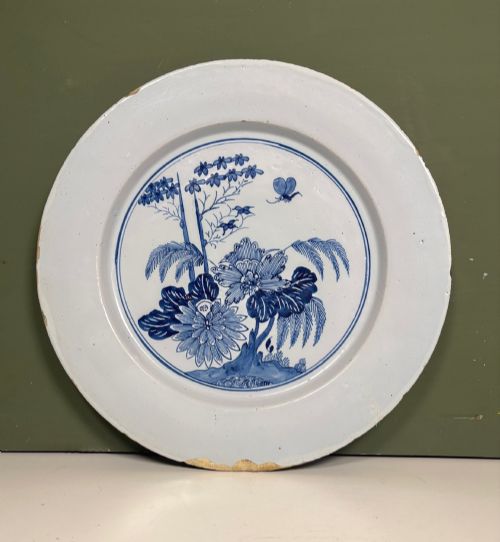
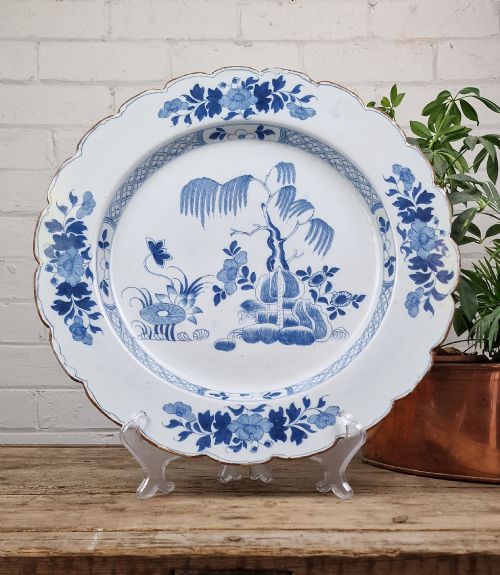


English Delftware Plate
These early english delftware plate examples are tin-glazed earthenware dishes that bring fragile historic charm and rich cobalt palettes to any collection.
What They Are
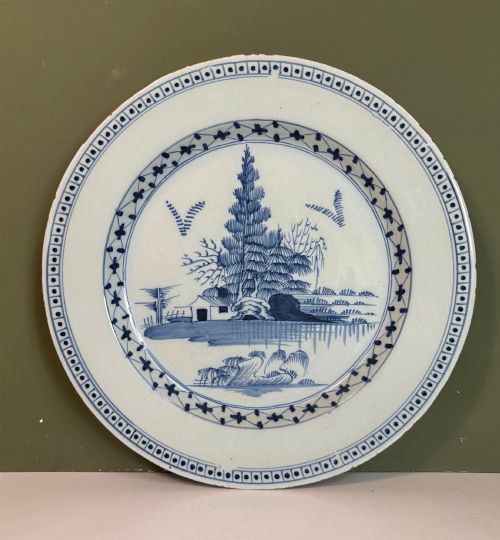
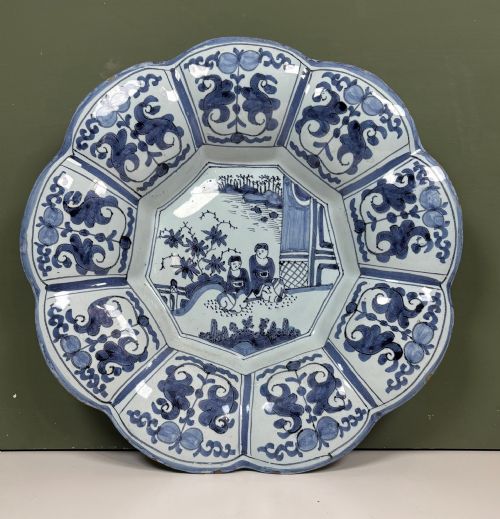
An english delftware plate is an earthenware dish finished with an opaque tin glaze that creates a pale ground for painted decoration. The pieces recorded here originate from the eighteenth century, presenting forms ranging from shallow bowls to decorative plates.
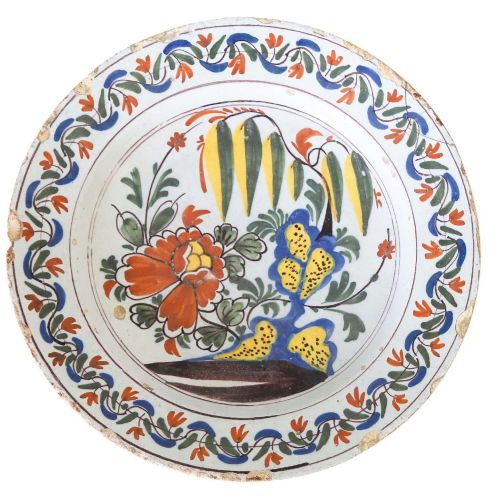
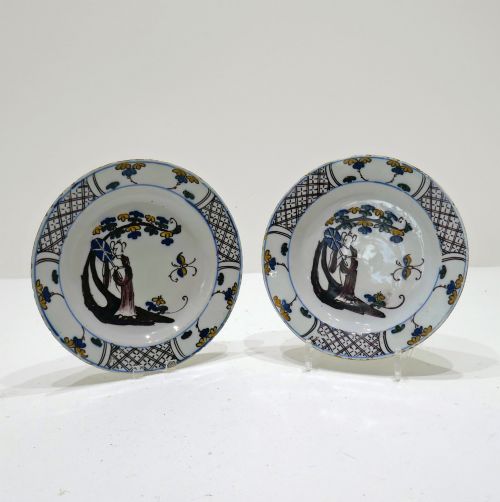
Surviving examples span both blue and white colourways and polychrome designs. Collectors frequently encounter plates attributed to English production centres such as Lambeth, alongside items influenced by eighteenth century Dutch styles.
How They Were Made
Potters formed these items using earthenware clay, shaping them into shallow bowls and plates before applying an opaque tin glaze. This mineral glaze surface dried to a characteristic chalky white finish ready to receive pigments.
Decorators applied cobalt oxide for blue and white schemes, or mixed mineral pigments for polychrome variations directly onto the unfired or lightly fired glaze. The pieces then underwent a high temperature kiln firing that fused the pigments into the tin surface.
Every item recorded in this category dates from the eighteenth century, utilising earthenware, tin glaze, and cobalt oxide.
What Varies in Quality
Distinction across these plates lies in the precision and confidence of the brushwork. Skilled hands executed freehand cobalt or polychrome motifs with fluid brushstrokes that convey movement and depth on the tin glaze.
The purity of the white glaze ground and the stability of the fired surface determine the visual harmony of each piece. Finer plates display balanced compositions and controlled pigment absorption without distracting clouding in the glaze.
The English Delftware Plate Glossary
- Tin glaze
- An opaque white glaze made by adding tin oxide to a lead glaze base. This technique provides the signature smooth surface characteristic of delftware.
- Cobalt oxide
- A metallic pigment used under the glaze to produce deep blue tones. It remains stable at high kiln temperatures.
- Polychrome
- Decoration employing multiple colours rather than a single pigment. Eighteenth century plates often combine hues like iron red, yellow, and green.
- Earthenware
- Porous pottery fired at lower temperatures than stoneware or porcelain. It forms the body beneath the tin glaze on these plates.
Frequently Asked Questions
What is an english delftware plate?
An english delftware plate is a tin-glazed earthenware dish made in England during the eighteenth century. Potters shaped these items from local clay and finished them with an opaque white glaze.
Decorators then painted designs onto the surface using cobalt oxide or mixed pigments before firing the pieces in a kiln.
How do I care for my plate?
These eighteenth century earthenware items require gentle handling because the tin glaze and clay body are susceptible to impact. Dust them softly with a dry cloth and keep them away from moisture.
Display them securely using appropriate plate hangers or stands designed to protect fragile historic edges.
Are all these plates blue and white?
While many examples feature cobalt blue designs on a white tin glaze ground, others utilise polychrome palettes. The archives and current listings include multi-coloured decorations alongside traditional blue and white schemes.
Painted details on polychrome versions often incorporate contrasting mineral pigments applied directly onto the glaze.
Where were these plates made?
Production centres in England included Lambeth, where potters manufactured tin-glazed earthenware during the eighteenth century. Some pieces also show stylistic influences originating from Dutch ceramic traditions of the same era.
Makers utilised local materials while adopting tin-glazing techniques derived from continental European pottery practices.