


English Country Windsor Chair
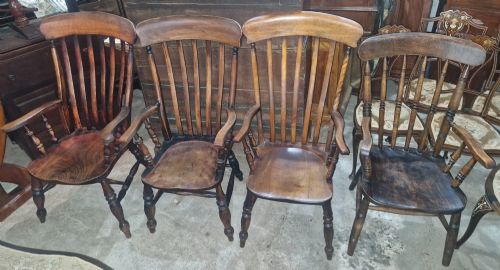
An English country windsor chair brings tactile warmth and vernacular strength to a room, built from solid native timbers by provincial joiners.
English Country Windsor Chair
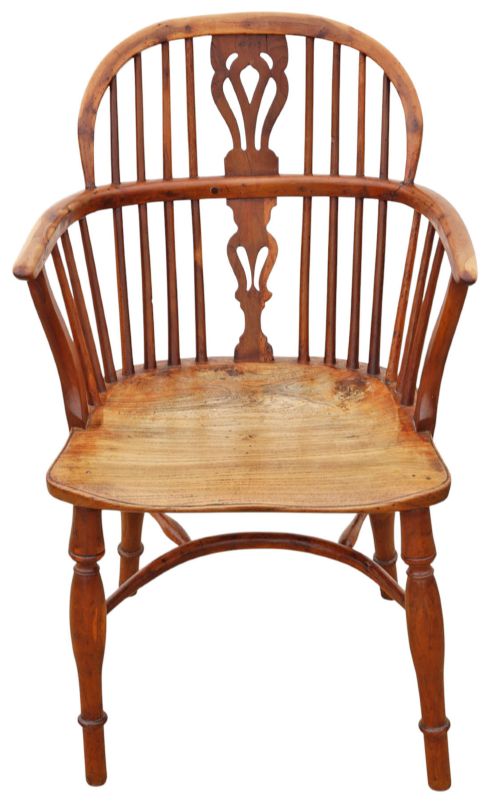
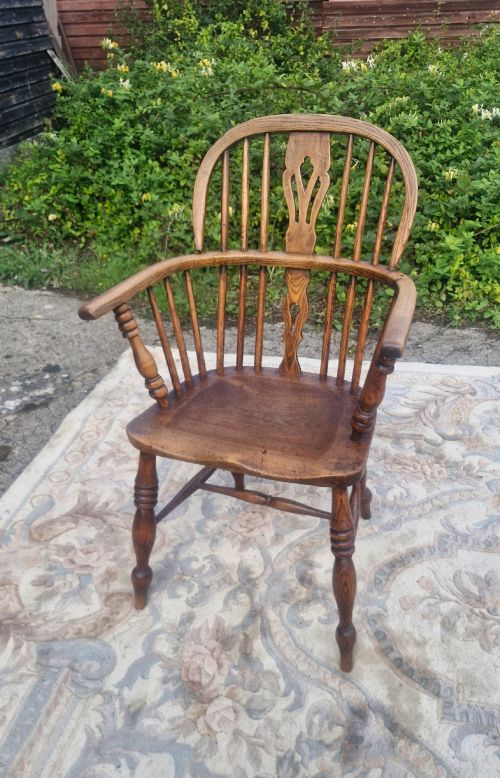
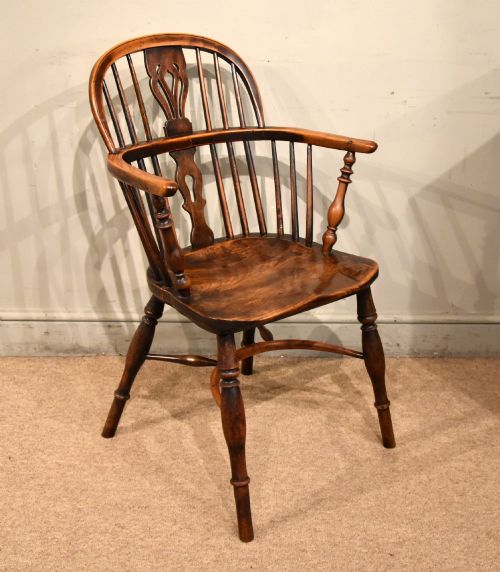
An English country windsor chair is a traditional seating form defined by its distinct construction, where legs and back spindles are wedged directly into a heavy solid wood seat rather than joined through a conventional frame.
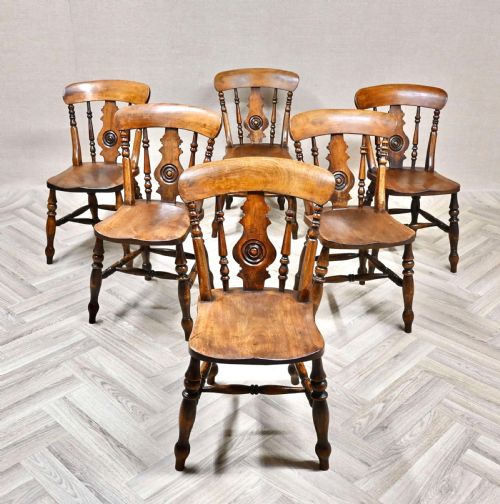
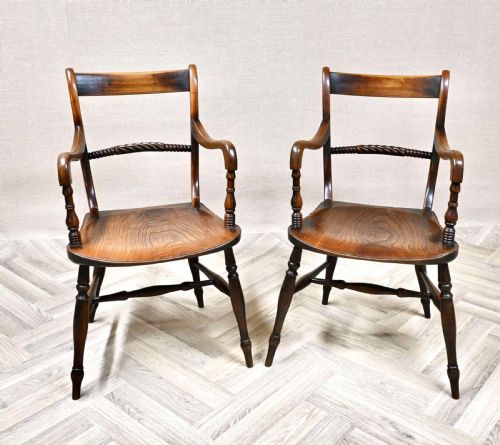
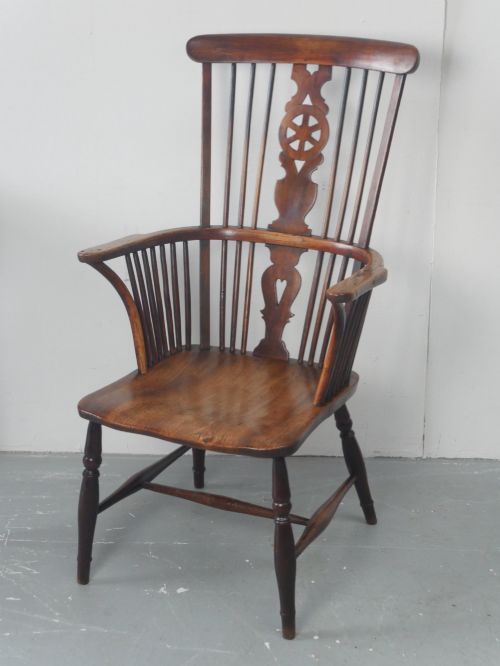
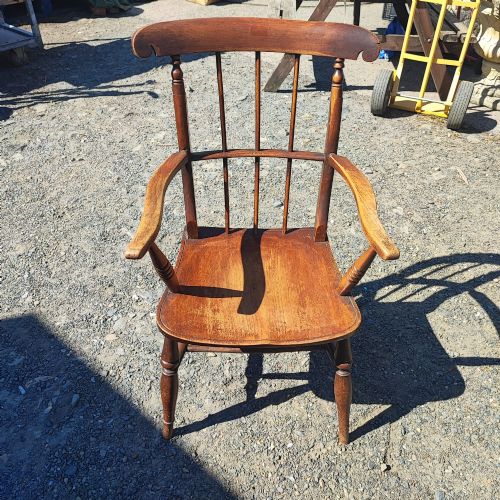
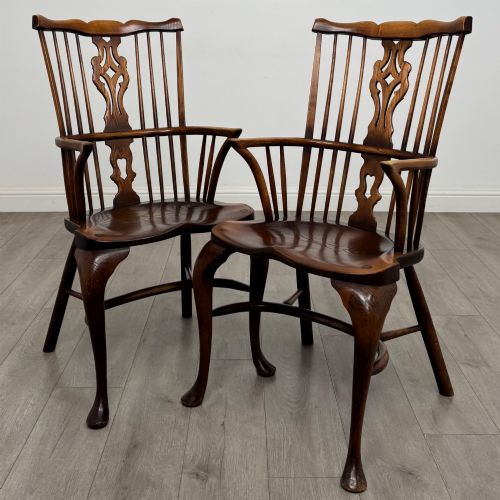
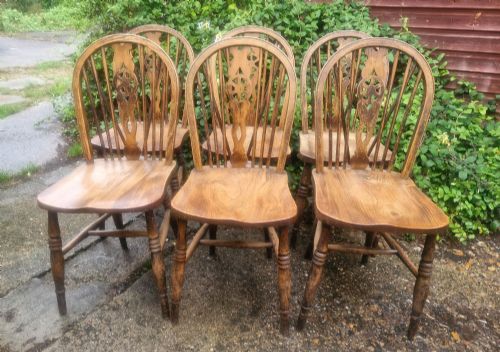
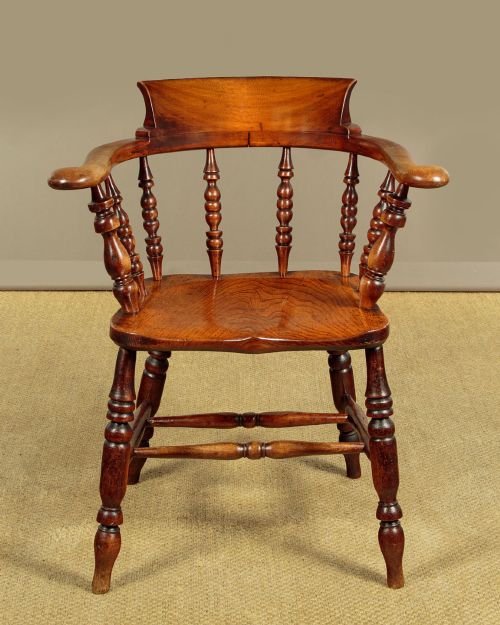
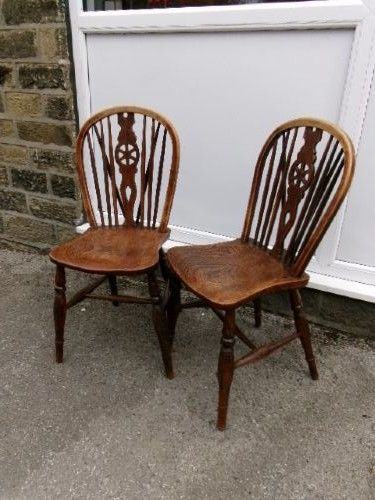
The selections available range from 18th century comb backs and georgian yew armchairs to 19th century wheelbacks, kitchen dining sets, and low back smokers bows.
Makers across provincial regions utilised local hardwoods to produce sturdy armchairs, carvers, and side chairs intended for domestic and farmhouse use.
How they were made
Constructed using a combination of turned and bent timbers, these chairs rely on elm for the thick contoured seat slab because its interlocking grain resists splitting under pressure.
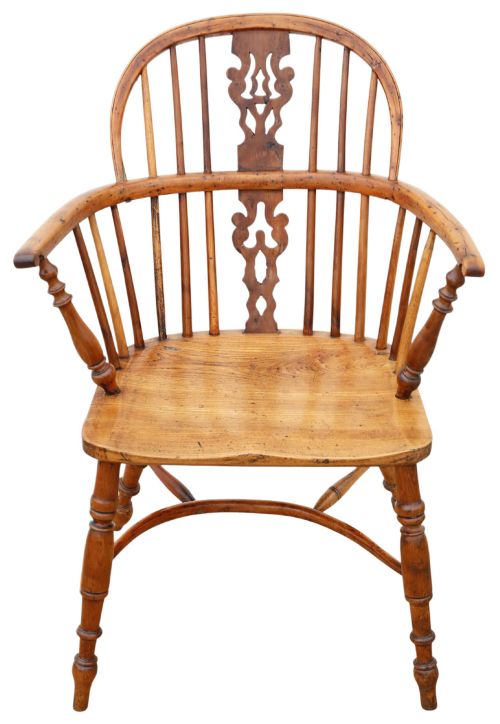
The bending elements, such as hoop backs and arm bows, utilise steam-bent ash or yew, whilst spindles and legs are turned from beech, oak, or fruitwood.
Joinery relies on wedged tenons and mortises, binding the rigid components together without relying on metal fixings.
English Country Windsor Chair Retail Price Guide 2026
Typical asking prices for english country windsor chair among the pieces listed under this phrase on Sellingantiques today, from the lower quarter to the upper quarter. They describe what is for sale here now, not the wider market.
Elm, ash, and yew wood emerge as the primary materials utilised across these vernacular seating forms.
What varies in quality
The distinction between ordinary and exceptional examples rests in the choice of timber, particularly the dramatic figuring found in yew wood and the depth of the adzed saddle seat.
Proportions dictate visual balance, with superior pieces displaying tapered spindles, well-defined arm scrolls, and retaining their original height without excessive wear to the foot base.
Maker marks stamped into the woodwork add provenance, whilst matched sets demonstrate greater desirability than assembled groups.
The English Country Windsor Chair Glossary
- Comb back
- A Windsor chair variation featuring a high rectangular or arched top rail supported by vertical spindles, resembling the teeth of a dressing comb. This form provides elevated back support and dates frequently to the 18th century.
- Smokers bow
- A low-backed Windsor armchair with a continuous curved arm rail and turned spindles, commonly found in 19th century domestic and commercial settings. It is also known historically as a captain's chair.
- Wheelback
- A Windsor chair incorporating a pierced wooden splat shaped like a carriage wheel within the backrest. This decorative motif gained popularity during the Victorian period.
- Broad arm
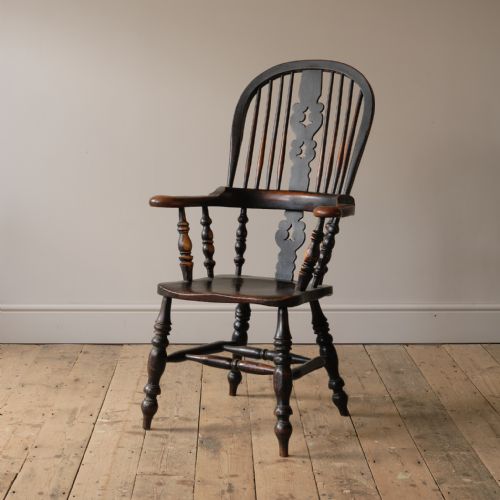
- An armchair design featuring an enlarged, flattened paddle-like wooden armrest on one or both sides. This vernacular adaptation served practical writing or working needs in farmhouses.
- Stretcher
- A horizontal wooden rod connecting the legs of a chair to provide structural rigidity. Provincial makers turned these components in various patterns to reinforce the underframe.
English Country Windsor Chair: Frequently Asked Questions
What is a Windsor chair?
A Windsor chair is a distinct seating form characterised by a solid wooden seat into which the legs, back, and arms are separately tenoned. This construction method creates a durable chair that relies on the strength of the thick seat plank to hold the components firmly.
Historically produced by rural craftsmen using native hardwoods, these chairs evolved into numerous regional styles across England, encompassing kitchen dining sets, low-backed reading chairs, and grand yew armchairs.
How do I identify a yew wood Windsor chair?
Yew wood Windsor chairs are recognised by their rich, warm reddish-brown timber featuring intricate grain patterns and natural knots. Yew was traditionally selected for finer armchairs due to its density and decorative visual appeal.
These pieces often command attention through their contrasting wood tones, pairing a highly figured yew bow or back with a substantial elm seat.
Were Windsor chairs used for dining?
Windsor chairs served versatile roles in domestic interiors, appearing frequently around kitchen tables and farmhouse dining spaces. Sets of matching kitchen chairs or wheelbacks were produced to accommodate families and guests.
Their robust construction made them practical for daily use, resisting the wear and tear of communal dining rooms and working country kitchens.
How can I tell the age of a Windsor chair?
Dating relies on observing structural details, such as the thickness of the seat, the turning profile of the legs, and the joining technique of the arm bow. 18th century examples often feature high comb backs and slender, elegant spindles.
Victorian and later 19th century variations frequently introduce wheelback splats, broader proportions, and machine-turned components that reflect industrial manufacturing shifts.
How do I care for an antique wooden chair?
Preserving an antique wooden chair involves maintaining stable indoor humidity levels and keeping the timber away from direct heat sources. Applying traditional wax feeds the dry wood and protects the historic surface finish without sealing it.
Regularly checking the joints for movement ensures that any loose wedged tenons can be secured before structural damage occurs.