
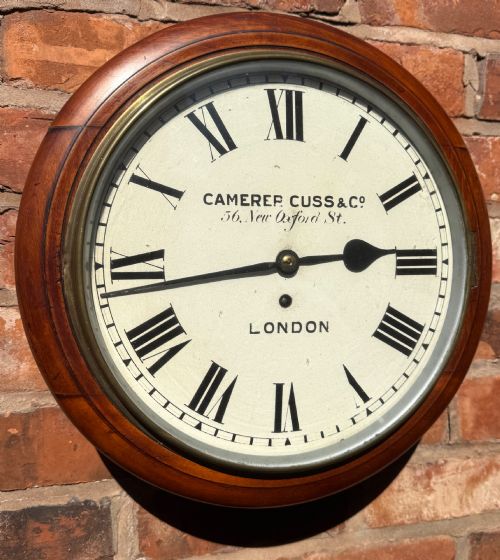

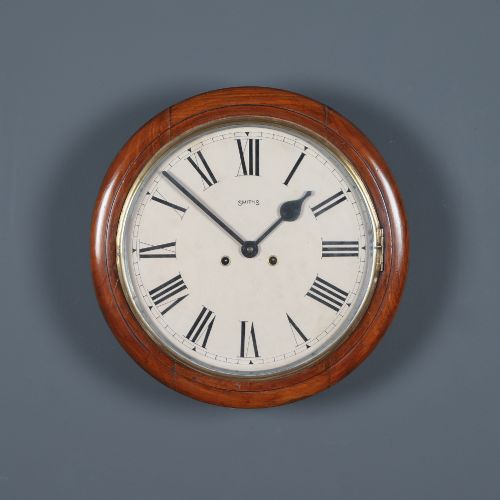
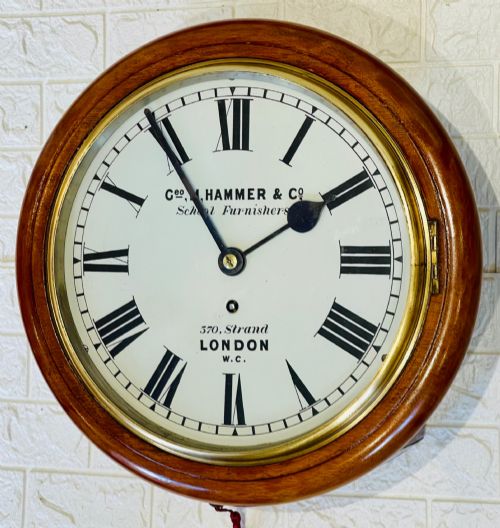
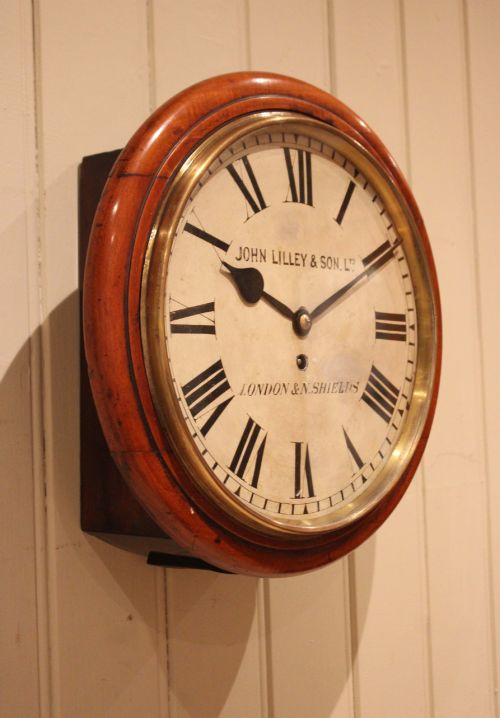
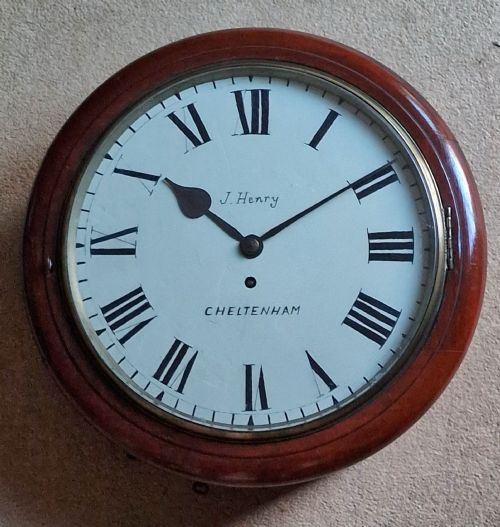
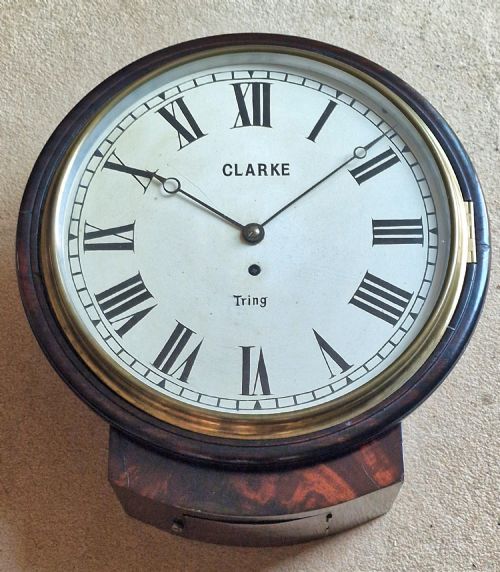
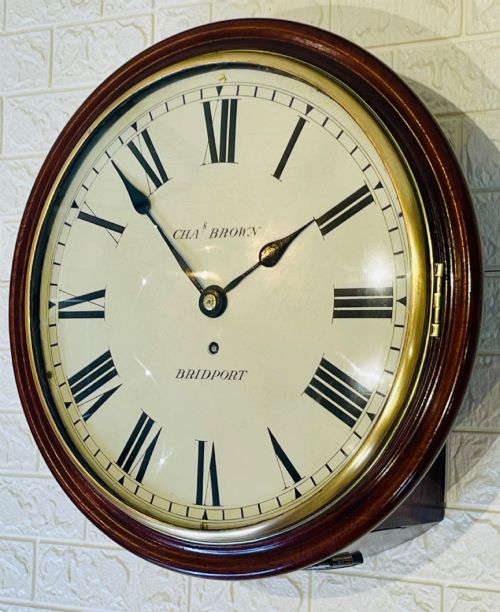
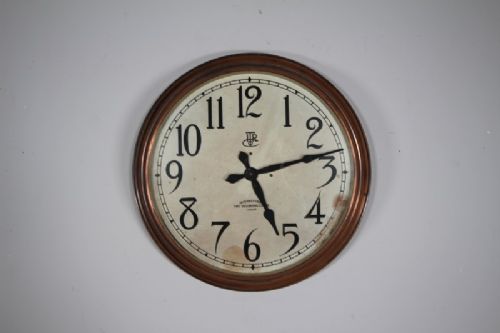
English Circular Wall Clock
An english circular wall clock brings steady nineteenth-century timekeeping to a room, combining brass, mahogany, and clear painted dials in a practical round form.
English Circular Wall Clock
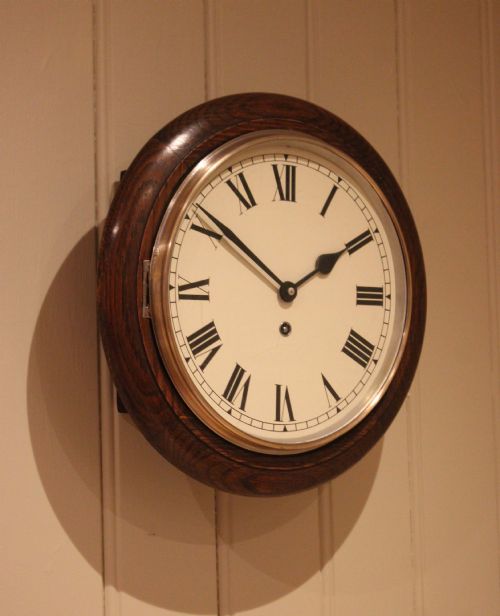
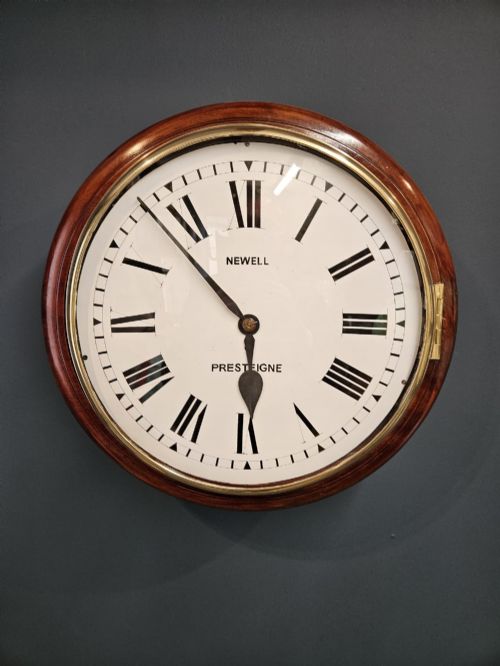
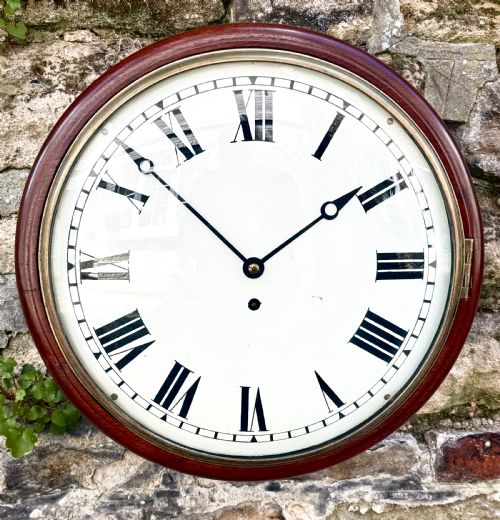
When you search for an english circular wall clock, you encounter timepieces designed for public spaces, railways, stations, and domestic rooms from the Georgian, Victorian, and Edwardian eras. These round pieces typically feature wooden cases housing precise movements behind protective glass bezels.
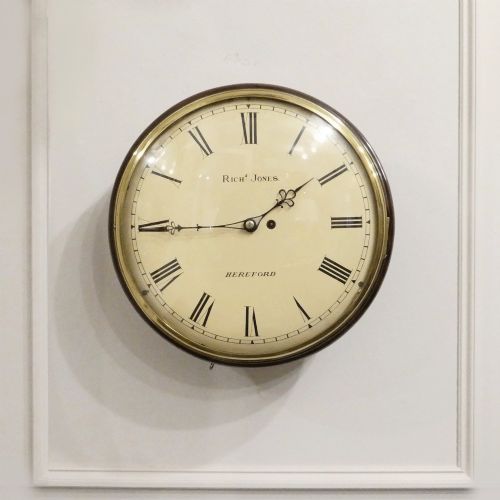
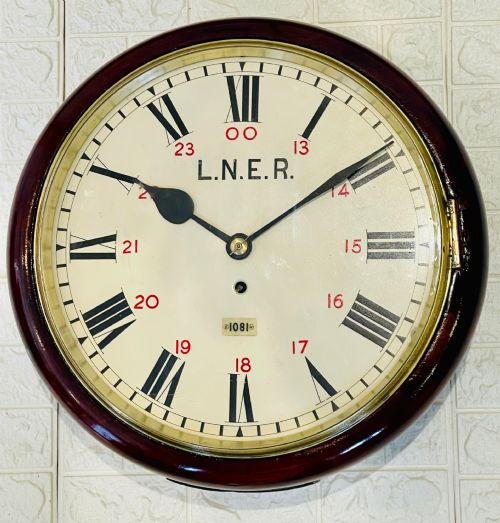
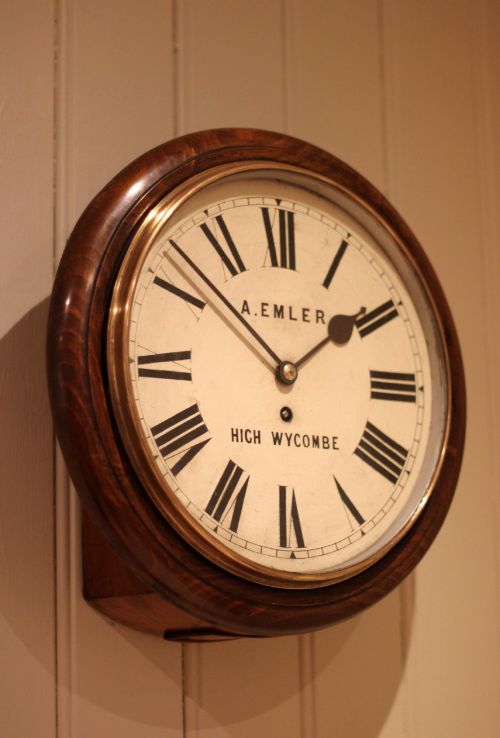
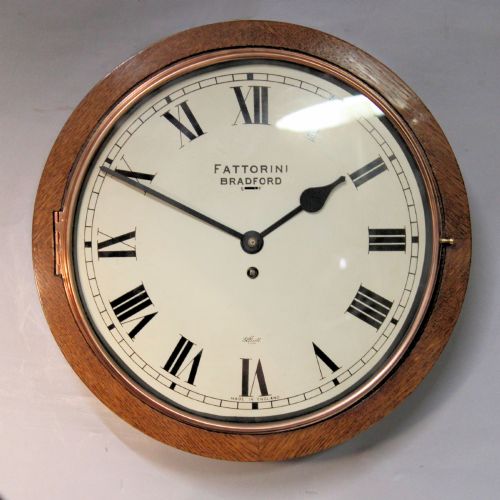
The version you are most likely to meet on this page is the fusee dial clock, often cased in mahogany or oak and marked with provincial or London maker names. Many examples originate from railway companies like the GWR or LNER, built for heavy daily service.
The selection spans simple school clocks to large factory and regulator wall pieces, reflecting the diverse practical demands of nineteenth and early twentieth-century British life.
Distinctions in Quality
The standard of a dial clock rests on the crispness of the painted metal face, the depth of the mahogany or oak timber case, and the finish of the brass bezel.
Maker reputation and the complexity of the movement, such as a well-adjusted fusee or lever escapement, separate standard utility pieces from finer examples signed by established London or provincial clockmakers.
Richard Jones of Hereford·Camerer Cuss and Co London·John Walker London·Francis Perigal London·Thomas Hedge of Colchester
The English Circular Wall Clock Glossary
- Fusee
- A conical pulley used in mechanical clocks to equalise the torque of the mainspring as it runs down. This mechanism ensures consistent timekeeping throughout the eight-day cycle.
- Dial
- The face of the clock where hours and minutes are marked. On these wall pieces, dials are typically painted metal protected by a brass-framed glass door.
- Bezel
- The ring, often made of brass, that holds the glass protecting the dial. It usually opens on a hinge to allow hand-setting and winding.
- Timepiece
- A clock that tells the time without striking the hours or chiming. Many railway and station clocks are simple timepieces built for pure utility.
- Escapement
- The mechanism that controls the release of gear train energy to the pendulum or balance wheel. Common types include anchor and lever escapements.
English Circular Wall Clock: Frequently Asked Questions
How do I wind an english circular wall clock?
Most fusee wall clocks require a specialised winding key inserted through a small hole in the dial face. Turn the key gently clockwise until resistance indicates the mainspring is fully wound.
Take care not to overwind the movement, as this can strain the fusee chain or spring. Regular weekly winding keeps the beat steady.
Why do some clocks have railway company letters?
Railway companies like the Great Western Railway or London and North Eastern Railway utilised regulated timepieces across stations and offices. These marked dials ensured synchronized operations for trains and staff.
Today, these company initials add historical provenance to the piece, connecting domestic interiors with the expansion of British transport.
How do I distinguish a Victorian clock from a Georgian one?
Georgian clocks tend to feature simpler, robust mahogany cases with clean sightlines and traditional brass bezels. Maker signatures on these earlier pieces often appear directly on the dial.
Victorian and later examples frequently introduce darker walnut frames, specialised railway markings, or alternative escapements like the lever, reflecting mass production and changing industrial demands.
Where should I hang a heavy dial clock?
Mount the clock directly onto a solid wall stud or masonry using sturdy fixings that can support the considerable weight of hardwood cases and brass movements. Secure hanging prevents vibration from disturbing the pendulum beat.
Ensure the wall is level so the pendulum swings freely and the clock keeps accurate time without stopping.