





Victorian Railway Wall Clock
A victorian railway wall clock brings utilitarian precision into a room with heavy mahogany cases and clear white dials.
Victorian Railway Wall Clock
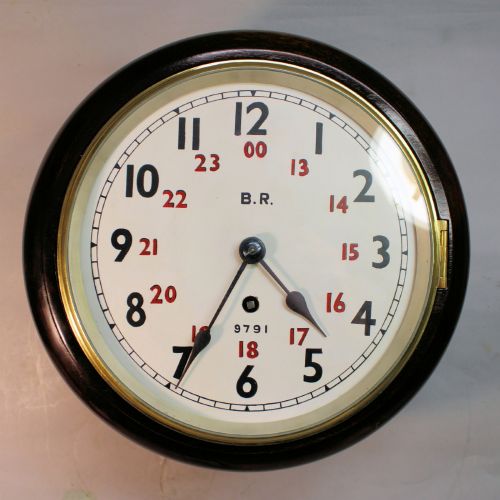
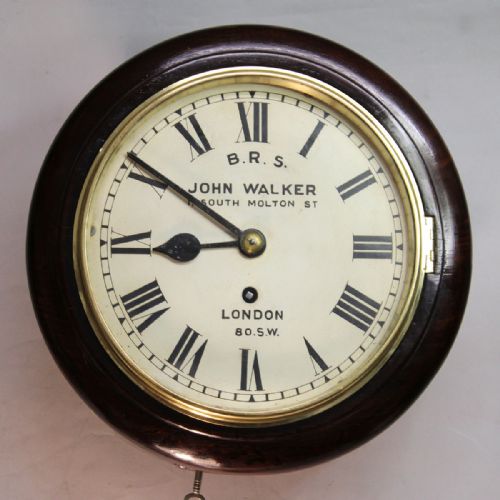
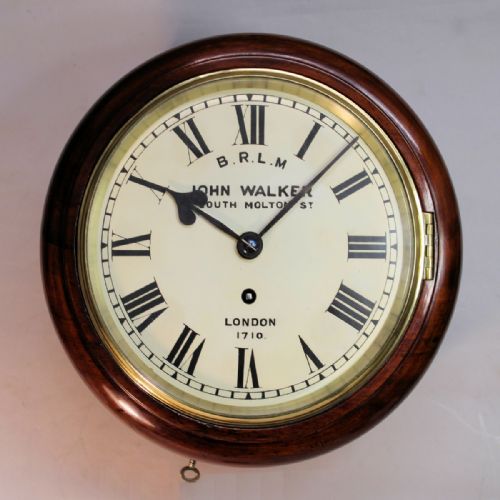
A buyer seeking a victorian railway wall clock investigates circular dial timepieces made for transport networks, station offices, and platforms. These clocks appear in round mahogany, oak, and beech cases designed to hang high on public walls for instant legibility. The specimens found here range from mid nineteenth century fusee movements to later twentieth century examples associated with regional lines.
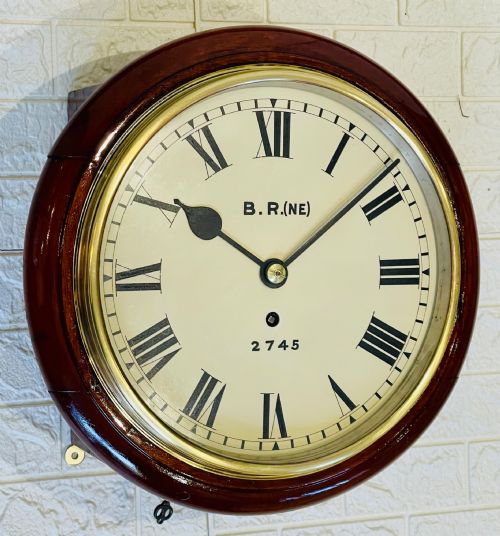
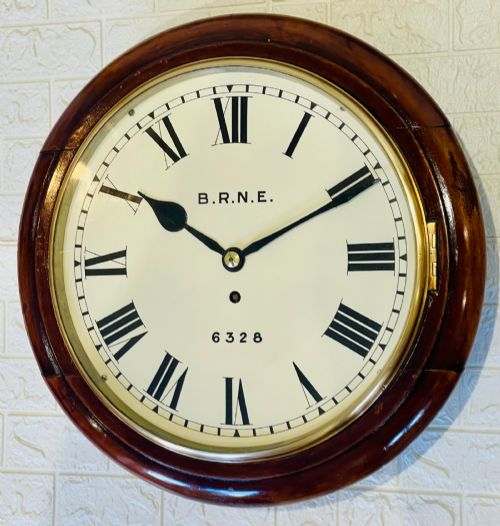
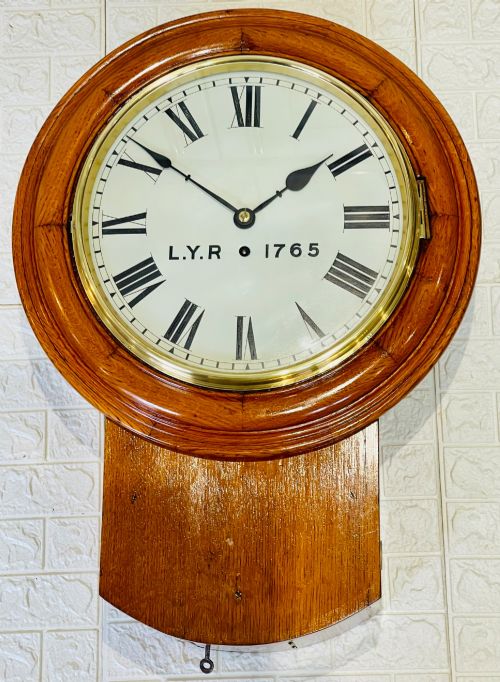
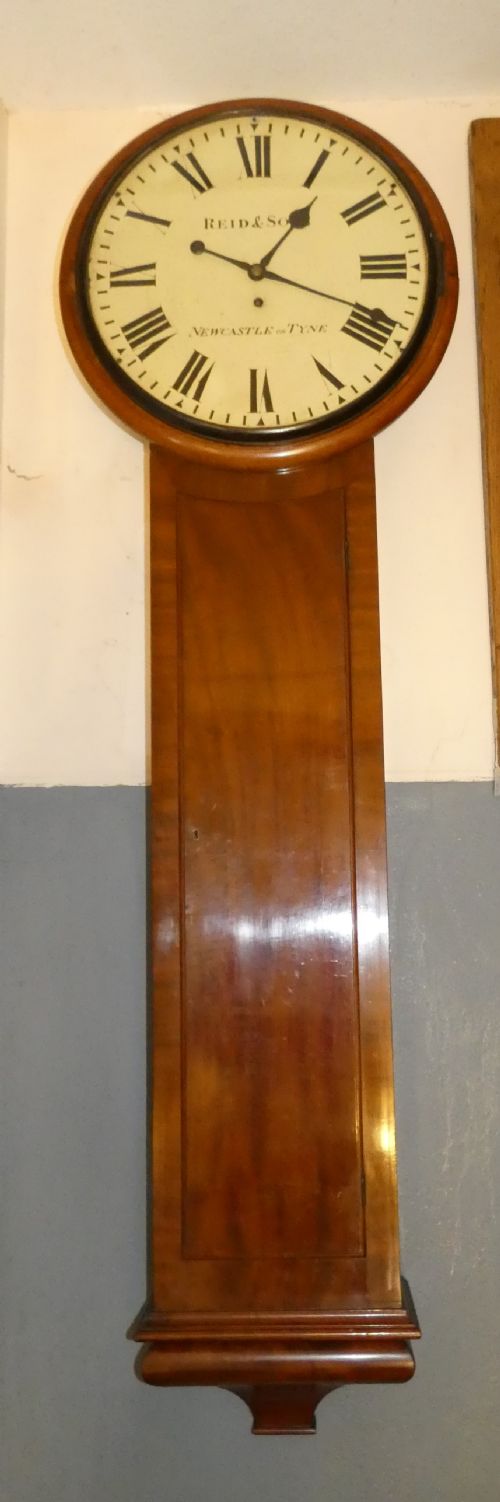
The most frequent versions encountered on this page feature mahogany frames housing dependable fusee movements and bold painted iron dials. Many pieces bear company lettering or provenance linked to specific networks like the Great Western Railway or the London, Midland and Scottish Railway. Cases vary from simple drum shapes to drop dial designs that accommodated the weight and depth of the mechanical movement.
Materials and construction
Makers utilised dense timbers such as mahogany, oak, and beech to construct robust cases capable of enduring the vibrations and heavy atmosphere of busy stations. These wooden frames enclose heavy brass mechanical works, often driven by a fusee movement that maintains even tension as the mainspring unwinds. Glass covers protect the painted iron or wood dials, securing the face against dust and moisture.
The dial faces typically feature clear black numerals painted onto a white ground, allowing porters and passengers to read the time accurately from a distance. Case construction often incorporates side doors or bottom access boxes secured with brass locks to permit routine winding and regulation by station staff.
Materials recorded across current listings include mahogany, oak, beech, brass, glass, and painted iron.
Judging quality and provenance
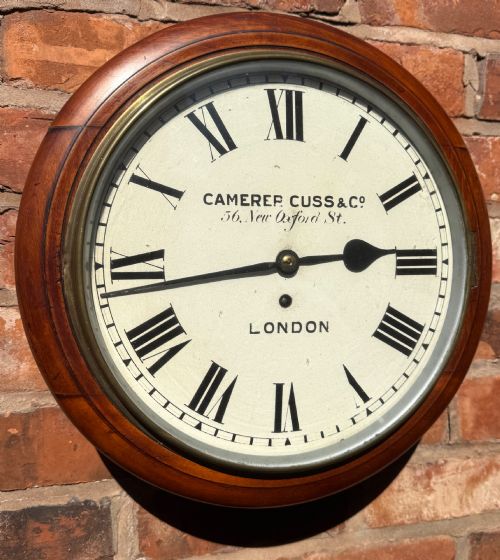
The distinction between standard utility timepieces and superior examples lies in the crispness of the movement and the documented history of the piece. Clocks bearing the names of esteemed makers such as John Walker or Camerer Cuss demonstrate finer finishing on the brass gears and plates. Original dial paintwork that retains its authentic lettering without heavy restoration commands greater regard among serious collectors.
Case timber selection also marks the hierarchy of these objects, with well figured mahogany and clean structural joinery representing the upper tier of production. Simpler beech or oak workshop clocks serve a different purpose, showing the practical side of nineteenth century timekeeping without the refinement of terminus clocks.
Camerer Cuss & Co London·John Walker·Anglo Swiss Watch Co·Thomas Gibbs Stratford
The Victorian Railway Wall Clock Glossary
- Fusee
- A conical pulley connected to the mainspring by a chain or cord, designed to equalise the torque as the spring unwinds. This mechanism ensures consistent timekeeping throughout the duration of the wind.
- Drop dial
- A clock case featuring an extended lower wooden trunk beneath the circular dial to accommodate the pendulum swing and the weight drop. This form allows a compact face to sit above a secure mechanical housing.
- Dial clock
- A wall timepiece characterised by a prominent round face and a shallow rear box enclosing the movement. These clocks were standard issue for offices, schools, and railway platforms.
- Regulator
- A high precision clock designed to keep exact time and often used to set other timepieces in a station or workshop. They feature fine adjustments and sturdy mechanical construction.
Victorian Railway Wall Clock: Frequently Asked Questions
How do I wind a fusee wall clock?
Winding requires inserting a dedicated key into the small aperture on the dial face and turning it gently until resistance stops the barrel. Care must be taken not to overwind the mechanism.
Most fusee movements run for eight days on a single wind, making weekly maintenance standard practice for these clocks.
Where were these clocks originally hung?
Railway clocks were installed in booking halls, station masters offices, platform shelters, and telegraph rooms across the network. Their robust construction allowed them to withstand coal smoke, steam, and constant vibration.
Today, buyers frequently hang them in hallways, kitchens, or living spaces where their bold proportions anchor the room.
How do I identify railway company markings?
Many dials and cases display painted or stamped initials corresponding to specific networks, such as GWR for Great Western Railway or LMS. Station names are sometimes painted directly onto the dial face or engraved on brass plaques affixed to the timber case.
Unmarked examples often share identical case profiles and movement standards with documented station clocks, having lost their specific insignia during twentieth century grouping operations.
Are these clocks suitable for daily timekeeping?
Mechanical railway clocks are capable of reliable timekeeping when properly serviced and correctly mounted on a solid wall. The heavy pendulum requires a plumb installation to ensure the beat remains even.
Minor adjustments to the pendulum bob regulate the speed, allowing the clock to maintain accuracy over its running cycle.