



English Chinoiserie Earthenware
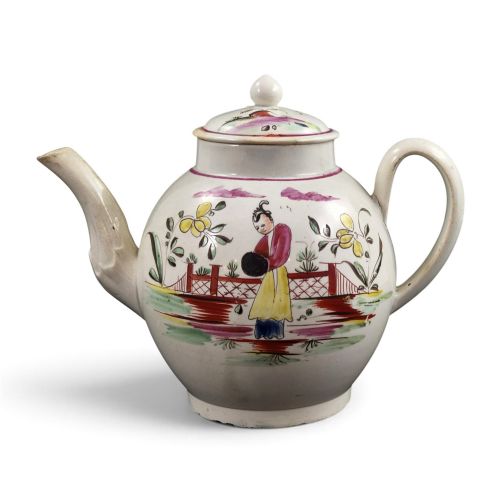
English chinoiserie earthenware encompasses tin-glazed chargers, creamware teapots, and pearlware plates decorated with oriental scenes, offering collectors a tangible link to eighteenth- and nineteenth-century tastes.
English Chinoiserie Earthenware
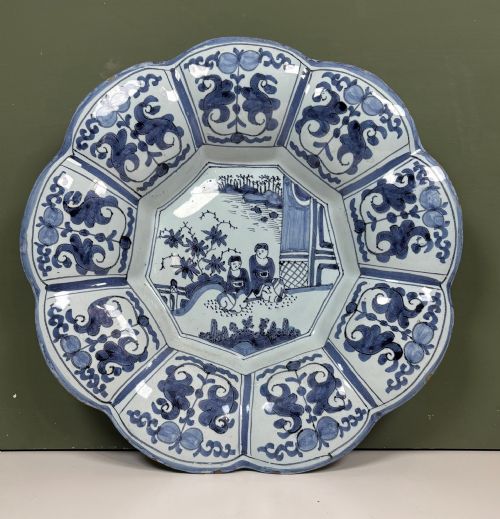
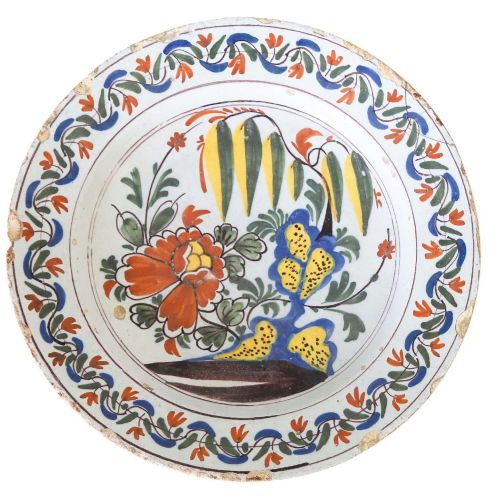
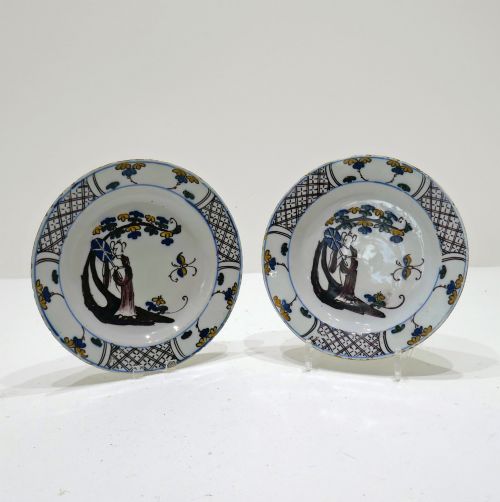
When buyers search for english chinoiserie earthenware, they encounter a diverse array of ceramic objects spanning the eighteenth and nineteenth centuries, including chargers, plates, serving dishes, and teapots. These pieces reflect European interpretations of East Asian artistic motifs, rendered through various ceramic bodies.
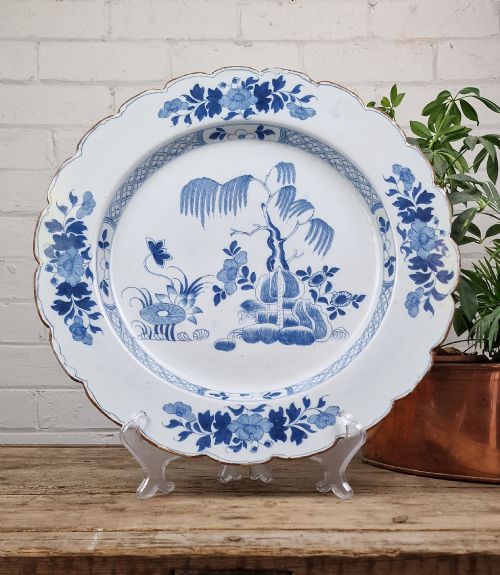
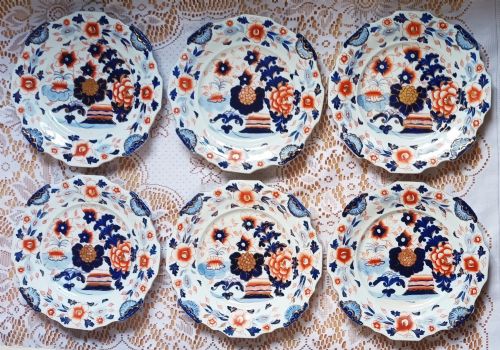
The most common examples on this page belong to the eighteenth-century delftware tradition, alongside nineteenth-century ironstone and pearlware items. Forms range from large display chargers to functional dinner service components, capturing distinct periods of production from Bristol, Lambeth, and other pottery centres.
Materials and Techniques
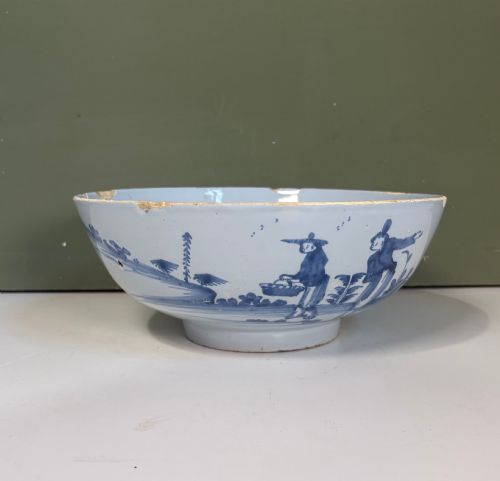
Potters utilised earthenware and ceramic bodies, often coating them with tin glaze or enamel to provide a smooth surface for hand-painted or transfer-printed decoration. Cobalt pigment frequently supplied the blue tones found in early pieces, while polychrome palettes incorporated additional mineral colours.
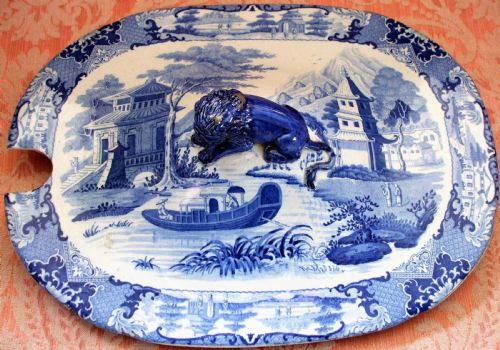
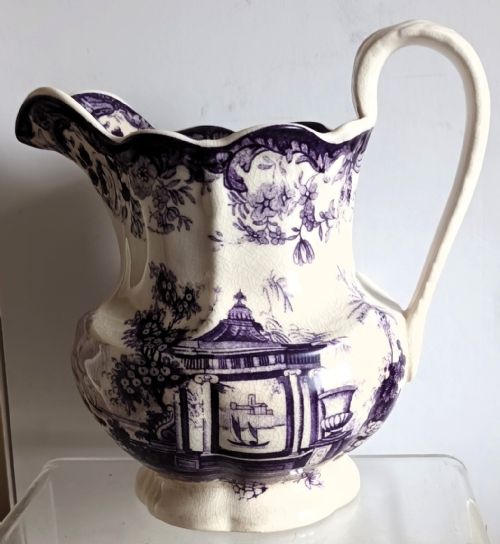
Transfer printing technology emerged alongside traditional hand-painting during the Georgian and Regency periods, allowing complex pictorial scenes like the Canton River pattern to be applied mechanically to pearlware and ironstone.
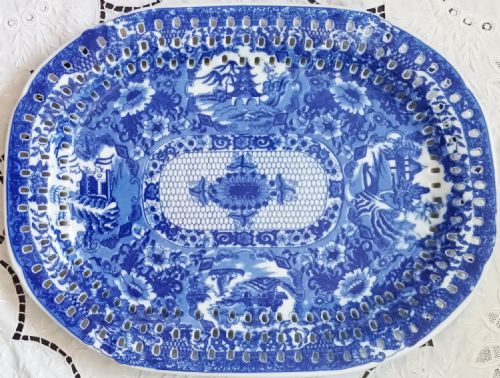
Garden seats and meat drainers appear among the plates, proving that nineteenth-century dinners required serious infrastructure.
Evaluating Quality
Quality in these ceramics depends on the crispness of the transfer print or the brushwork control in hand-painted polychrome and blue-and-white designs. Superior examples display precise line work and harmonious colour application without excessive blurring or glaze pooling.
The complexity and scale of the form also influence standard, with large pierced serving dishes and marked ironstone pieces representing higher degrees of manufacturing skill during the Georgian and Victorian eras.
Robert Hamilton·C.J. Mason·Miles Mason·Minton·Wedgwood
The English Chinoiserie Earthenware Glossary
- Pearlware
- A refined earthenware developed in the late eighteenth century by Josiah Wedgwood and others. It possesses a subtle bluish tinge in the glaze due to the inclusion of small amounts of cobalt.
- Ironstone
- A dense, durable type of ceramic patented in the nineteenth century by Mason and others. It bridges the gap between earthenware and porcelain in terms of weight and strength.
- Clobbered
- A term describing older white or blue-and-white ceramics subsequently embellished with colourful overglaze enamels. This secondary decoration was often applied to update older stock.
- Charger
- A large decorative plate or dish intended primarily for display on a wall or sideboard rather than for dining use. Eighteenth-century examples often feature hand-painted chinoiserie motifs.
English Chinoiserie Earthenware: Frequently Asked Questions
What is English delftware?
English delftware is a tin-glazed earthenware produced primarily during the seventeenth and eighteenth centuries. Potters coated a buff-coloured clay body with an opaque white glaze before applying hand-painted designs.
Many pieces draw inspiration from Chinese porcelain imports, resulting in the characteristic blue-and-white or polychrome chinoiserie scenes seen on chargers and plates from this era.
How do I date these ceramics?
Dating relies on stylistic clues, ceramic bodies, and manufacturing techniques. Eighteenth-century pieces typically feature tin glaze on soft earthenware bodies, while nineteenth-century items often utilise harder ironstone or pearlware.
Transfer printing became widespread by the early nineteenth century, replacing hand-painted motifs on many everyday tableware items produced during the Regency and Victorian periods.
What is transfer printing?
Transfer printing is a mechanical decoration technique developed in the eighteenth century. An engraved copper plate transfers an inked design onto tissue paper, which is then applied to the ceramic surface before glazing.
This method allowed potteries to produce intricate pictorial patterns, such as river scenes and pagoda landscapes, with a consistency that manual painting could not easily achieve.
How were chargers used?
Chargers are large plates primarily designed for display rather than service at the table. In eighteenth-century interiors, they were often mounted on walls or stood on sideboards to showcase decorative ownership.
Their generous surface area provided ample space for elaborate hand-painted chinoiserie landscapes and floral borders executed in cobalt blue or polychrome pigments.