




English Ceramic Figure
An English ceramic figure captures personalities, animals and allegories in fired earth or porcelain, spanning mantelpiece ornaments to cabinet statuary.
English Ceramic Figure
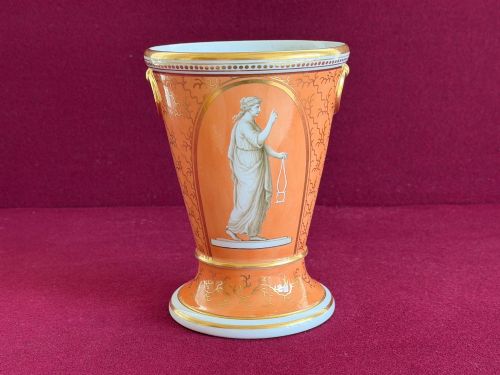
When searching for an English ceramic figure, buyers encounter a wide spectrum of domestic ornament ranging from robust Staffordshire earthenware pottery to delicate porcelain statuary. The forms include portrait figures, spill vases, Toby jugs, and animal groups that populated mantelpieces across the eighteenth and nineteenth centuries. The pieces on this page span Georgian sophistication, Victorian theatricality, and twentieth-century studio craft.
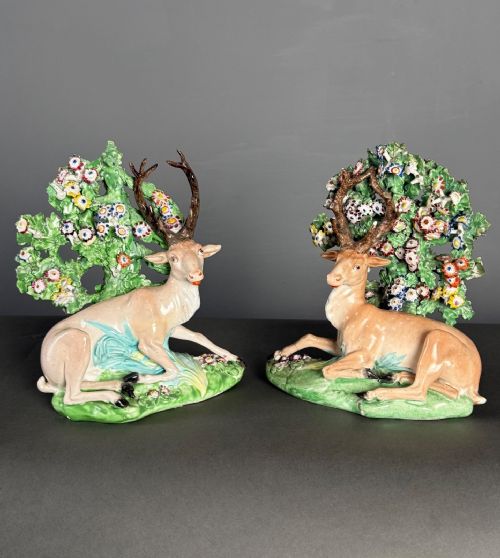
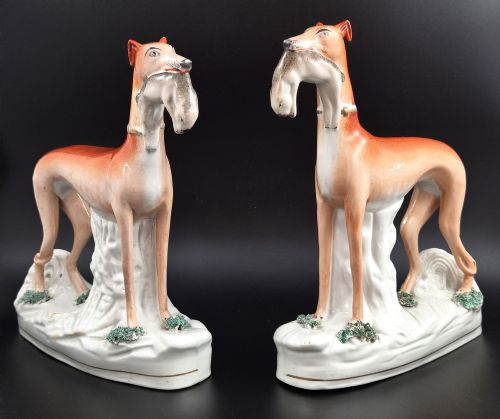
Most frequently, a buyer meets Staffordshire earthenware pottery from the nineteenth century, including pairs of comforter spaniels, greyhounds, and historical portrait groups. These mantelpiece ornaments were moulded to satisfy popular demand for recognizable characters, domestic animals, and topical events such as the Crimean War. Alongside them sit porcelain figures from factories such as Derby and Worcester, representing classical subjects or allegorical themes.
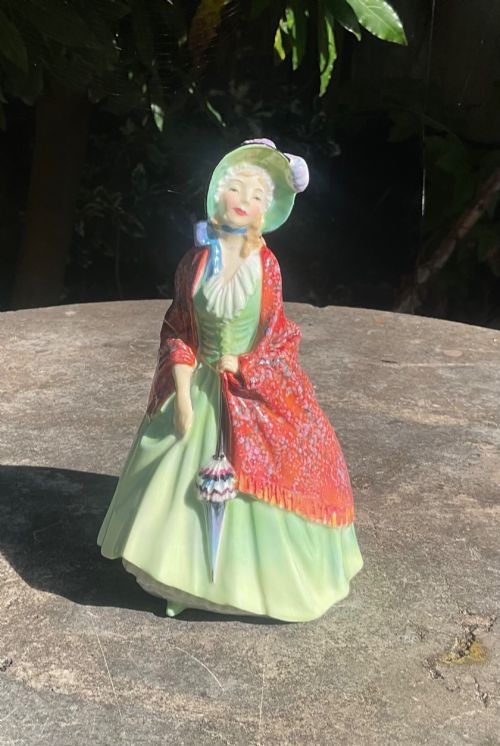
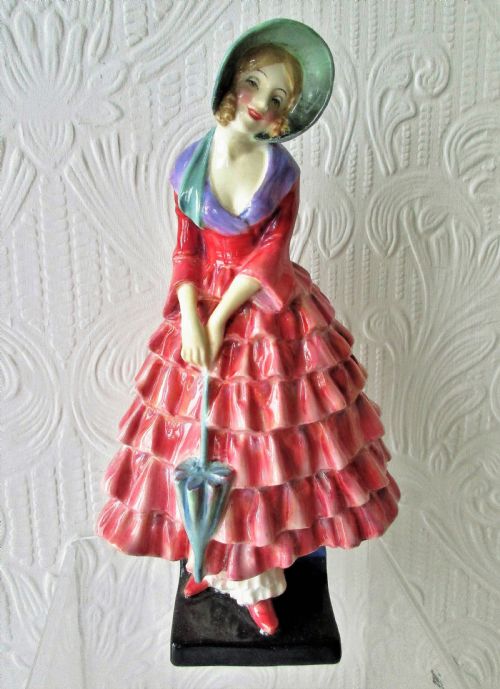
The objects also encompass bone china and porcelain figurines produced by Royal Doulton in the twentieth century, alongside studio pottery pieces that reflect individual artistic vision. Whether decorated with bright enamels or left in unglazed biscuit porcelain, each type represents the prevailing domestic taste of its period of manufacture.
How they were made
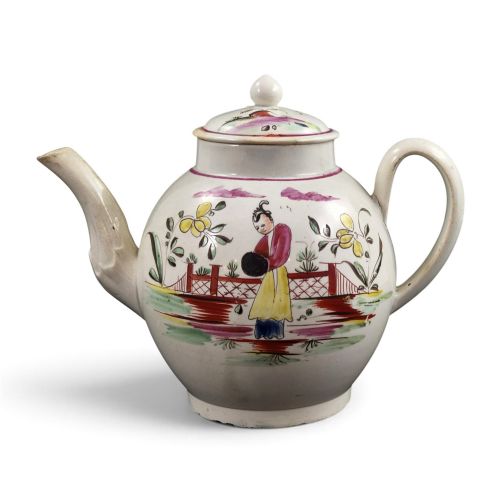
Makers utilised earthenware, bone china, soft-paste, and hard-paste porcelain, shaping the clay through press-moulding or slip-casting before firing in kilns. Earthenware figures received a tin or lead glaze, sometimes enhanced with pearlware treatments or pearl glaze finishes, whilst porcelain pieces often utilised a translucent body.
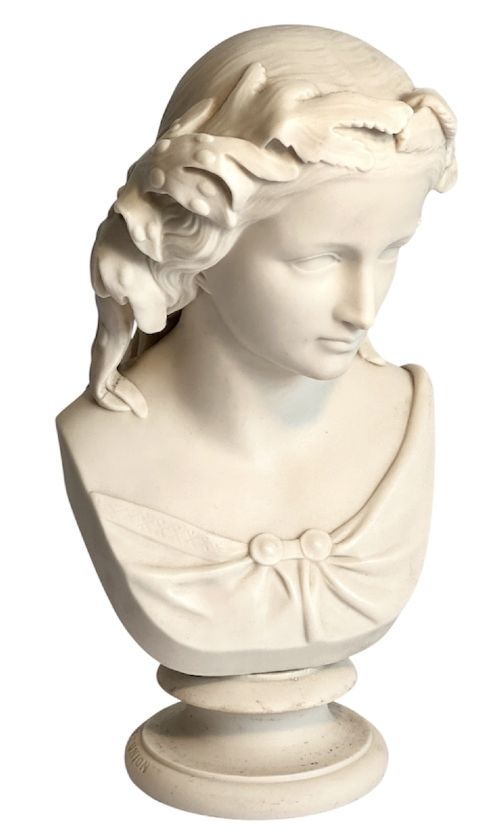
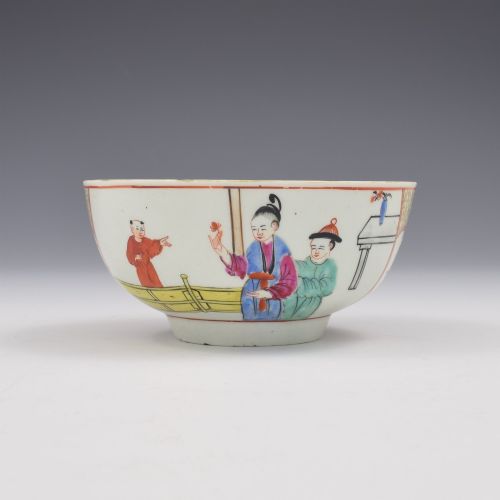
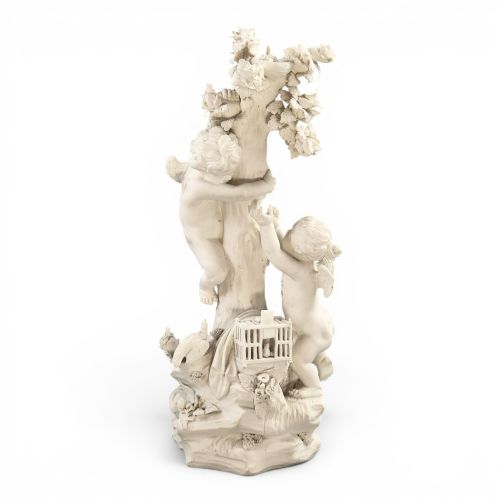
Surface decoration relied on hand-painted enamels, gilding with gold leaf, and cobalt blue underglaze painting, particularly on earlier porcelain bodies. Biscuit porcelain required no glaze, remaining unglazed to highlight the fine modelling of the clay surface, as seen in classical figures and portrait busts.
Materials represented across the inventory include enamel, earthenware, bone china, soft-paste porcelain, and gold leaf.
What varies in quality
The choice of body also defines the tier of production, shifting from coarse earthenware with simple coloured glazes to refined porcelain bodies with intricate gilding. A maker's mark or model number often indicates a standard of factory execution, distinguishing standard commercial output from superior works.
Royal Doulton·Flight & Barr Worcester·Derby·Charles Vyse·John Bevington·Copeland
The English Ceramic Figure Glossary
- Pearlware
- A fine earthenware developed by Josiah Wedgwood that featured a subtle blue-white tinted glaze over a whitish body. It was widely used for Staffordshire figures and tableware during the late eighteenth and early nineteenth centuries.
- Biscuit porcelain
- Unglazed fired porcelain that possesses a smooth, matte texture resembling marble. It was frequently utilised for neoclassical figures and portrait busts to emphasise sculptural form.
- Spill vase
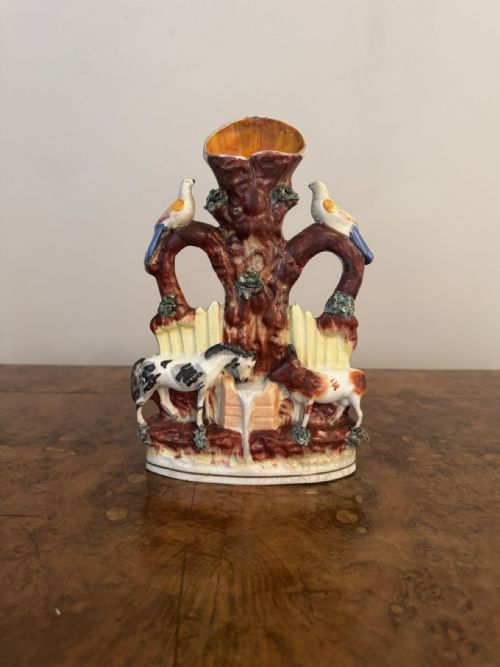
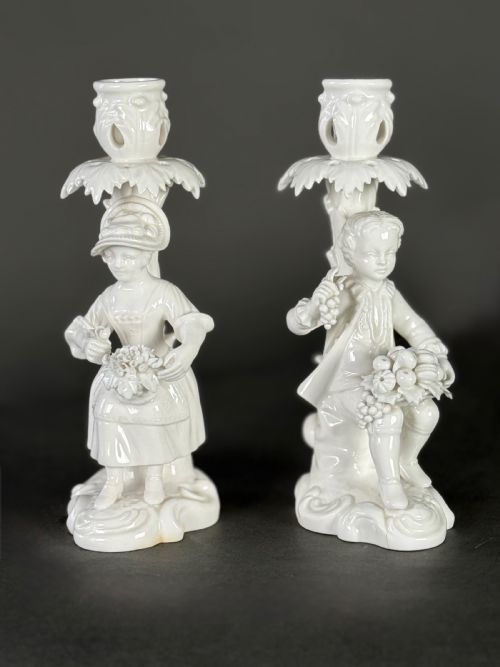
- A hollow cylindrical ceramic vessel attached to a figure, designed to hold taper spills for lighting candles or fires. These dual-purpose objects combined domestic utility with decorative display.
- Soft-paste porcelain
- An artificial ceramic composition made from white clay mixed with ground glass and other materials, fired at lower temperatures than hard-paste. It was characteristic of early English porcelain factories.
- Toby jug
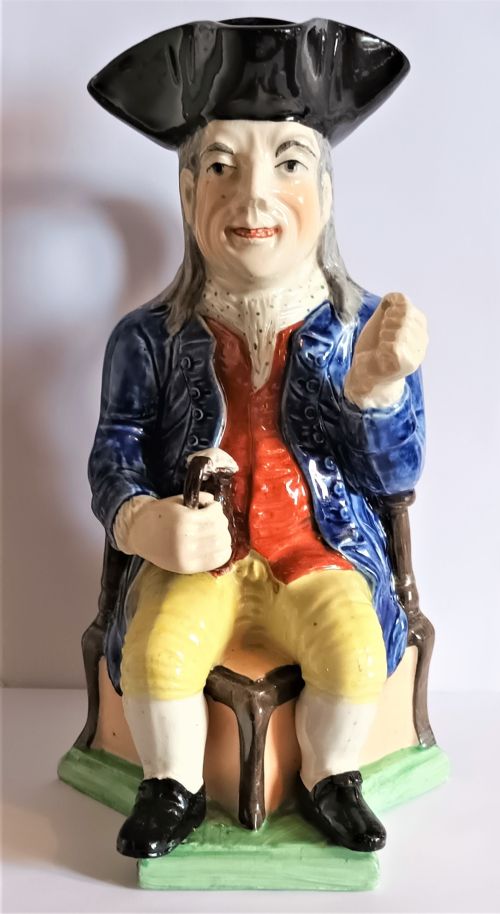
- A pottery jug modelled in the form of a seated stout man, usually wearing eighteenth-century attire and holding a mug of beer or a pipe. They became a staple of English ceramic production.
English Ceramic Figure: Frequently Asked Questions
How do I date a Staffordshire figure?
Dating relies on stylistic clues, glaze characteristics, and historical subject matter depicted by the piece. Figures commemorating specific nineteenth-century events provide a reliable terminus post quem for manufacture.
Changes in ceramic bodies, such as the transition from creamware to pearlware and later heavier earthenware, further help narrow the decade of production.
Were these figures meant for display?
Most ceramic figures were intended as parlour ornaments to be displayed on mantelpieces, brackets, or sideboards. They served as visible indicators of taste, loyalty, or domestic respectability.
Some forms, such as spill vases and tobacco jars, also served practical domestic functions alongside their decorative role.
What is the difference between earthenware and porcelain?
Earthenware is a porous, opaque pottery fired at lower temperatures and finished with an opaque or transparent glaze. It forms the heavy, robust body of most Staffordshire figures.
Porcelain is a vitrified, translucent ceramic fired at much higher temperatures, producing a more refined and delicate object suited for cabinet display.
Why do some figures come in pairs?
Pairs of figures, particularly animals like greyhounds or spaniels, were manufactured to flank a central fireplace ornament or mirror on a mantelpiece. This symmetry matched the interior design conventions of the period.
Human figures were also occasionally issued as companion pieces representing literary characters, historical figures, or allegorical concepts.