


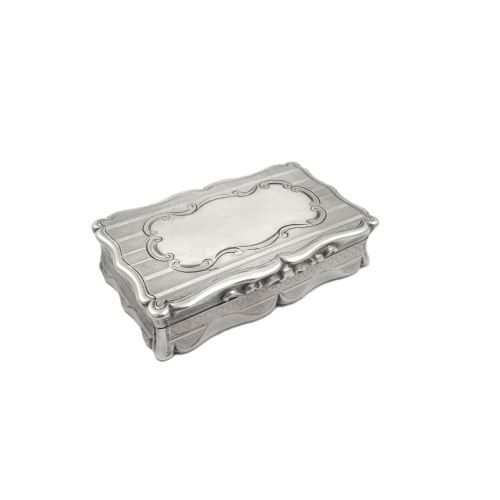


Engine Turned Silver Container
These engine turned silver container pieces bring pocket-sized luxury to the table, offering a tactile grip and brilliant shine that collectors prize.
Engine Turned Silver Container
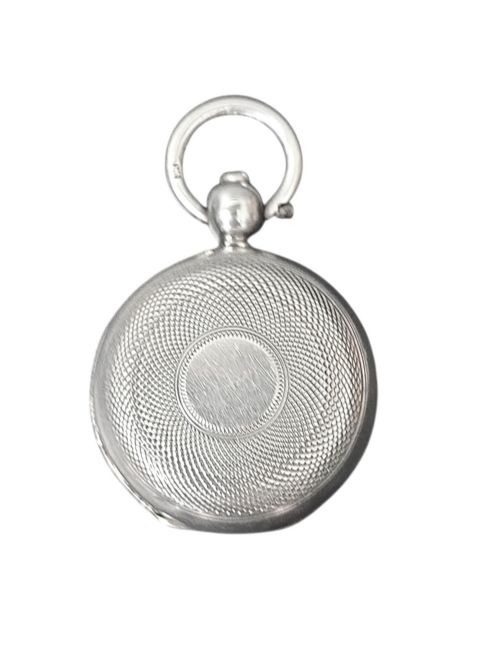
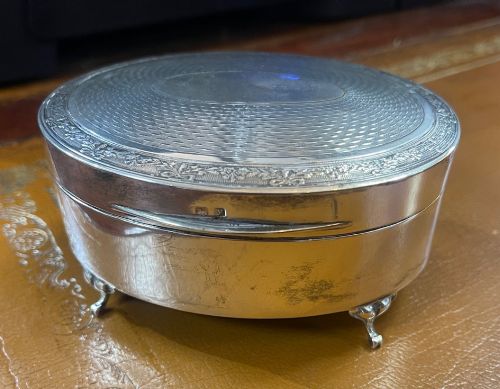
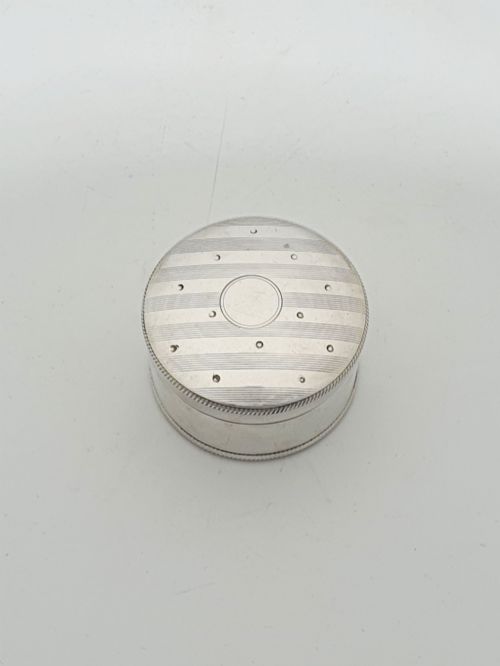
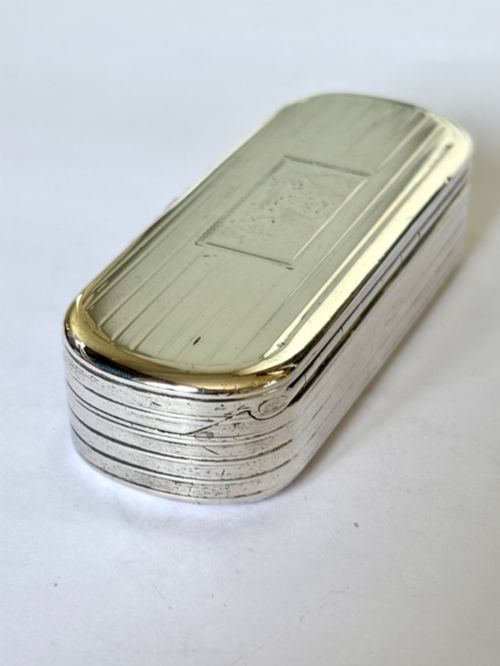
An engine turned silver container is a small personal vessel used historically for snuff, tobacco, sovereign coins, or cosmetics. The pieces seen here span from the Georgian period through the Victorian era and into the Art Deco and Mid-Century Modern years.
Snuff boxes and trinket boxes dominate the selection, alongside perfume bottles, tea caddies, card boxes, and vanity jars. Most examples appear in sterling silver or silver gilt, occasionally paired with amethyst glass or cut glass.
Makers working across Birmingham and London produced these portable objects to hold daily necessities. The surface decoration relies on repetitive geometric engraving rather than cast figural motifs.
What varies in quality
The clarity and crispness of the engine turned pattern separate fine work from worn examples, as mechanical engraving can soften through decades of handling. Weight and gauge of the sterling silver also dictate the substance of the container.
Maker marks from prominent silversmiths and clear hallmarking add distinction to an individual piece. The internal gilding on silver gilt boxes remains well preserved on superior pieces.
Engine Turned Silver Container Retail Price Guide 2026
Typical asking prices for engine turned silver container among the pieces listed under this phrase on Sellingantiques today, from the lower quarter to the upper quarter. They describe what is for sale here now, not the wider market.
A rising card tray inside a silver card box ensures polite discretion when presenting your visiting cards.
Aaron Lufkin Dennison·Robert Thornton·William Eaton·Henry Williamson Ltd·Nathaniel Mills
The Engine Turned Silver Container Glossary
- Engine turning
- A mechanical engraving technique that cuts intricate geometric patterns into metal surfaces. This method creates the signature textured finish found on many small boxes.
- Silver gilt
- Sterling silver that has been coated with a thin layer of gold on the interior or exterior. This process protects the silver from tarnishing in specific functional contexts.
- Hallmark
- An official stamp indicating the metal purity, place of assay, and date of manufacture. British pieces carry distinct town marks and date letters.
- Sovereign case
- A small fitted pocket case designed to hold gold sovereign coins securely. These containers often feature spring-loaded mechanisms.
- Snuff box
- A small hinged container used to hold powdered tobacco. These form a large portion of early pocket silver.
Engine Turned Silver Container: Frequently Asked Questions
What were engine turned silver containers used for?
These small vessels held personal items such as tobacco, snuff, sovereign coins, rouge, and visiting cards. People carried them daily in pockets or handbags.
Their compact size made them practical accessories for the pocket or dressing table. The tight lids kept contents dry and secure during travel.
How do I date a silver box?
British pieces rely on hallmarked date letters stamped directly into the metal. Assay office marks from London or Birmingham point to the location of testing.
Stylistic cues such as Art Deco geometry or Victorian ornamentation also help narrow the period of manufacture.
Are these boxes made of solid silver?
Most examples use sterling silver or silver gilt construction. Some vanity jars combine a solid silver top with a cut glass or amethyst glass body.
Gilt metal appears on specific accessory pieces alongside standard silver components.
How do I clean engine turned silver?
Soft cloths and gentle silver cleaners preserve the fine engraved lines of the pattern. Abrasive polishes wear down the crisp mechanical cuts over time.
Keeping the pieces dry prevents tarnish from settling into the small grooves of the engine turning.