


Silver Top Vanity Jar
When you search for a silver top vanity jar, you are looking at dressing table accessories combining precious metalwork with glassware.
Silver Top Vanity Jar
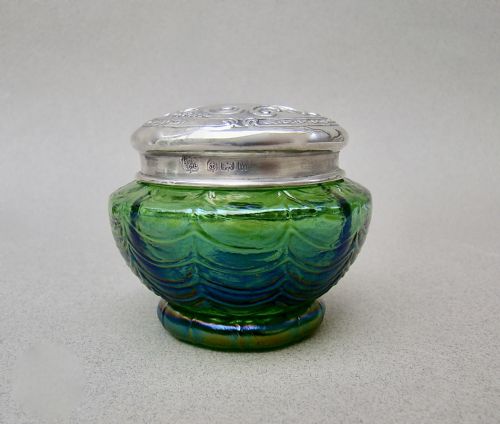
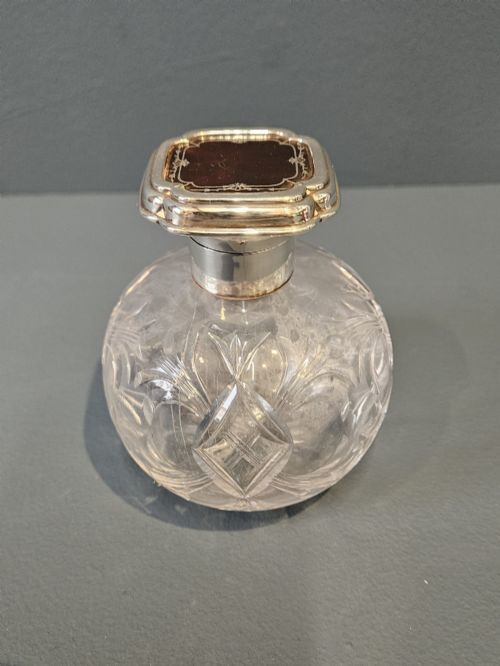
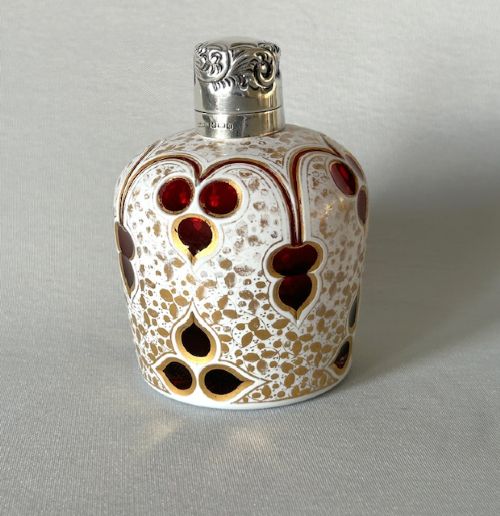
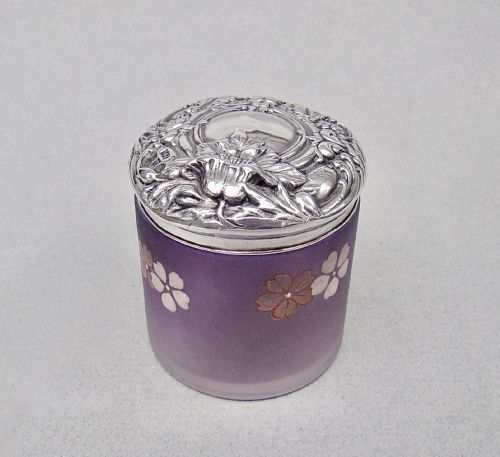
A silver top vanity jar combines a glass vessel with a sterling silver lid, designed for use on dressing tables and in travelling sets. These pieces range from compact scent bottles and trinket boxes to larger cylindrical and globular jars created to hold powders and cosmetics.
The pieces seen most frequently on this page originate from the Victorian and Edwardian eras, extending through the Art Deco period of the nineteen-twenties and nineteen-thirties. British manufacturing hubs such as Birmingham dominate the selection alongside continental European examples.
Buyers will encounter items spanning simple cut glass containers to elaborately decorated receptacles featuring coloured glass, enamel, and tortoiseshell inserts set into the silver mounts.
Materials and Technique
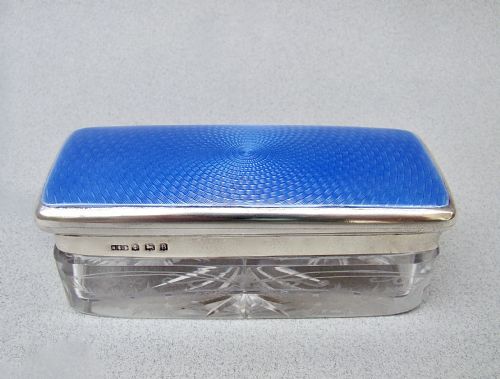
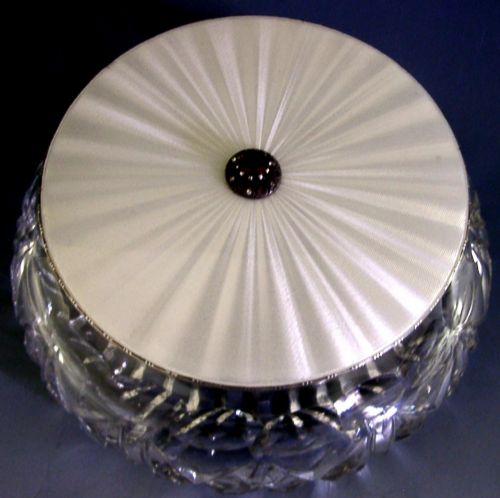
The construction relies on combining heavy glass bodies - often formed through moulding, cutting, or crystal blowing - with fitted sterling silver mounts and lids. Glass types vary from clear cut crystal to coloured, frosted, and cranberry glass, frequently paired with guilloché enamel or polished tortoiseshell.
Silver components were typically shaped using stamping and spinning techniques before being hand-finished and engraved, then stamped with hallmarks indicating the assay office, date letter, and maker's mark. These metal lids were engineered to fit snugly over glass necks ground down for a precise union.
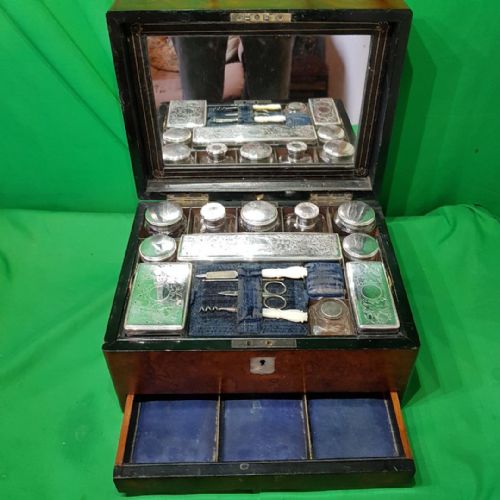
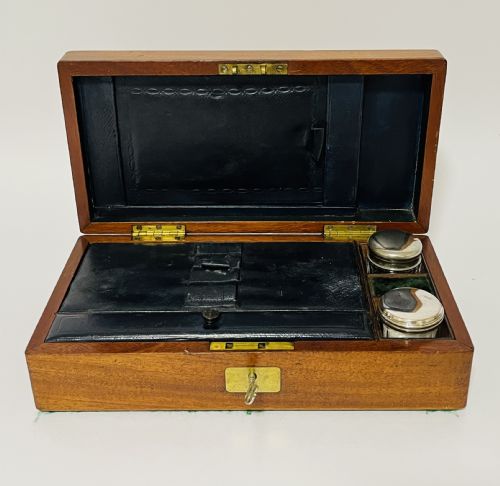
Some gentleman's travel sets included lockable silver bottles, ensuring nobody else tampered with your cologne.
Assessing Quality
Quality in these pieces is dictated by the depth and clarity of the glass cutting, the weight of the sterling silver used in the lid, and the intricacy of any secondary decoration like guilloché enamel or pinned tortoiseshell. Superior examples display crisp hallmarks, thick walled crystal, and flawless enamel without chipping.
The relationship between the glass body and the metal mount reveals the standard of manufacture, where higher grade items feature substantial silver gauges that retain their shape and tight closures against the glass rim over decades of use.
A. J. Pepper & Co·Henry Clifford Davis·Barnsley & Co·Adie Brothers Ltd·Goldsmith's and Silversmith's Co·W J Myatt & Co
The Silver Top Vanity Jar Glossary
- Guilloché enamel
- A decorative technique where intricate geometric patterns are machine-engraved into metal and covered with translucent coloured enamel. This process allows light to reflect through the coloured surface, frequently seen on Art Deco vanity pieces.
- Sterling silver
- An alloy consisting of ninety-two point five percent silver and seven point five percent other metals, usually copper. This standard composition provides the durability required for functional lids and mounts.
- Cut glass
- Glassware shaped and patterned by holding the vessel against a rotating abrasive wheel. The resulting deep facets catch light and add tactile weight to dressing table containers.
- Hallmark
- A series of official marks stamped onto precious metal items in the United Kingdom. These symbols designate the standard of purity, the assay office, and the year of manufacture.
- Tortoiseshell
- The mottled brown and amber shell of certain marine turtles utilised historically for decorative inlays. It provides a rich contrast when mounted beneath pierced sterling silver tracery.
Silver Top Vanity Jar: Frequently Asked Questions
What were silver top vanity jars used for?
These jars served as functional containers on dressing tables for holding powders, creams, pins, and cotton, or as portable receptacles within fitted travelling cases.
Their secure lids kept contents protected from dust while displaying the owner's taste through precious metalwork and decorative glass.
How can I date my silver top vanity jar?
Dating is primarily achieved by reading the hallmarks stamped into the sterling silver lid or mount, which include specific date letters corresponding to assay office records.
The style of the glass cutting and decorative motifs like Art Deco enamel or Victorian engraving provide secondary chronological clues.
Are these jars safe to use for modern cosmetics?
Most pieces function well for dry powders, jewellery storage, or display purposes on contemporary dressing tables.
Care should be taken with older glass and bonded inserts like tortoiseshell or enamel when exposed to moisture or modern liquids.
How should I clean the silver and glass?
Silver components require gentle polishing with a specialised cloth while avoiding contact with the glass or enamel surfaces to prevent abrasion.
Glass bodies can be washed in warm soapy water, ensuring any mounted lids are kept dry to protect adhesives and organic materials.