
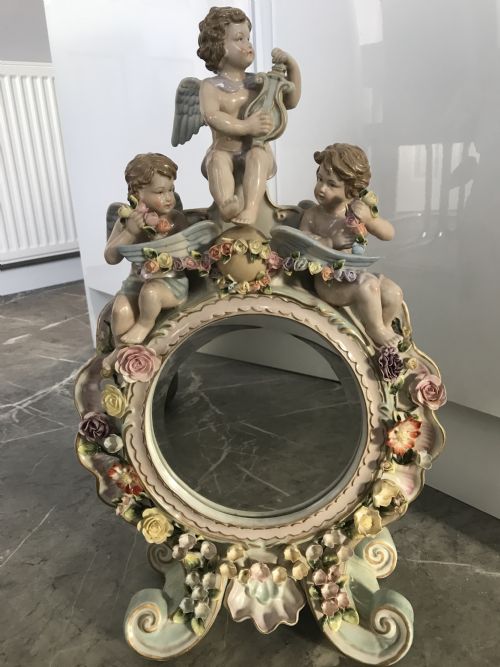


Encrusted Floral Porcelain
Encrusted floral porcelain pieces bring sculptural three-dimensional blooms and gilt details directly to nineteenth-century centrepieces, mirrors, and lamps.
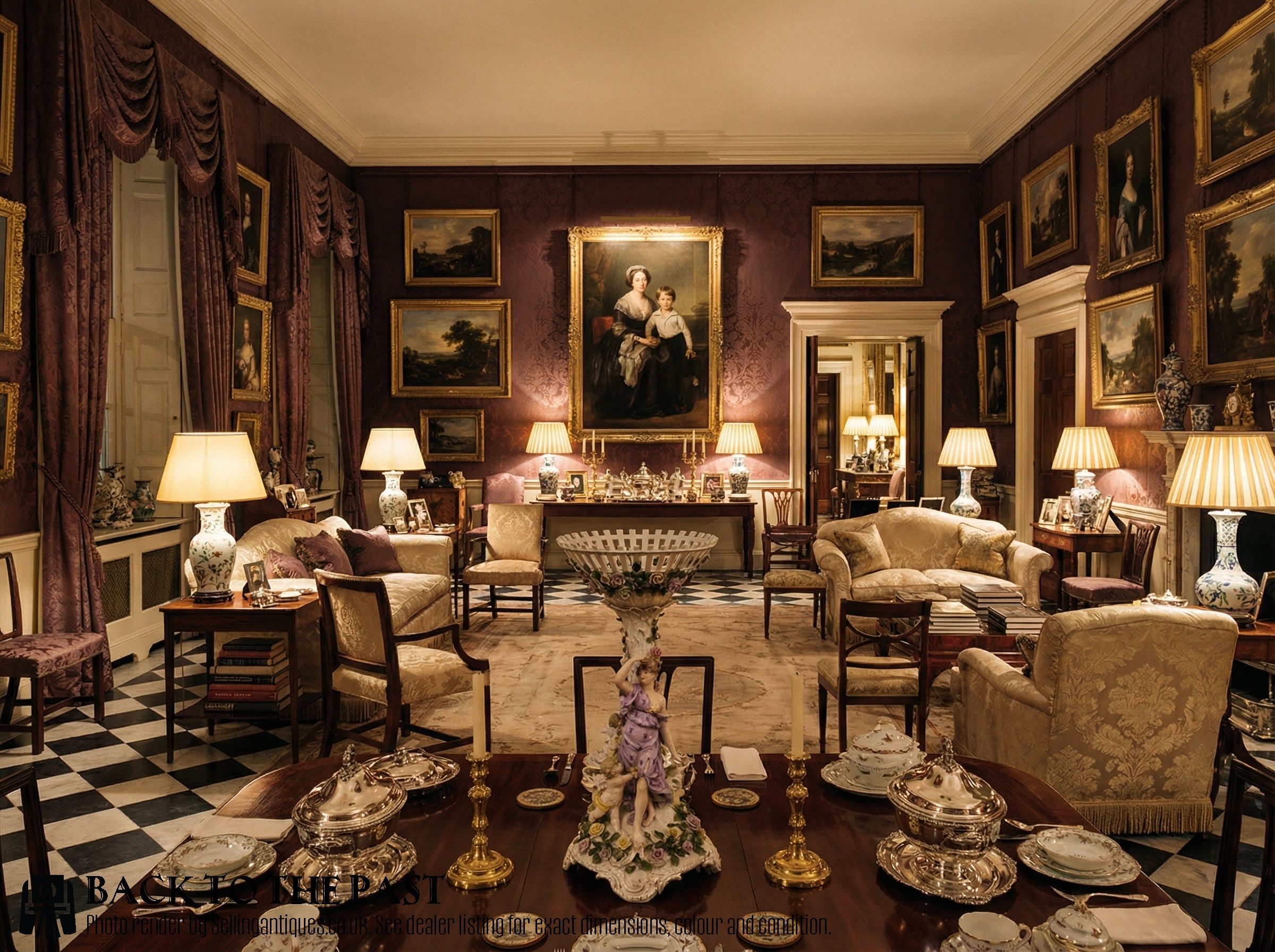
Encrusted Floral Porcelain
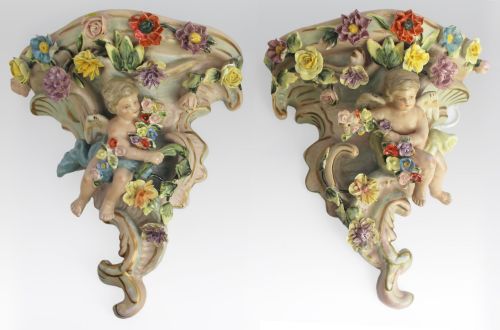
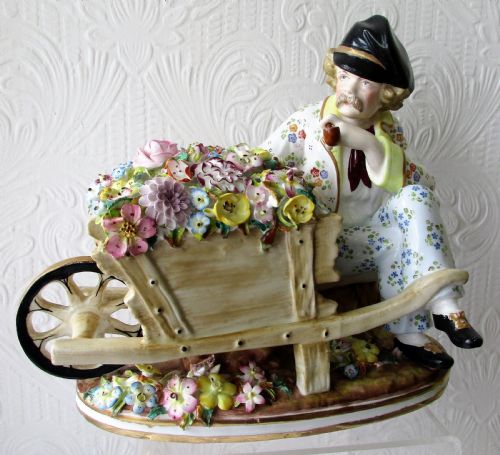
Encrusted floral porcelain encompasses elaborate decorative objects adorned with applied ceramic blossoms, leaves, and figural elements. These pieces emerge primarily from Victorian and continental European traditions spanning the nineteenth and early twentieth centuries.
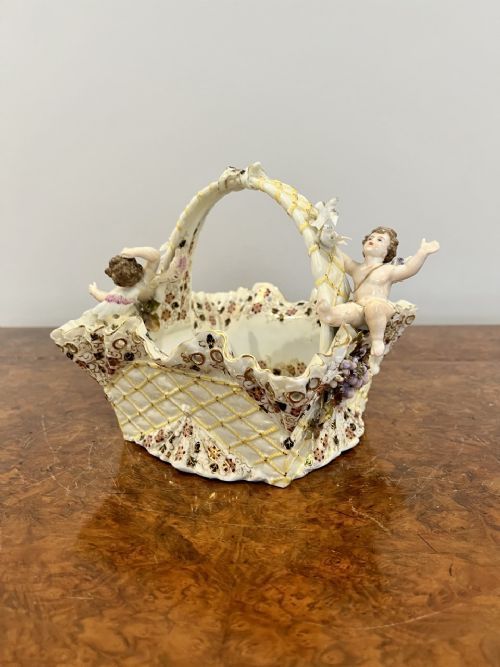
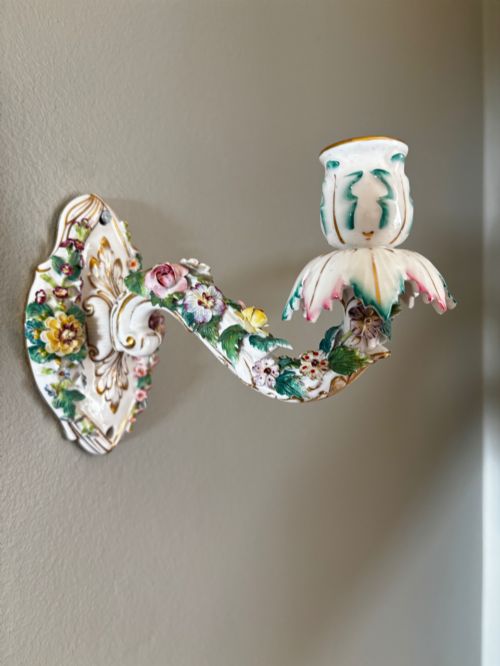
Buyers will frequently encounter functional and ornamental forms such as candelabra, centrepieces, wall mirrors, and figural candlesticks. German factories dominate the selection, alongside English makers producing similar floral applications.
The aesthetic leans heavily into rococo revival styles, incorporating cherubs, putti, and pierced basketwork alongside dense arrangements of applied petals. Pieces range from small scent bottles to large musical putti centrepieces and oil lamps.
Materials and construction
Manufacturers shaped the base bodies from ceramic porcelain, frequently applying enamel colours and gold leaf highlights to enhance the visual depth. Gilt and gilding accent the edges, framing the intricate hand-formed flora.
Individual petals and leaves were modelled by hand before being attached to the ceramic surface prior to firing, a technique that requires immense precision. Subsidiary materials such as brass fittings appear on lamps, mirrors, and candelabra.
Listings feature Victorian and Edwardian periods alongside earlier nineteenth-century eras, utilising porcelain, enamel, and gold leaf.
Evaluating craftsmanship and detail
Quality rests in the delicacy and preservation of the applied floral encrustation, where finer examples maintain crisp petal edges and intricate individual leaves. Mass-modelled flowers lack the botanical variation seen in superior hand-formed work.
The integration of figural elements, such as putti and cherubs, dictates the upper tier of the range, showing careful facial modelling and balanced composition. Gilding application and enamel saturation further separate standard decorative production from exceptional factory pieces.
John Bevington·Rudolstadt Volstedt·Sitzendorf·Schierholz·Royal Worcester·Rockingham·Minton
The Encrusted Floral Porcelain Glossary
- Encrustation
- The application of modelled clay flowers and foliage directly onto a ceramic surface. This technique creates a heavily textured, sculptural effect across vases and baskets.
- Rococo Revival
- A nineteenth-century design style emulating eighteenth-century asymmetric scrollwork and organic motifs. It heavily influences the swirling frames of mirrors and candelabra in this category.
- Putti
- Depictions of chubby male infants, often winged, derived from classical art. They frequently clamber among the floral branches of centrepieces and wall sconces.
- Gilding
- The application of gold leaf or gold powder to ceramic and metal surfaces. It provides rich highlights around the edges of porcelain vessels and mirror frames.
- Schneeballen
- A German ceramic technique translating to snowballs, featuring dense clusters of small white flowers covering the entire surface. This specialised encrustation appears on covers and vessels.
Encrusted Floral Porcelain: Frequently Asked Questions
How should I clean encrusted floral porcelain?
Dust these delicate surfaces gently using a soft, dry brush to avoid catching fragile ceramic petals. Avoid submerging items in water, especially if they feature exposed brass fittings, old adhesives, or delicate gilt highlights.
Moisture can penetrate unglazed ceramic areas or weaken historical repairs. Professional restoration is recommended for any deeply embedded grime.
Are these pieces functional or purely decorative?
Many items serve a dual purpose, combining decorative sculptural forms with practical utility as candle holders, inkstands, or mirrors. Candelabra and oil lamps were built to hold candles or burn fuel, though modern owners often display them unlit.
Centrepieces and baskets function well for holding dry arrangements or standing alone as table ornaments. Care should govern any practical use to protect the fragile applied flora from accidental impact.
How do I identify continental porcelain factories?
Look for underglaze factory marks, blue crossed swords, or impressed numbers on the unglazed bases of the ceramic bodies. German and French houses often used specific impressed codes corresponding to nineteenth-century production years.
Stylistic cues, such as the specific modelling of putti and the density of the floral encrustation, also point toward particular regional workshops.
Why do some pieces feature snowball patterns?
The snowball, or Schneeballen, motif involves completely covering a vessel with tiny overlapping white blossoms and leaves. This demanding German technique requires exceptional patience from the modeller, creating a uniform, textured white surface.
Such pieces often incorporate perched birds or gilt branches to break up the dense floral field.