







Empire Style Commode
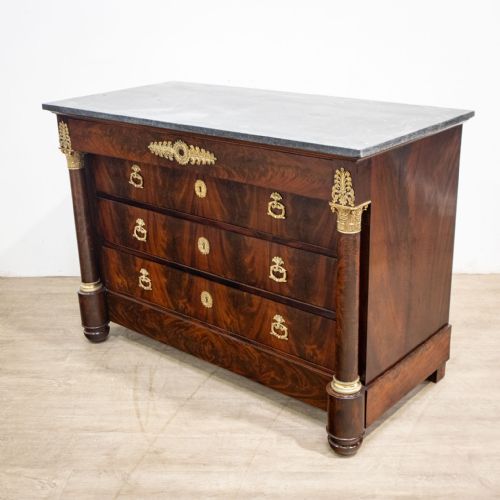
An empire style commode brings architectural dignity and rich timber grain to a room, offering both generous storage and a commanding visual presence.

Empire Style Commode
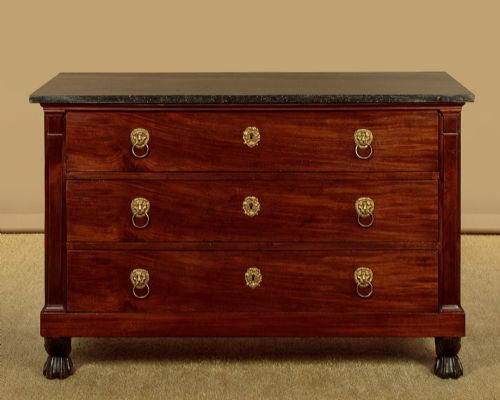
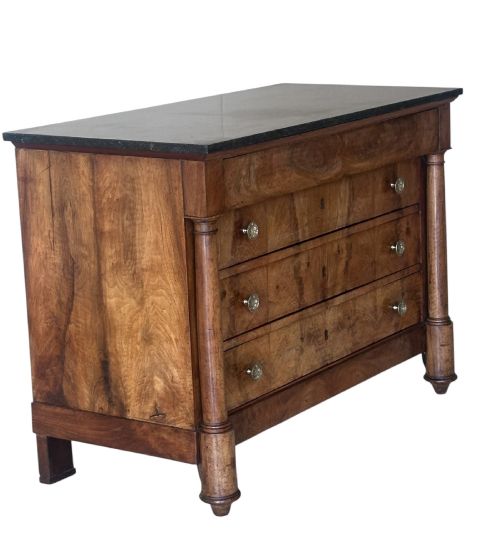
An empire style commode is a substantial case piece designed for storage, most frequently encountered as a chest of drawers or a marble-topped cabinet dating from the nineteenth century. These items manifest in several regional interpretations, including French, Dutch, Italian, and Swedish variations that span the eighteenth to twentieth centuries.
The primary forms appearing on this page include mahogany chests of drawers, burr elm commodes, and birch cabinet pieces, often accompanied by dressing tables and sideboards. French examples dominate the selection, bringing classical proportions and distinct local cabinet-making traditions to the category.
Materials and Construction
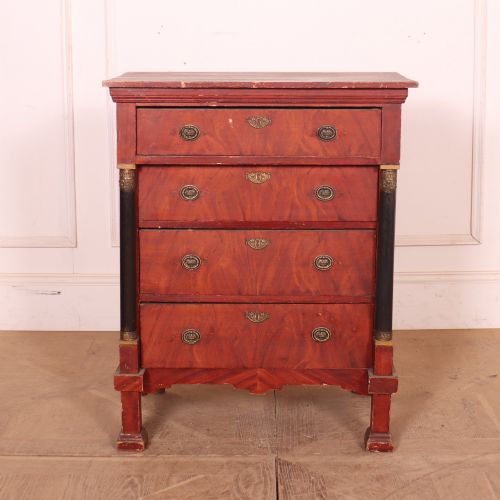
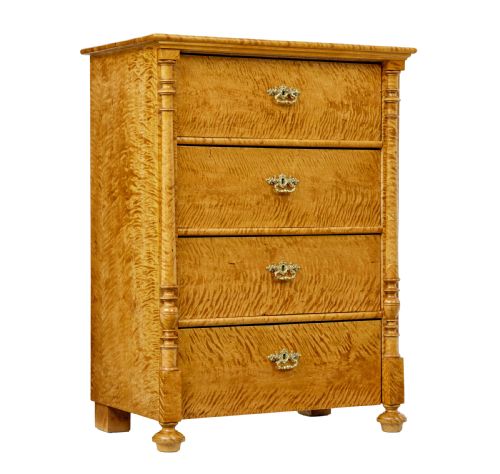
Construction relies heavily on dense timbers such as mahogany, walnut, birch, and ebonised wood, frequently paired with contrasting veneers like burr elm and tiger birch. These wooden carcasses provide a heavy, stable foundation for the decorative schemes.
Surface detailing integrates polished marble tops, brass mounts, and gilt metal ornamentation to punctuate the dark timber surfaces. Certain pieces incorporate intricate marquetry and stencil painting to build complex visual patterns across the drawer fronts.
Paw-footed chests walk silently across the centuries, carrying our socks.
Evaluating Quality and Execution
Superior execution shows in the precision of the veneer matching and the seamless integration of marble tops with the wooden carcass below. The crispness of the brass or gilt metal mounts and the depth of the timber finish separate standard production from exceptional examples.
The sophistication of regional details, such as Italian marquetry work or Swedish birch graining, dictates the standing of a piece within the range. Structural harmony between the classical proportions and the natural figure of the wood determines the overall success of the design.
The Empire Style Commode Glossary
- Marquetry
- The art of applying pieces of veneer to a structure to form decorative patterns. This technique appears on Italian and French cabinets to create pictorial or geometric designs.
- Ormolu
- Gilt bronze mounts applied to furniture to accent corners, key escutcheons, and feet. These metallic details define the neoclassical vocabulary of the period.
- Biedermeier
- A Central European style of furniture design emphasising utilitarian comfort and clean lines. Pieces from this tradition showcase striking natural wood grains without excessive ornamentation.
Empire Style Commode: Frequently Asked Questions
Where were these commodes made?
The listings on this page include pieces originating from France, Italy, Sweden, the Netherlands, and Britain. Each region adapted the neoclassical aesthetic using local timbers.
French workshops favoured dark mahogany and walnut, while Swedish makers frequently utilised pale birch and tiger birch veneers.
How do I style a marble top commode?
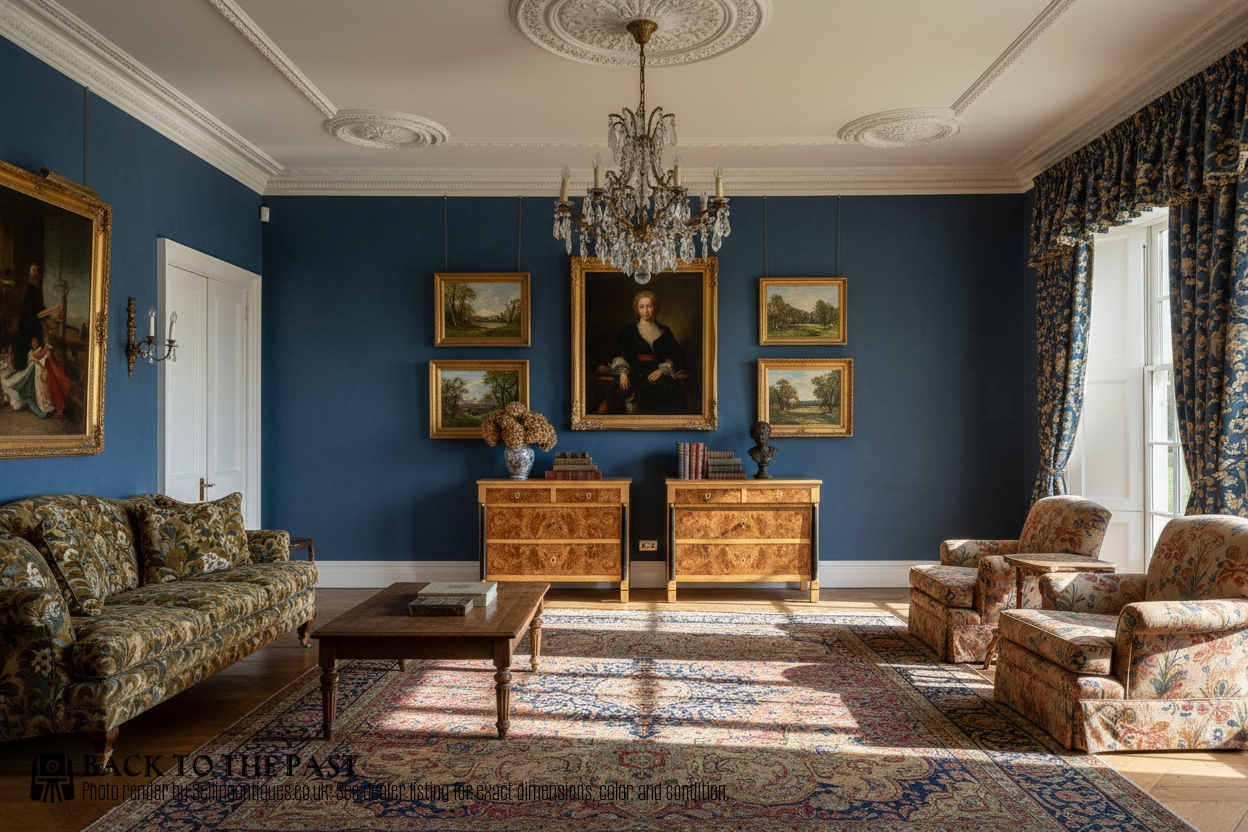
A marble-topped commode works well in a hallway, bedroom, or living space as a surface for lamps, mirrors, or decorative objects. The stone top provides a durable finish for daily use.
Keep the surrounding decor balanced to let the architectural lines and rich wood grain of the cabinet remain the primary focus.
How do I tell regional styles apart?
Regional differences appear in the choice of timber and the complexity of the mounts. French examples lean toward dark mahogany with gilt bronze, while Swedish pieces showcase bright birch.
Italian variants often incorporate detailed marquetry and bow fronts, reflecting distinct local cabinet-making preferences of the period.