
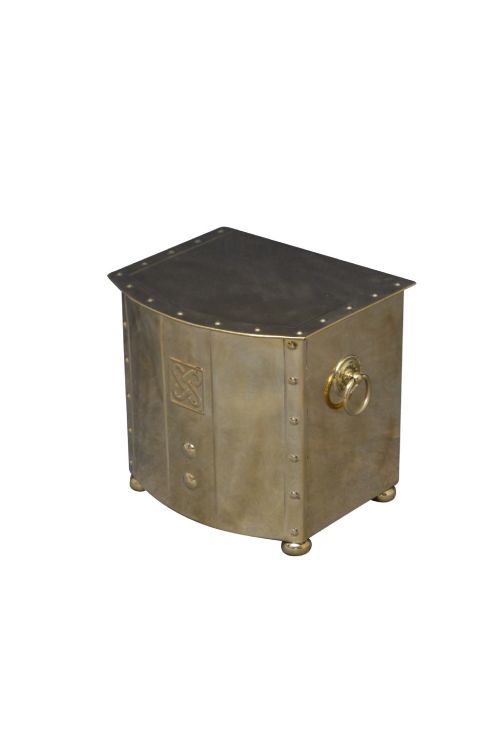


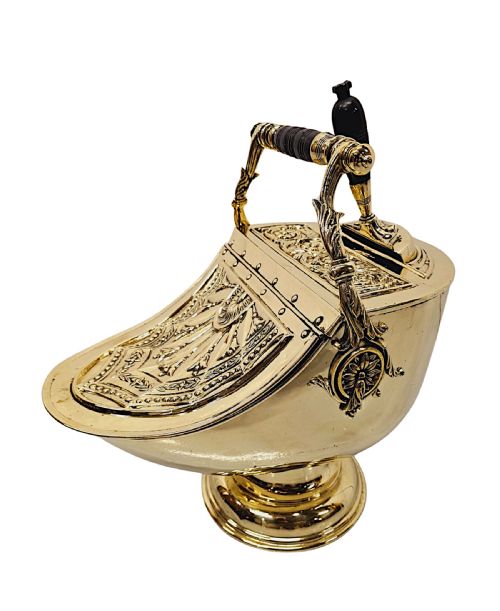
Embossed Brass Coal Bucket
An embossed brass coal bucket brings warmth and pattern to a hearth, holding fuel while catching the eye with hammered and raised metalwork.
Embossed Brass Coal Bucket
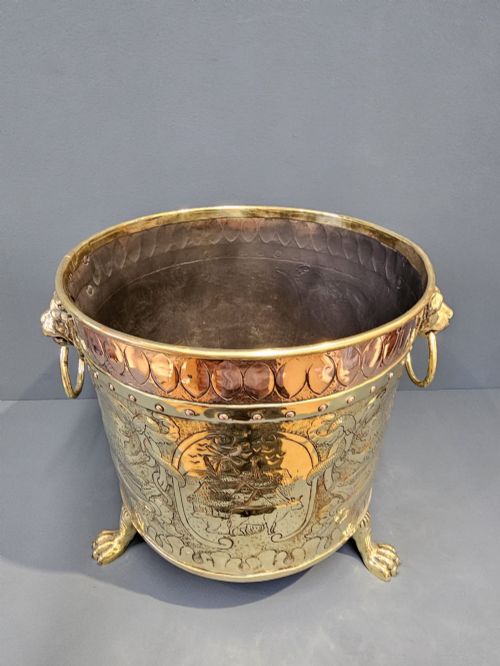
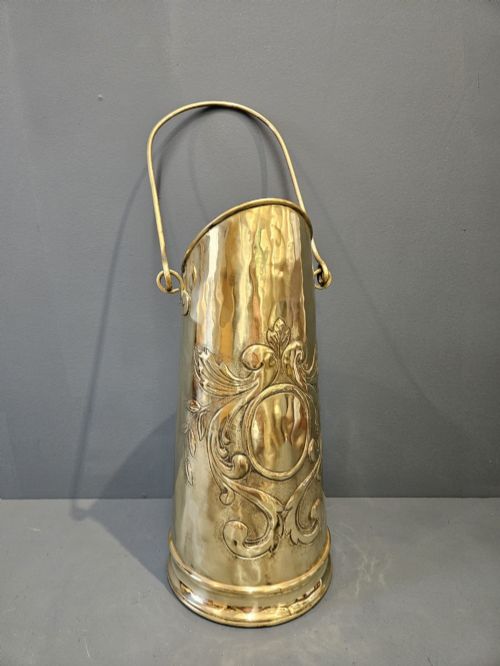
An embossed brass coal bucket is a functional hearth accessory designed to store solid fuel such as coal or logs by the fireplace. When you search for this phrase, you encounter pieces that range from straightforward cylindrical bins to lidded scuttles and helmet forms.
The pieces appearing on this page span several key historical eras, with Victorian examples appearing most frequently alongside pieces from the nineteenth century, Edwardian period, and Arts and Crafts movement. Makers also utilised related metals like copper or added wooden elements, yet brass remains the dominant material for these decorative fireside containers.
Materials and construction
These vessels rely on sheet brass and copper, sometimes shaped over metal bodies or paired with wooden handles and ebonised details. Artisans hammered, chased, and embossed the metal surfaces to create raised pictorial or floral motifs.
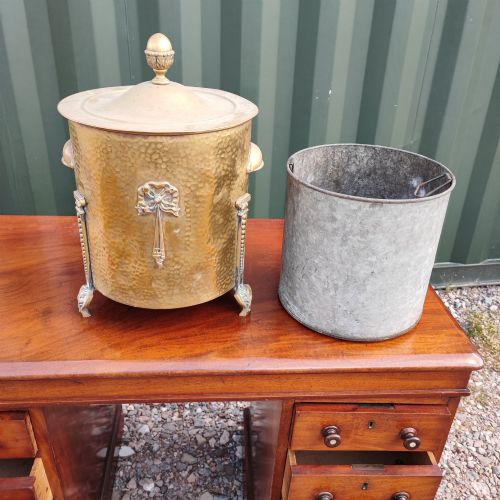
Makers often incorporated swing handles, drop handles, or contrasting metal bands to reinforce the structure of the bucket. Interiors frequently retain galvanised metal liners or internal buckets designed to contain dust and fuel residue.
Arts and Crafts examples in the archive frequently showcase hand-hammered surfaces and narrative tavern scenes alongside traditional floral embossing.
Assessing quality and craftsmanship
Quality rests upon the crispness of the chasing and the depth of the metal embossing. Superior pieces display sharply defined tavern scenes, floral patterns, or classical motifs hammered with precision rather than shallow mechanical pressing.
Construction details distinguish standard utility vessels from finer examples. Robust gauge metal, secure handle attachments, and well-fitted lids or original internal liners indicate superior manufacturing standards.
Benham & Froud·Henry Loveridge·Petrus Ramus
The Embossed Brass Coal Bucket Glossary
- Embossing
- A metalworking technique where a design is hammered or pressed from the reverse side to raise it in relief. This creates tactile surface patterns on the body of the vessel.
- Coal scuttle
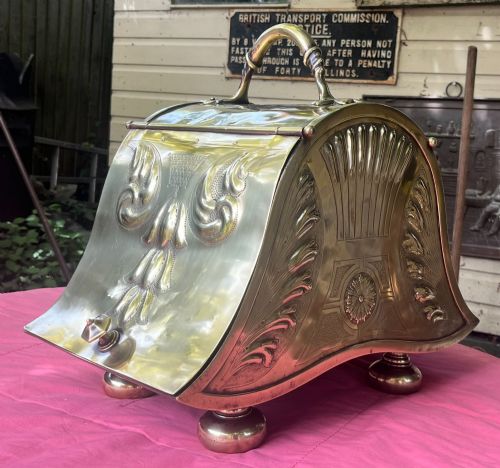
- A traditional container designed for carrying coal to the fire, often featuring a sloping front or a hinged lid with a shovel compartment. Many incorporate a swing handle for transport.
- Purdonium
- A box-style coal container featuring a sloping front door that drops forward to reveal an inner metal shovel and scuttle. They became popular household items during the Victorian period.
- Dinanderie
- A term for medieval and later brass or copper hollowware objects produced in northern Europe. It describes decorative vessels created from beaten and worked base metals.
- Jardiniere
- An ornamental pot or container designed to hold plants or flowers. These large brass and copper vessels are frequently repurposed as fireside log bins.
Embossed Brass Coal Bucket: Frequently Asked Questions
How were these coal buckets used?
They sat beside the hearth to keep solid fuel close to the fire for tending flames throughout the day. Housemaids filled them from larger coal cellars or scuttles stored elsewhere.
The hinged lids and drop-front designs helped contain coal dust and kept the hearth area tidy while remaining accessible for quick refueling.
How do I clean a brass coal bucket?
Cleaning depends on whether you prefer to preserve the aged patina or maintain a bright polished finish. Gentle dusting and wiping with a soft cloth keep the surface free from soot.
Harsh metal polishes can wear down fine embossing and remove historical darkening. Test any cleaning method on a discreet underside area first.
Are these buckets still suitable for daily fireside use?
Many of these containers remain sturdy enough to hold logs or kindling beside a working fireplace. Checking the condition of internal metal liners helps prevent moisture damage to the outer brass.
Some collectors prefer to use them purely for decorative display or as indoor plant planters rather than active fuel storage.