


Polished Brass Coal Scuttle
A polished brass coal scuttle brings bright metallic warmth to a hearth while keeping fuel neatly stored beside the fire.

Polished Brass Coal Scuttle
When you search for a polished brass coal scuttle, you are looking at functional fireside containers designed to hold coal, logs, or peat for domestic hearths. The pieces seen here span periods from the Georgian and Regency eras through the Victorian and Edwardian decades.
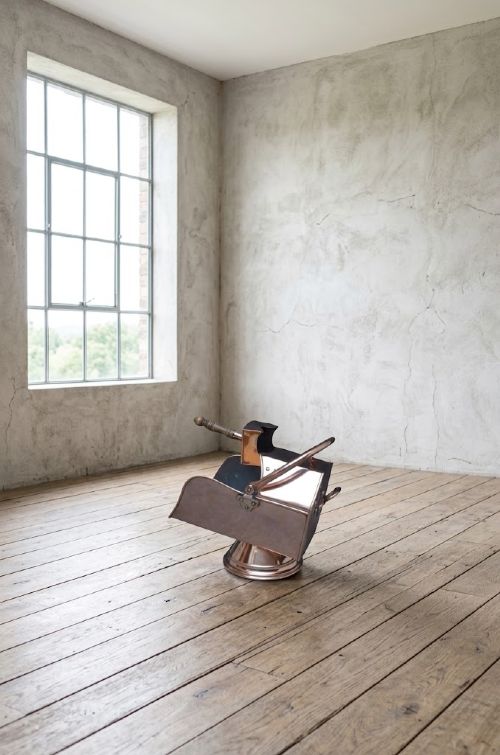
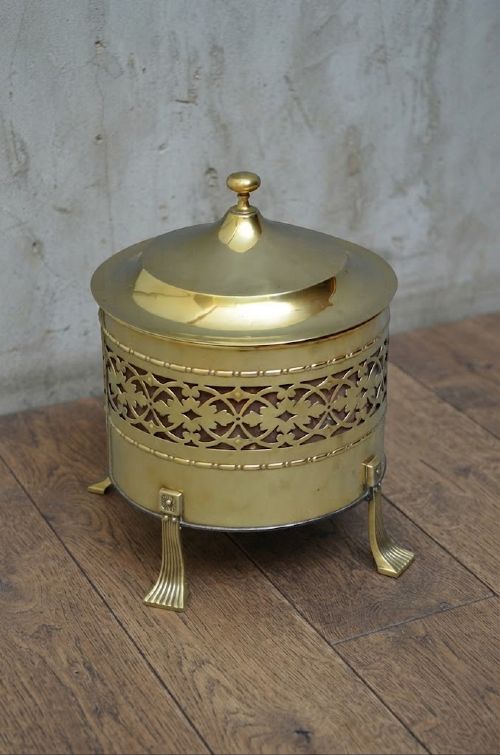
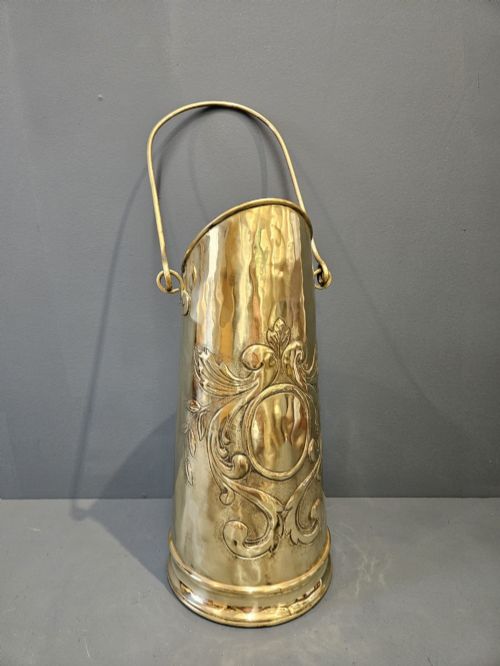
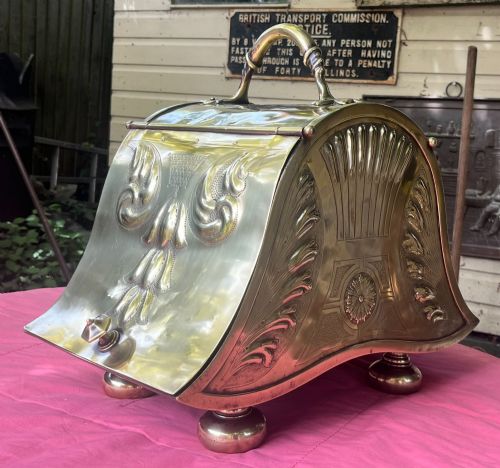
The most common forms on this page include helmet-shaped coal scuttles, open coal buckets, and lidded coal scuttles or purdoniums. Many examples originate from the 19th Century and turn up in brass, copper, or combined metals.
Beyond standard scuttles, related items such as planters, jardinieres, and log bins appear within the fireside accessories. These objects often double as decorative storage vessels in sitting rooms.
Materials and Construction Techniques
The construction relies heavily on brass and copper, sometimes paired with iron or wood for handles and liners. Metals are beaten, sheet-formed, or riveted together to build sturdy bodies capable of holding heavy loads of fuel.
Many items incorporate decorative elements such as fretwork designs, embossed patterns, or swing handles fixed with solid mounts. Workshops also utilised polished brass finishes to create a bright, reflective surface that catches the firelight.
A German artillery shell from 1915 found a second life as trench art fireside coalware.
Distinctions in Quality and Design
Quality in these fireside pieces is determined by the weight of the metal and the crispness of decorative details like fretwork or applied brass ornamentation. Heavier gauge brass and secure, original riveting separate standard utility pieces from finer examples.
Design complexity also plays a role, with Adam style mouldings, Art Nouveau motifs, or specialised helmet shapes indicating superior craftsmanship. The presence of matching accessories like original shovels elevates the standing of a piece.
Benham and Froud·William Soutter & Sons
The Polished Brass Coal Scuttle Glossary
- Coal scuttle
- A container designed with a sloping mouth or a scoop shape for carrying and pouring coal onto a fire.
- Purdonium
- A box-style coal container, usually featuring a hinged lid and a drop-down front compartment holding a removable metal liner.
- Helmet coal scuttle
- A traditional vessel shaped with an elevated back and a flared, helmet-like front lip that aids in pouring fuel.
- Dinanderie
- An old term for medieval and later brass or copper objects, often applied to decorative worked metal vessels.
- Jardinerie
- An ornamental pot or stand, frequently utilised beside hearths as a decorative container for logs or plants.
Polished Brass Coal Scuttle: Frequently Asked Questions
What is a coal purdonium?
A coal purdonium is an enclosed box container used for storing household coal neatly by the fireplace. It typically includes a hinged lid and a removable inner metal bucket.
These pieces were common in Victorian and Edwardian interiors where keeping coal dust contained while maintaining a tidy hearth was important.
How do I use a coal scuttle?
A coal scuttle sits beside the fireplace to hold solid fuel such as coal, logs, or peat ready for burning. The tapered shape or integrated handle allows fuel to be tipped directly onto the fire.
When not in use, polished brass versions add reflective metallic texture and warmth to the fireplace setting.
Can these hold logs instead of coal?
Many larger brass buckets, bins, and jardinieres serve equally well for holding fireplace logs or kindling. Open buckets and cylindrical bins accommodate wood lengths easily.
Checking the internal dimensions helps ensure logs fit comfortably inside the specific container.
How do I date a brass coal scuttle?
Dating relies on stylistic clues, manufacturing techniques, and materials characteristic of specific periods like Georgian, Regency, Victorian, or Edwardian. Details such as Art Nouveau floral motifs, Adam style ornamentation, or maker marks help narrow down the era.
Heavier riveted construction and specific handle designs also point toward 19th-century workshop standards.