









Brass Fireplace Planter
A brass fireplace planter is a sturdy hearth vessel made to hold fuel or greenery, bringing warmth and metal texture to a room.
Brass Fireplace Planter
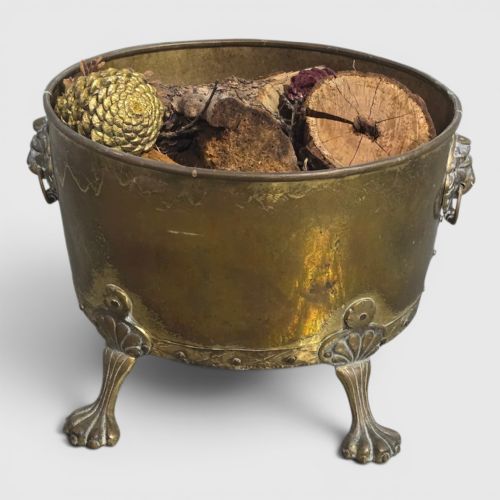
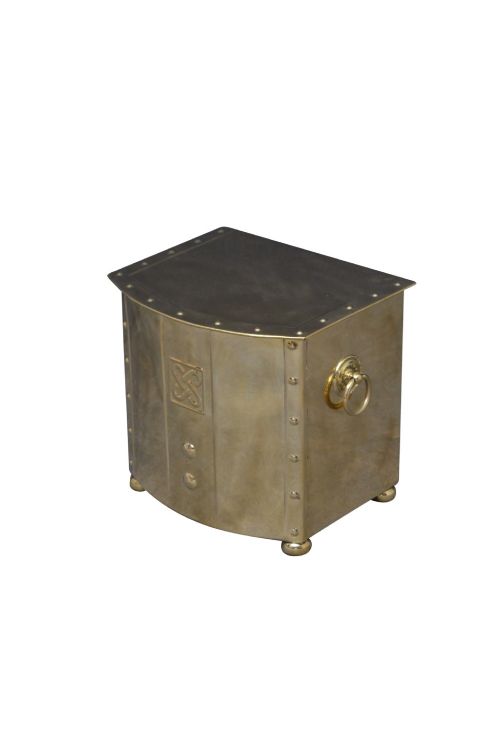
A brass fireplace planter serves multiple domestic duties by the hearth, often doubling as a log bin, coal bucket, or peat container. You will frequently find Victorian examples alongside Arts and Crafts and Edwardian pieces designed to hold fuel or display greenery.
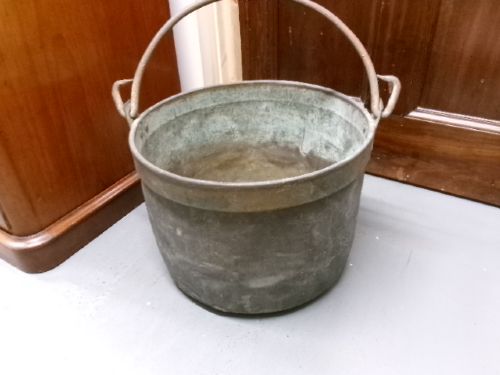
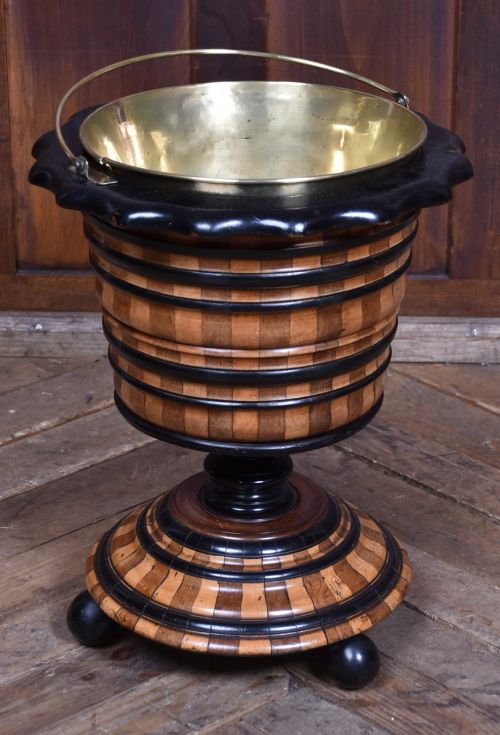
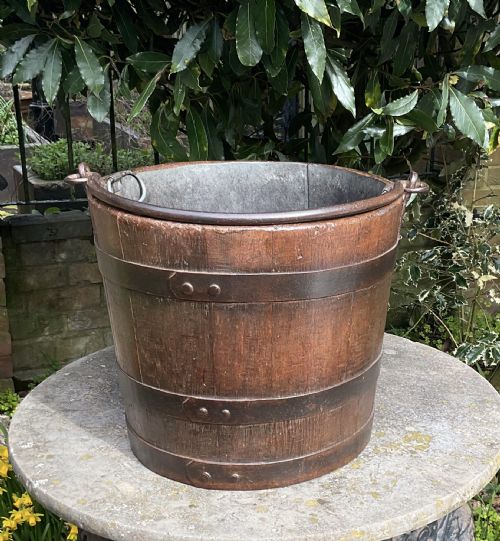
The form draws on traditional coopered buckets and cauldrons, shaped from sheet metal or staved wood with metal bands. Many pieces bridge the gap between practical fireside storage and decorative indoor gardening.
Makers adapted these vessels across various periods, from 19th-century Dutch designs to Anglo-Indian campaign pieces. They suit both traditional inglenooks and modern interiors looking for period character.
How they were made
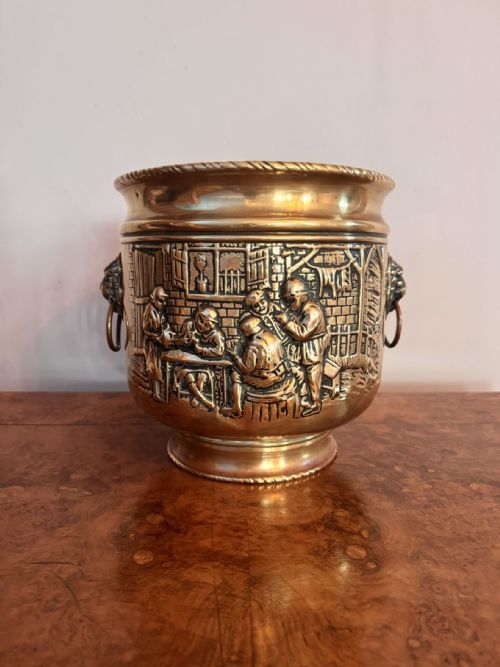
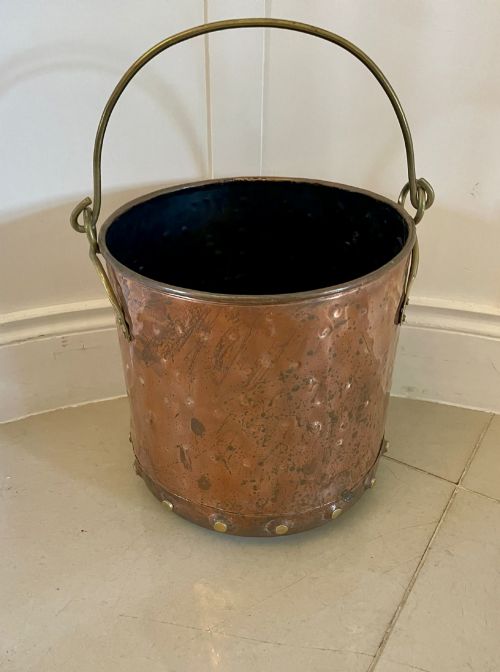
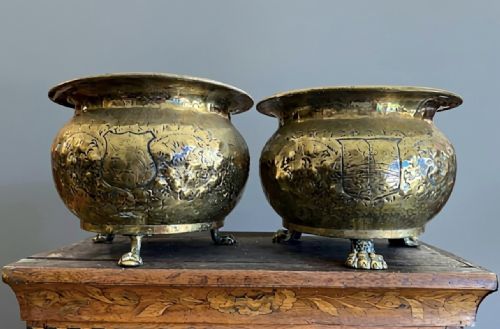
Crafstmen shaped sheet brass and copper by hand, joining seams with visible rivets and hammering surfaces to create textured dinanderie finishes. Metal bands and swing handles were forged separately and attached securely to the main body.
Coopered versions utilise vertical staves of oak, mahogany, walnut, or mixed hardwoods bound tightly with brass or iron hoops. Liners of metal or ceramic often protected the wood from moisture and damp fuel.
Brass Fireplace Planter Retail Price Guide 2026
Typical asking prices for brass fireplace planter among the pieces listed under this phrase on Sellingantiques today, from the lower quarter to the upper quarter. They describe what is for sale here now, not the wider market.
What varies in quality
Weight and gauge of the metal set fine examples apart from ordinary production, as heavy brass or thick copper resists denting and holds a crisp form. Hand-embossed crests, heraldic motifs, and chased detailing indicate careful workshop execution.
Construction integrity defines value in coopered and metal vessels alike, with tight stave joints and secure handle mounts showing proper craftsmanship. Original liners and uncompromised surface patination preserve the integrity of the piece.
Henry Loveridge·Petrus Ramus
The Brass Fireplace Planter Glossary
- Dinanderie
- An art form involving worked brass or copper objects, often associated with vessel making and decorative embossing. The technique produces rich surface textures found on period hearth containers.
- Coopered
- Built from narrow wooden staves fitted together and bound with metal hoops, much like a traditional barrel. This method is common in wooden log bins and peat buckets.
- Jardiniere
- A decorative pot or container designed to hold plants and flowers indoors. Many fireplace vessels served this secondary purpose when not holding fuel.
- Teestoof
- A Dutch foot warmer or small stove that used hot embers inside a metal liner to heat a room. These small brass and copper vessels often reappear as planters.
- Embossed
- Ornamented with raised patterns or designs pressed into the metal sheet. This decorative work highlights the skill of the 19th-century metalworker.
Brass Fireplace Planter: Frequently Asked Questions
How were brass fireplace planters originally used?
These vessels sat by the hearth to store coal, logs, or peat for the fire. Their sturdy construction made them practical for carrying heavy fuel into the living space.
Over time, many owners repurposed them as indoor planters or decorative cachepots. The inclusion of metal liners helped contain moisture from soil or damp wood.
What is the difference between a log bin and a jardinier?
A log bin focuses on heavy utility, featuring thick metal or coopered wood built to take the weight of fuel. A jardinier is typically lighter and designed specifically to hold plants.
In practice, makers often used similar forms for both purposes, leading to overlapping terminology in period pieces.
How do I date a brass fireplace container?
Dating relies on manufacturing techniques, such as the style of hand-riveting, the depth of hammering, and the choice of alloy. Victorian and Edwardian pieces often display specific aesthetic revivals like Arts and Crafts or Dutch motifs.
Wood types and hardware fixings also provide clear clues to the decade of manufacture.
Can I use an antique brass bucket for real plants?
Many of these vessels feature original metal liners intended to hold moisture without damaging the outer shell. If a liner is absent, placing a modern plastic pot inside protects the historic metal from water corrosion.
Checking the interior condition ensures the vessel can safely handle damp soil.