




Elm Wooden Coffer
An elm wooden coffer is a robust storage piece offering deep character, drawing collectors with its varied domestic and regional uses.
Elm Wooden Coffer
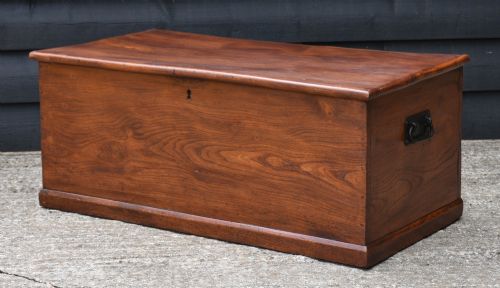
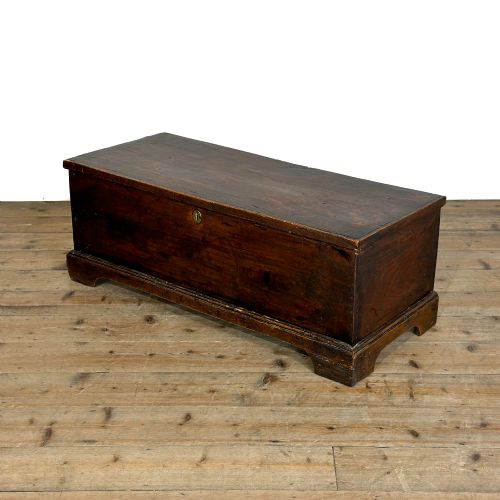
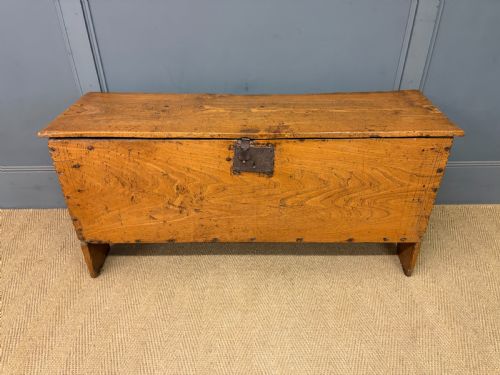
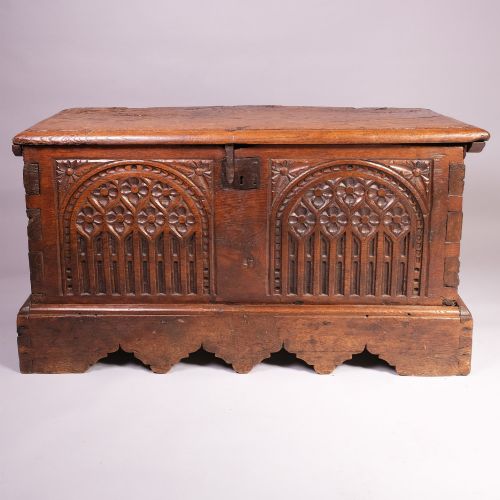
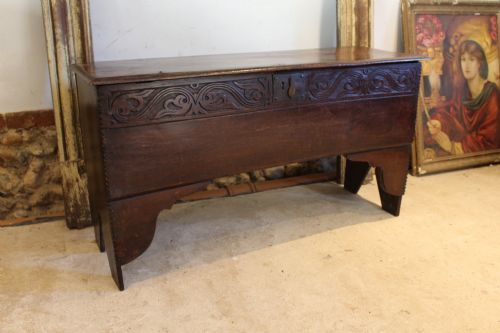
When you search for an elm wooden coffer, you encounter sturdy timber storage chests spanning several centuries of vernacular and formal design. The pieces on this page range from modest six-plank constructions to refined Georgian mule chests and regional variants.
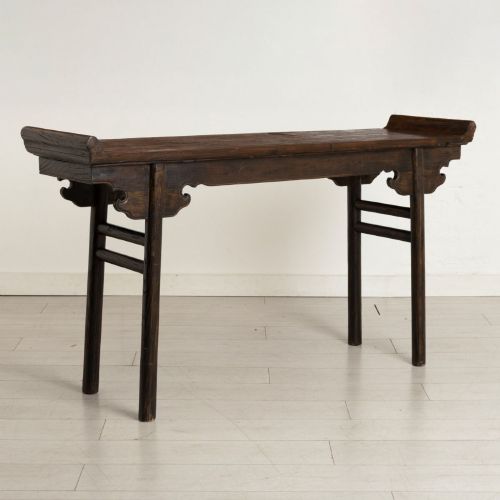
Domestic storage needs shaped these forms, resulting in blanket chests, bible boxes, strongboxes, and specialised bins. Alongside British country pieces, the selection includes Chinese cabinets, altar tables, and writing desks utilising the same durable timber.
How they were made
Joiners and cabinet makers constructed these items primarily from solid elm, often combining it with oak, pine, or burr elm panels for visual variety. The timber's resilient grain lent itself to both simple plank construction and more complex joined frameworks.
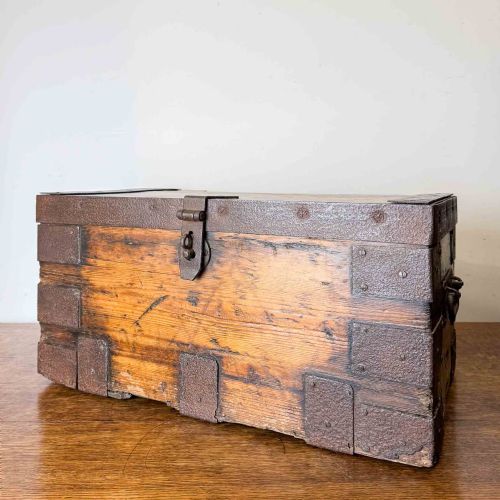
Hardware played a functional role in assembly and security, incorporating iron straps, hasps, carrying hoops, and brass mounts. These metal elements were fastened to reinforce lids, corners, and joints on heavy boxes and strongboxes.
French elm cannonball boxes once held heavy ammunition before finding a quiet retirement holding blankets.
What varies in quality
The distinction between ordinary utility items and finer examples rests on timber selection, such as figured burr elm panels, and the sophistication of the joinery. Regional characteristics, such as specific Welsh or provincial British vernacular traits, also elevate a piece.
Original hardware, including period brass mounts and robust iron hasps, contributes significantly to a piece's integrity. Survival of original surfaces, dates, initials, or specialised interior fittings marks the upper tier of these chests.
The Elm Wooden Coffer Glossary
- Six-plank coffer
- A primitive chest constructed from six individual boards joined simply at the edges. This method represents the earliest form of box construction.
- Mule chest
- A storage chest featuring one or more drawers beneath the main lift-top compartment. They bridge the evolution between simple coffers and modern chest of drawers.
- Bible box
- A small, portable desk or storage box historically used to house family scriptures and writing materials. Many feature sloping lids for reading.
- Burr elm
- A growth distortion on the elm tree that produces highly figured, swirling wood grain. Cabinet makers prized this timber for decorative panel highlights.
- Cellarette
- A fitted cellar box or chest designed for safely storing wine bottles. Examples utilise fine woods like burr elm and brass mountings.
Elm Wooden Coffer: Frequently Asked Questions
What is a six-plank coffer?
A six-plank coffer is formed from single boards making up the front, back, sides, bottom, and lid.
This method represents an early, straightforward approach to carpentry before sophisticated framing techniques became standard.
How were elm coffers used?
These chests served primarily for storing household textiles, blankets, clothing, and valuables.
More specialised versions held books, documents, dough for baking, or travelling possessions.
How do I date an elm coffer?
Dating relies on construction methods, tool marks, hardware styles, and regional joinery traditions.
Earlier pieces often utilise simple planking and hand-forged iron, while Georgian examples show more refined cabinet making.
What is a mule chest?
A mule chest is a traditional storage box that adds one or more drawers beneath the main compartment.
This design innovation allowed access to stored items without needing to lift the top lid.