
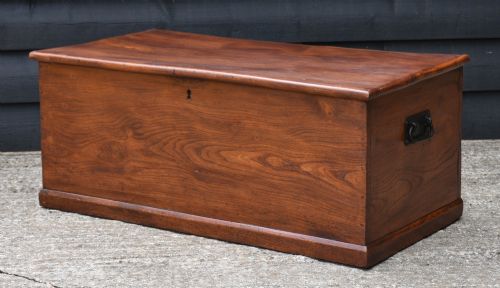
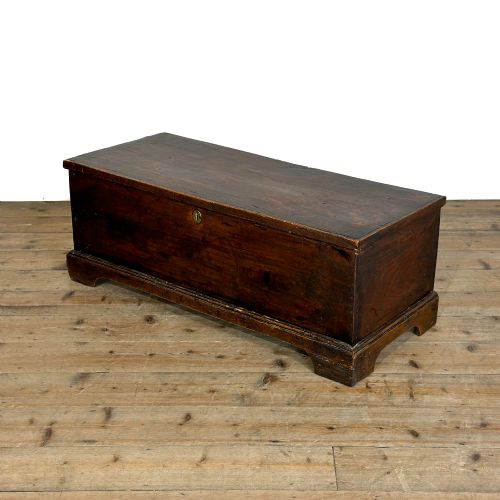
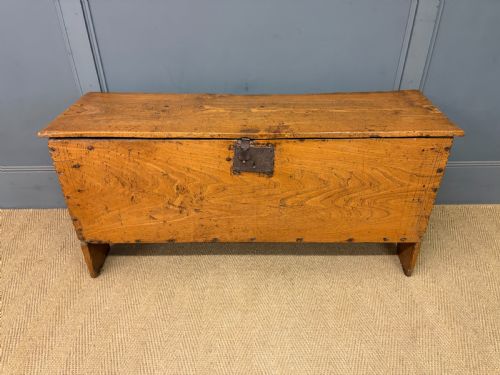


Georgian Elm Coffer
A georgian elm coffer brings honest country utility and rich timber grain straight into a room.
Georgian Elm Coffer
A georgian elm coffer is a sturdy wooden storage chest made primarily during the eighteenth and early nineteenth centuries. These pieces served practical domestic purposes, holding blankets, linens, and personal valuables in provincial homes.
The versions met most often on this page span the georgian and regency periods, taking forms such as six-plank construction, mule chests with drawers, and smaller candle-box coffers. Regional pieces often display distinct local character from areas like Wales and the West Country.
Beyond standard storage trunks, related forms include benches, cellarettes, and bible boxes built from the same durable timber. Their appeal lies in plain vernacular design rather than formal court furniture.
How They Were Made
Cabinetmakers utilised native elm for its tough, interlocking grain, often pairing it with oak structural framing or incorporating burr elm panels for decorative warmth. Iron strap hinges and brass mounts provided necessary reinforcement to heavy lids and corners.
Construction methods range from simple six-plank pegged joints to more complex panelled frames, occasionally featuring carved motifs, initials, or painted surfaces. Interior fittings such as internal candle boxes and small drawers are common in surviving examples.
Some chests bear personal initials and exact dates carved by makers who wanted their handiwork remembered.
What Varies in Quality
Quality in these coffers depends upon the figure of the elm timber and the integrity of the original construction. Highly figured burr elm panels or pieces retaining original blue paint command greater attention from collectors.
Proportion and scale also influence worth, as smaller provincial chests and those with untouched original ironwork or dated inscriptions represent finer survivals of country craftsmanship.
The Georgian Elm Coffer Glossary
- Six-plank coffer
- A simple chest constructed from six individual boards joined edge to edge at the corners. This method represents an early and straightforward form of box construction.
- Mule chest
- A storage chest fitted with one or more drawers beneath the main compartment. It bridges the transition between the traditional coffer and the modern chest of drawers.
- Candle box
- A small internal compartment fixed inside a chest to hold candles away from linens. It usually lifts out or sits in the upper corner.
- Cellarette
- A fitted timber box or chest designed to hold bottles of wine or spirits. Regency examples often utilise figured elm veneers.
- Vernacular furniture
- Domestic pieces made by local country joiners using regional materials rather than following metropolitan court styles. Elm is a principal timber of this tradition.
Georgian Elm Coffer: Frequently Asked Questions
What did people store in a coffer?
These chests primarily held household textiles, heavy woollen blankets, and family linens to protect them from moths and dampness. Deeper boxes also accommodated clothing, valuables, and important documents.
Smaller variants functioned as bible boxes or toy chests for domestic spaces. Their robust construction made them suitable for secure storage in everyday provincial homes.
How do I identify elm timber?
Elm wood is distinguished by its twisting, interwoven grain pattern that creates a distinctive figure, often showing rich brown tones. It resists splitting remarkably well due to this stubborn grain structure.
Carpenters favoured it for items subject to heavy wear, such as seating and storage chests. Burr elm varieties exhibit swirling knot formations that add high decorative value.
Are these chests heavy to move?
Solid timber construction and thick planks mean these coffers possess considerable weight, particularly larger examples made from dense elm and oak. Many feature original iron carrying handles affixed to the sides for transport.
Positioning them typically requires two people, especially when navigating historic country houses or narrow stairwells. Once in place, their heavy lids keep the contents secure.
How should I care for elm furniture?
Maintaining these pieces involves keeping them away from direct heat sources and sudden humidity shifts that cause timber to split. Gentle cleaning with a soft cloth preserves the dry, historic surface sheen.
Avoiding harsh modern polishes ensures the natural grain and old patination remain undisturbed. Wax can be applied sparingly if the wood appears dry.