



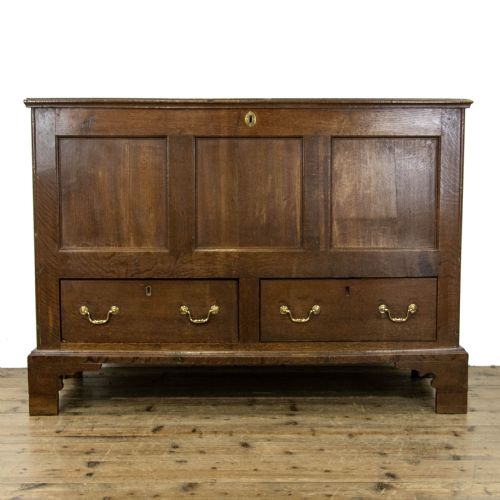

Vintage Linen Box
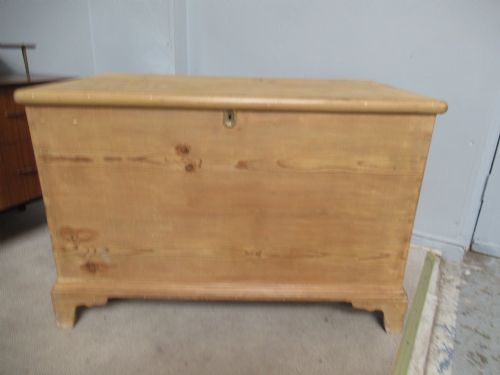
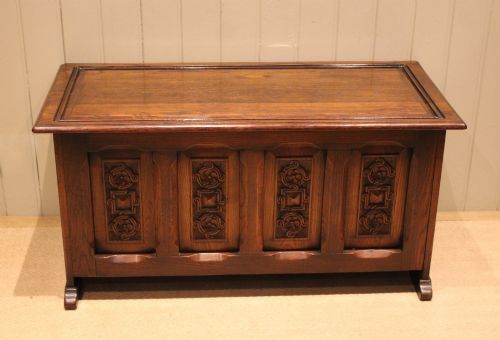
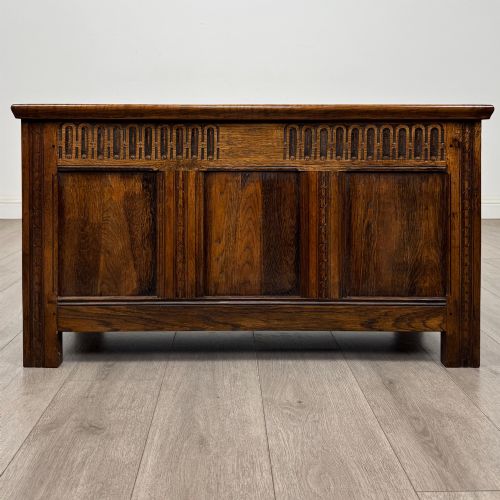
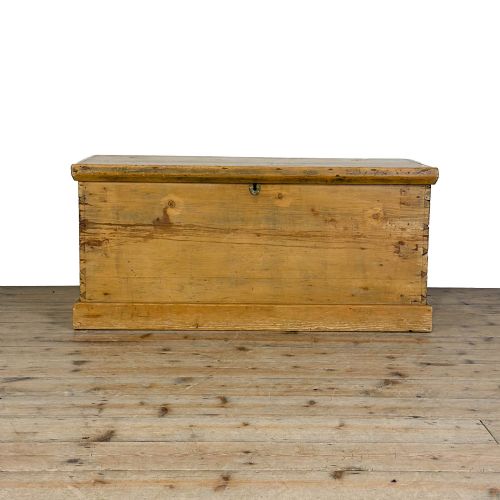
These vintage linen box examples are robust storage chests and trunks in timber, providing practical depth for textiles.
Vintage Linen Box
A vintage linen box search uncovers sturdy repositories designed to protect fabrics, bedding and garments from dust and damp. These vessels take several structural forms, spanning blanket chests, mule chests, coffers and storage trunks.
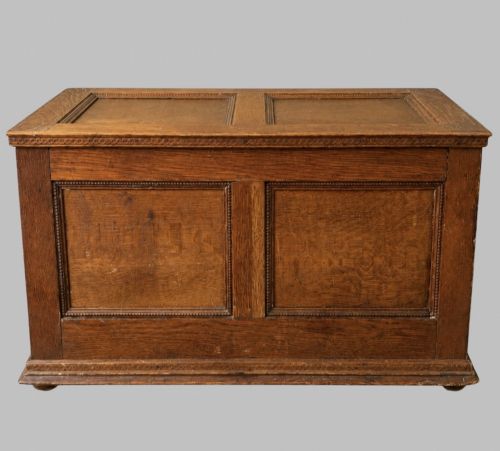
The pieces appearing here cross multiple eras, including Georgian, Victorian, Edwardian and early twentieth century. Vernacular country pieces sit alongside carved oak revival items and oriental camphor wood trunks.
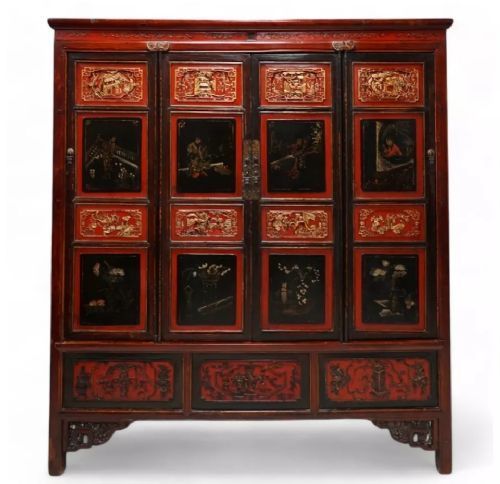
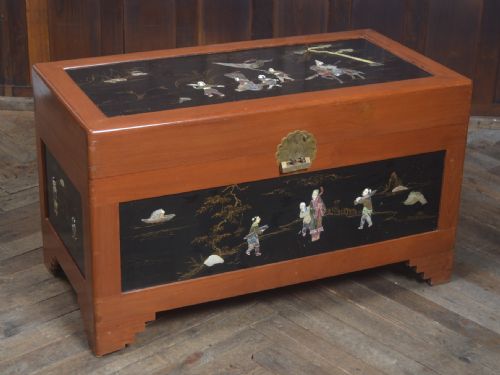
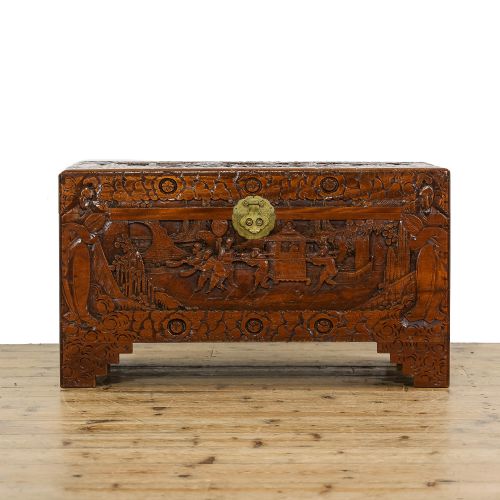
Timber varieties dominate the selection, featuring oak, pine, elm and camphor wood alongside occasional lacquer work. Buyers encounter both simple utilitarian domestic boxes and more elaborate panelled or carved constructions.
How they were made
Carpenters constructed these boxes primarily in solid timbers such as oak, pine and elm, utilising traditional panel and frame methods to accommodate seasonal wood movement. Dovetail joints frequently secure the corners of drawers in mule chests and box bases.
Hardware elements like brass lock plates, iron hinges and carrying handles provide both functional reinforcement and visual accent. Surface finishes vary from waxed or polished oak and stripped pine to red lacquer and carved oriental relief work.
Materials recorded across the inventory include brass, oak, pine, elm, lacquer, camphor wood, iron and mahogany.
What varies in quality
Distinction in quality arises from the selection of timber and the dexterity of the joinery rather than mere age. Thick, well-figured oak boards and hand-cut dovetails indicate superior cabinet work compared to utilitarian pine alternatives.
Carved ornament depth and clarity separate standard production from finer workshop pieces. The retention of original iron or brass hardware and operational locks also elevates the standing of a chest.
The Vintage Linen Box Glossary
- Coffer
- A heavy wooden chest traditionally used for storing valuables and textiles. Early examples feature robust panel construction.
- Mule chest
- A storage chest characterised by one or more drawers built into the base beneath the main compartment. These pieces bridge the function of a trunk and a chest of drawers.
- Camphor wood
- An aromatic hardwood utilised for trunks and storage chests because its natural scent deters moths and insects. It is frequently carved in relief.
- Blanket box
- A deep domestic chest designed for housing bedding, quilts and linens. They are commonly rendered in pine, oak or elm.
Vintage Linen Box: Frequently Asked Questions
What is a vintage linen box used for?
These chests serve primarily for storing blankets, bedding, winter garments and household linens. Their deep interiors keep textiles organised and protected from dust.
Beyond bedroom storage, many people utilise them as coffee tables or hallway benches while keeping the internal space functional.
How do I date a wooden chest?
Dating relies on observing construction methods, timber choice and style markers. Hand-cut joinery, pegged joints and vernacular proportions often point towards earlier centuries.
Secondary woods, nail types and hardware styles help narrow the period further when assessing Victorian or Edwardian pieces.
Are camphor wood chests safe for linen?
Camphor wood is traditionally favored for linen storage because its natural aroma repels moths and insects. The distinct scent permeates stored textiles safely.
These aromatic trunks became popular imports during the nineteenth and early twentieth centuries for protecting delicate fabrics.
How do I care for antique pine boxes?
Pine benefits from occasional application of quality beeswax to nourish the dry timber and maintain a soft sheen. Avoid placing wooden chests near direct heat sources or in damp environments.
Keeping the interior clean and dry preserves the structural integrity of historical pine and elm.