


Antique Toy Chest
An antique toy chest offers honest, sturdy storage in seasoned timber, bringing tactile history and quiet utility directly into a modern room.
Antique Toy Chest
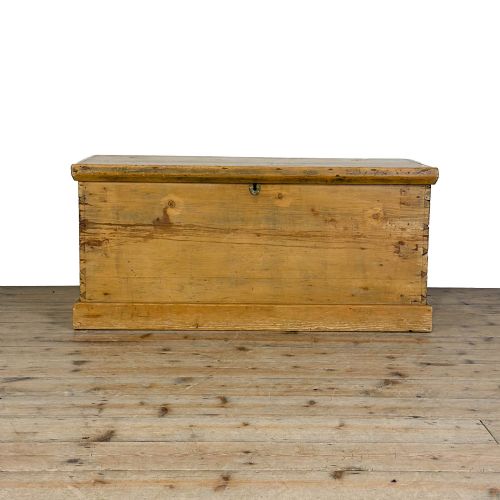
An antique toy chest encompasses utilitarian pine and elm boxes made to hold children's playthings, household linens, and blankets in nineteenth-century homes. Buyers encountering this search phrase will find sturdy trunks, blanket boxes, mule chests, and storage kists dating from the Victorian era up to nineteen hundred.
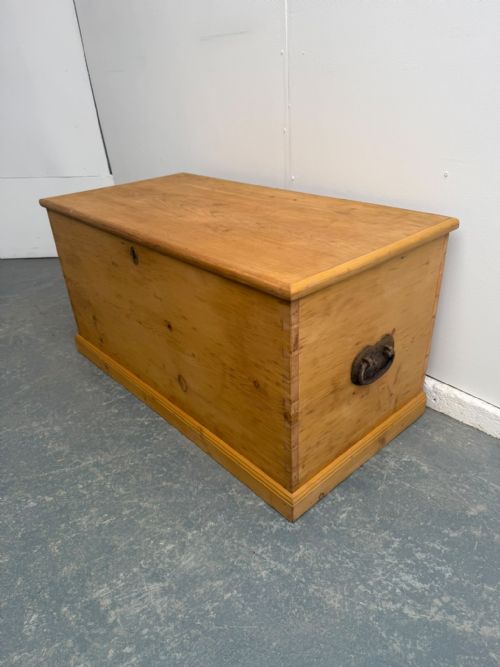
The prevailing format on this page is the pine blanket box or storage trunk, often finished with wax or stripped back to the bare wood. These domestic containers reflect the country vernacular and rustic farmhouse styles of their period, prioritising practical capacity over ornate decoration.
How they were made
These chests rely principally on solid pine and elm planks joined to withstand heavy daily use in domestic spaces. Workshops employed robust timber construction, leaving the natural grain visible or treating surfaces with protective wax finishes.
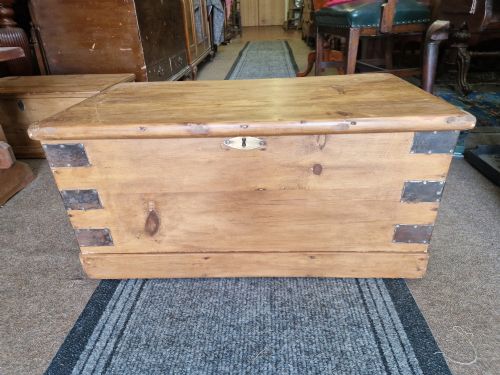
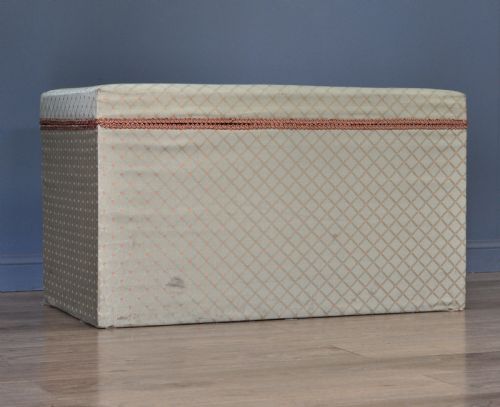
Metal hardware plays a functional role in the construction of these pieces, incorporating iron straps and brass elements to reinforce corners and lids. Simple upholstery fabric and braid trim appear selectively on certain examples to line or soften the interior storage compartments.
At least one miniature sterling silver table proves that toy chests were not the only playthings receiving meticulous nineteenth-century craftsmanship.
What varies in quality
Quality in an antique toy chest rests upon the integrity of the timber and the subtlety of its surface finish, distinguishing simple utility from finer craftsmanship. Waxed pine surfaces that retain a rich, mellow tone sit above dry or poorly stripped alternatives.
Proportion and scale also separate standard regional storage boxes from more developed forms like mule chests or kists. Strong dovetail joints, well-preserved iron or brass fittings, and intact historical surfaces elevate a piece above basic vernacular containers.
The Antique Toy Chest Glossary
- Kist
- A traditional regional term for a heavy wooden storage chest or box, typically constructed with a hinged lid. These sturdy containers served various domestic storage needs before modern wardrobes became common.
- Mule chest
- A form of storage chest featuring one or more drawers beneath the main compartment. This hybrid design bridges the traditional trunk and the chest of drawers.
- Country vernacular
- A design style reflecting local building traditions rather than high-style academic architecture. These pieces were made by regional carpenters for everyday domestic utility.
- Pine
- A soft softwood widely utilised in nineteenth-century furniture making due to its availability and workability. Waxed pine finishes are typical among domestic storage chests of the period.
- Elm
- A tough, interlocking-grained timber valued for resistance to splitting. It was often selected for heavy-use items such as bedding and toy boxes.
Antique Toy Chest: Frequently Asked Questions
What is an antique toy chest?
An antique toy chest is a solid wooden box, usually made from pine or elm during the nineteenth century, designed to hold children's playthings and household items. These practical containers range from simple lidded trunks to mule chests fitted with lower drawers.
Most surviving examples reflect country vernacular or rustic farmhouse styles, intended for sturdy everyday service in Victorian homes. Their honest construction and aged timber surfaces make them popular for modern storage today.
How were these chests used?
These boxes served primarily as robust receptacles for household textiles, blankets, and children's toys in nineteenth-century domestic settings. Their deep interiors and hinged lids allowed families to stow bulky items safely out of the way.
Placed in bedrooms or nurseries, they also functioned as impromptu benches or low tables when closed. Today, owners utilise them in much the same manner to hide clutter while adding historical character to a room.
Are these chests suitable for daily use?
These sturdy wooden boxes are well-suited for everyday storage in modern living spaces. Their solid pine and elm construction provides a durable enclosure for blankets, toys, and household goods.
Because they were built to withstand generations of domestic wear, their hinges and joints remain remarkably resilient. Living with one simply involves appreciating the natural bumps and bruises accumulated over a century of service.