
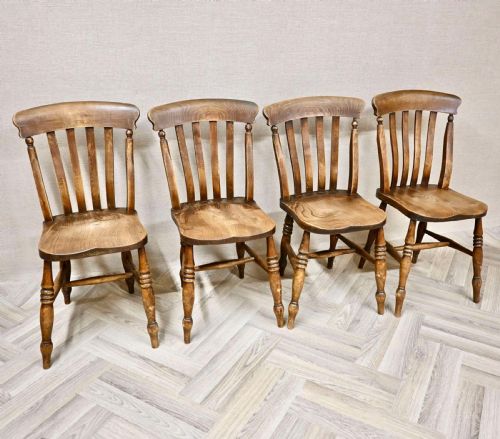
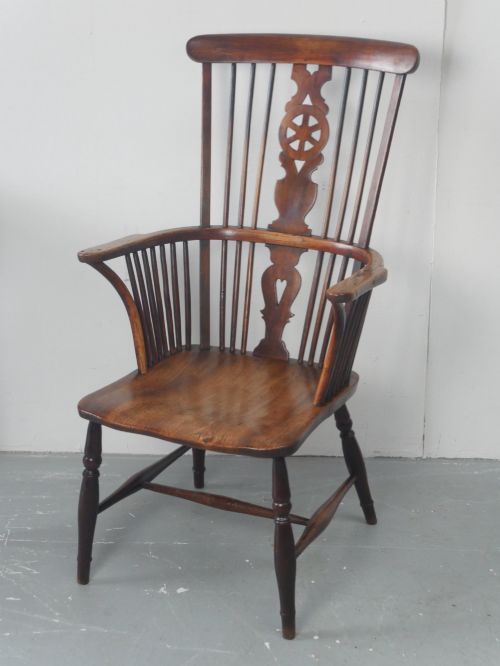
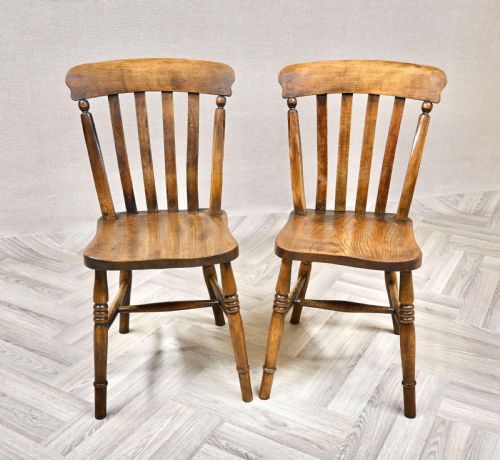
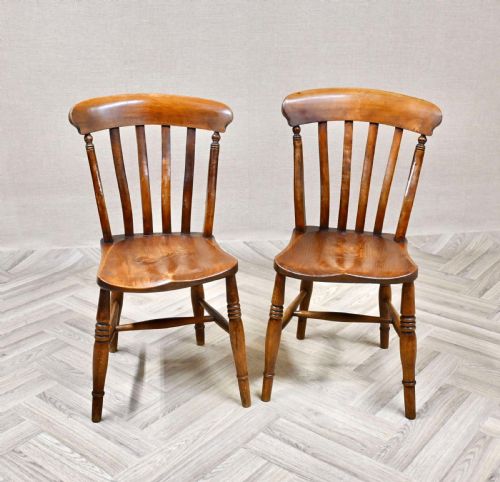
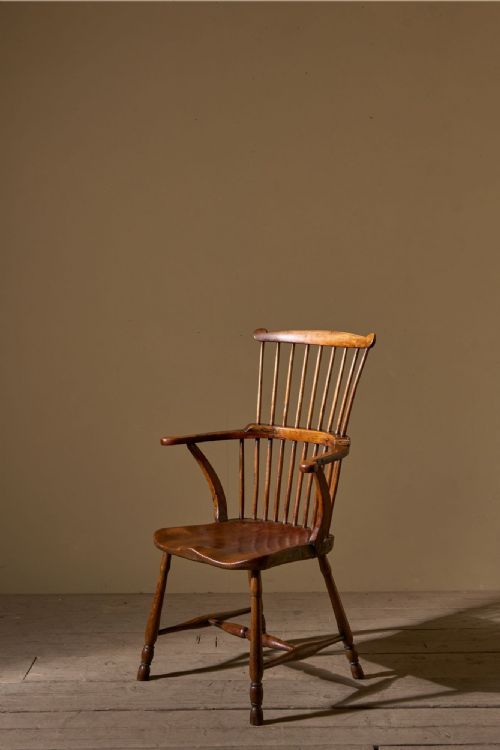
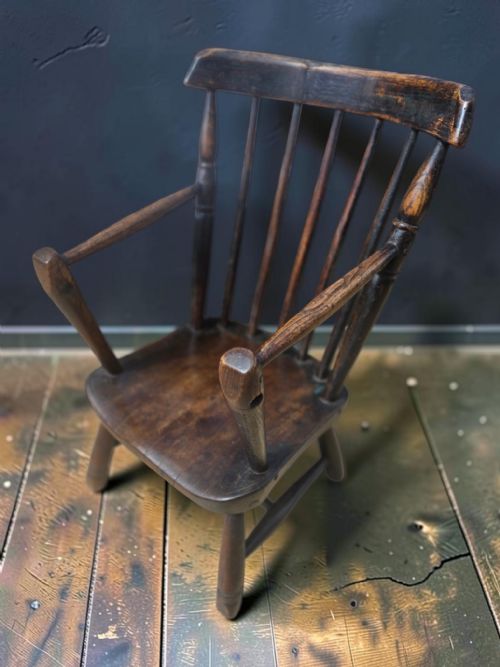
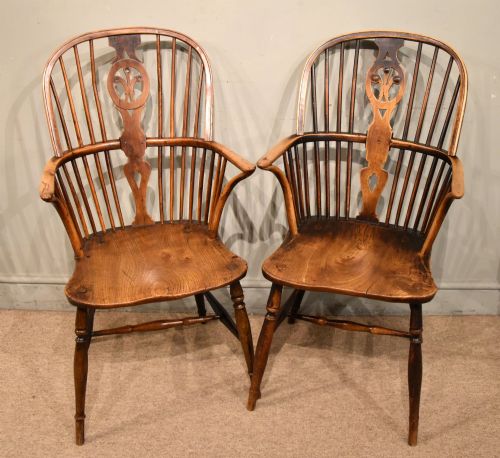
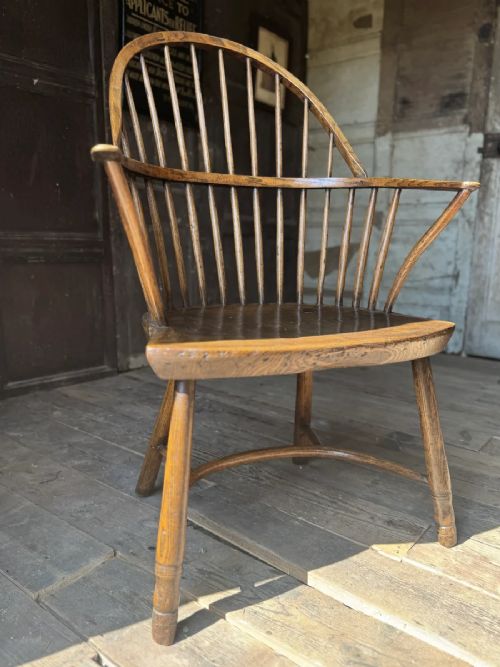
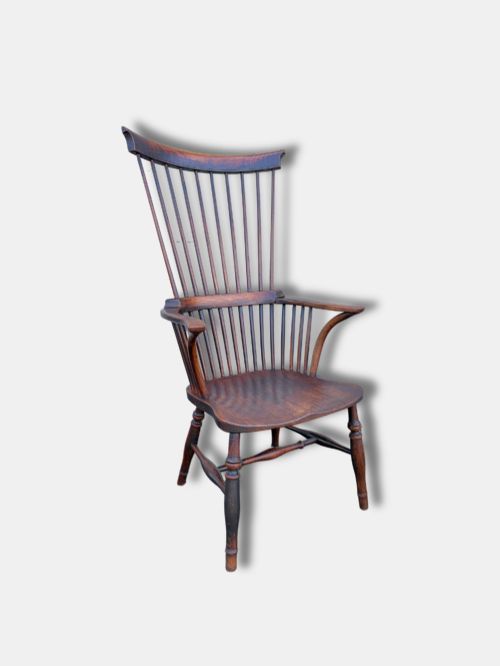
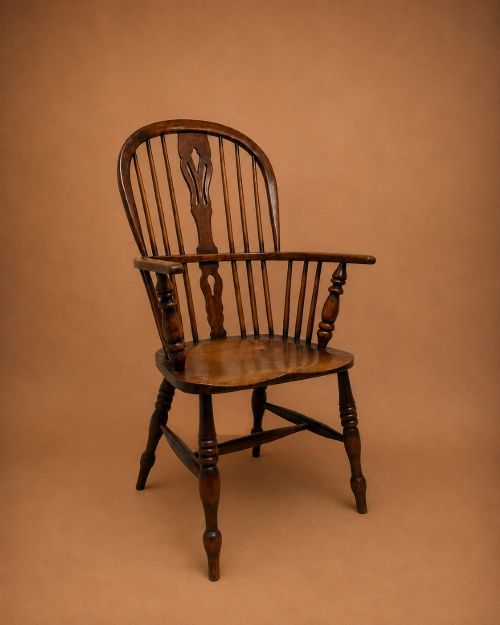
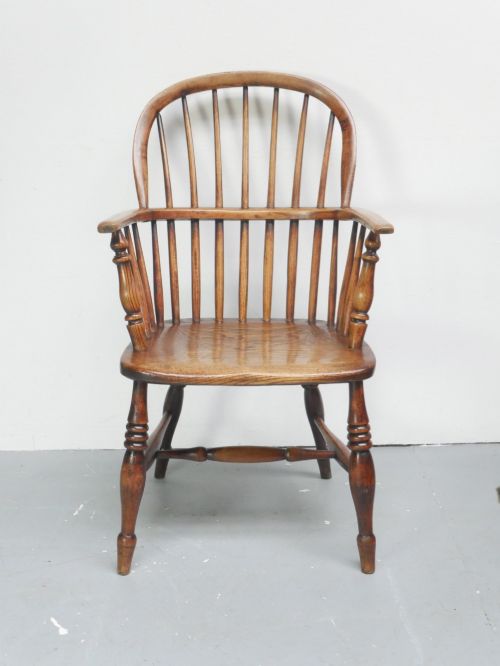
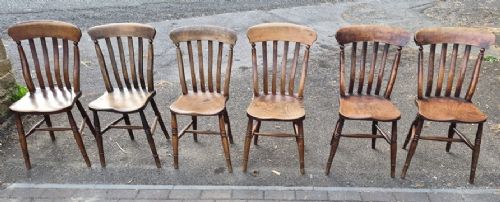
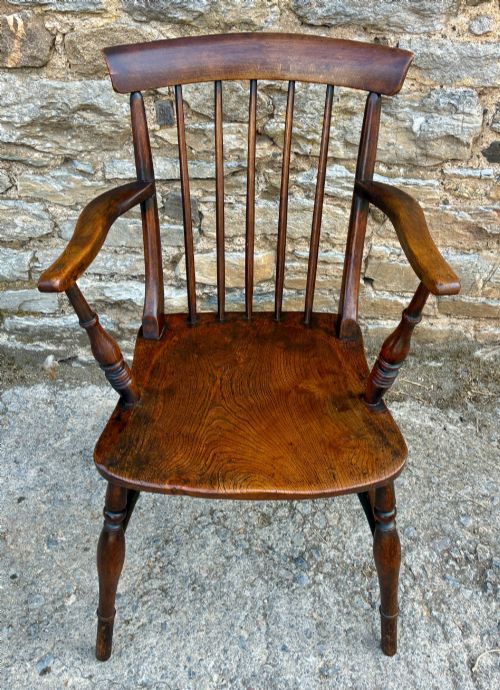
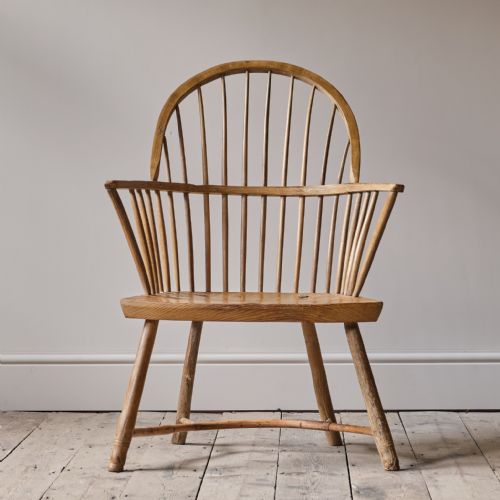
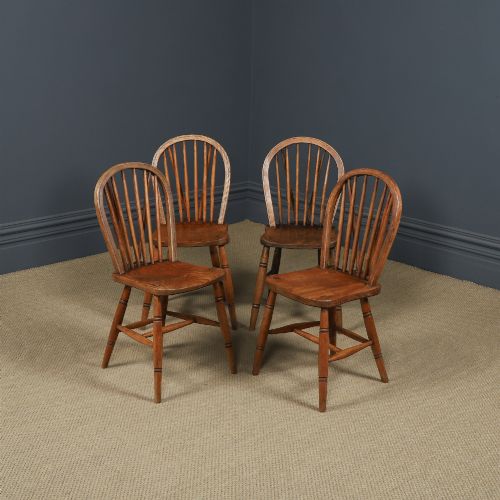
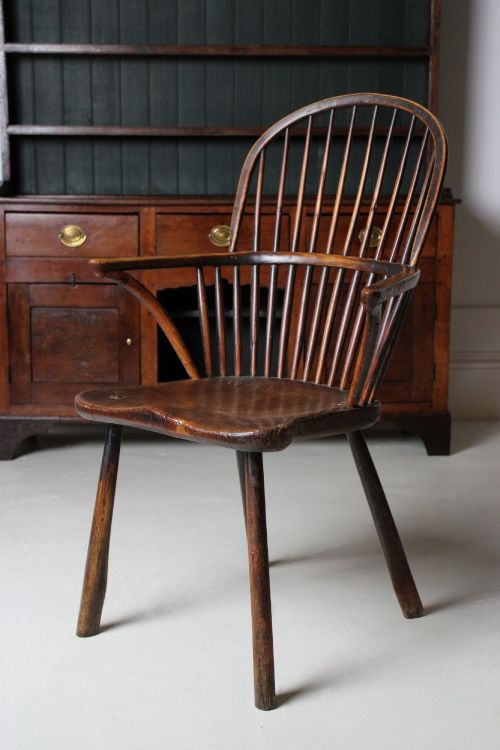
Elm Stick Back Chair
An elm stick back chair brings tactile warmth and vernacular utility to any interior.
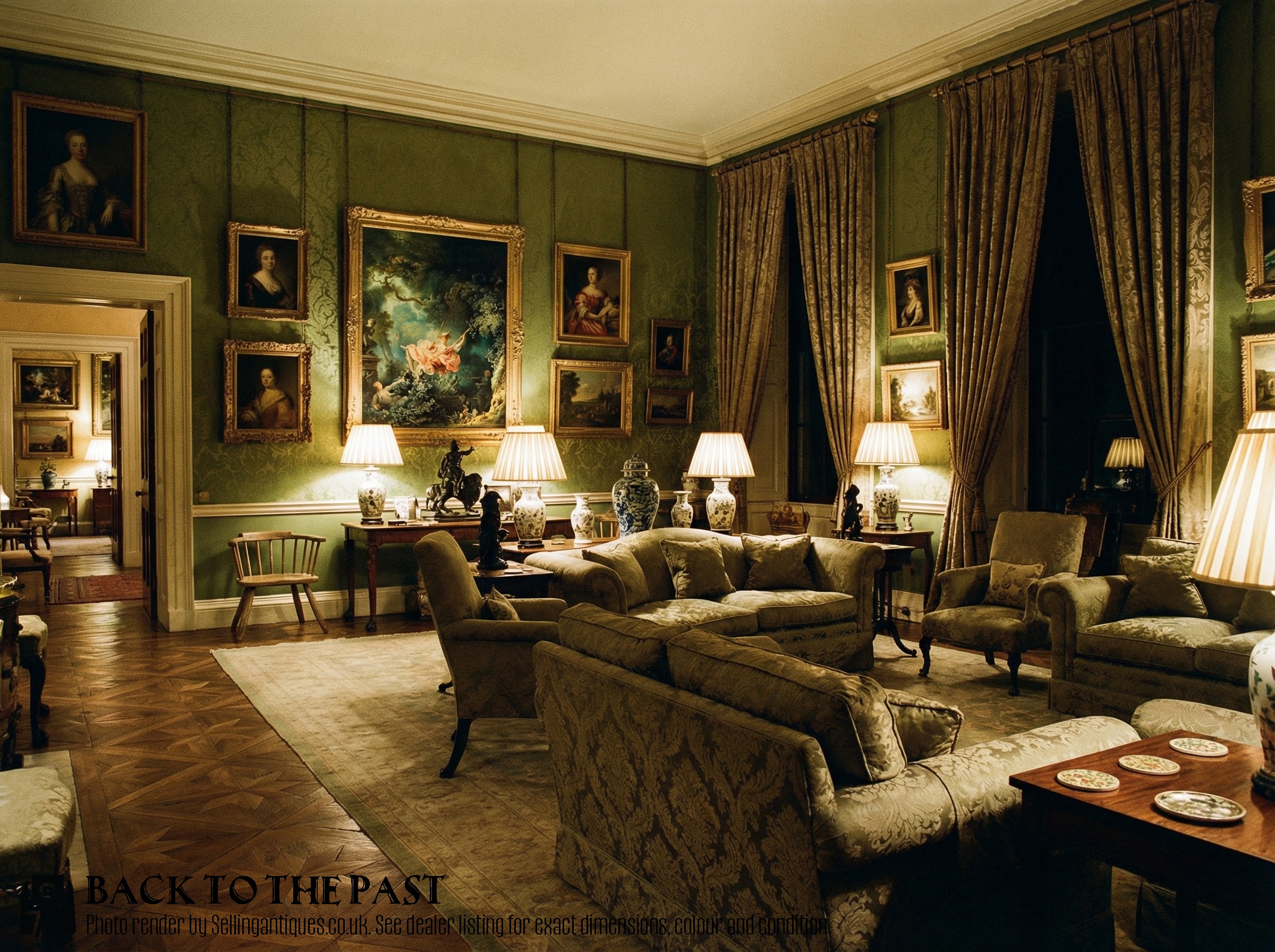
Elm Stick Back Chair
An elm stick back chair is a traditional wooden seat featuring upright spindles inserted directly into a solid timber plank. These items span the eighteenth, nineteenth, and early twentieth centuries, encompassing regional English styles from the Thames Valley, the West Country, and Wales. Collectors encounter single armchairs, matching dining sets, and children's versions.
The form developed through utilitarian necessity into a staple of farmhouse kitchens and country parlours. Makers constructed these seats with distinct back variations, including low profiles, high combs, hoops, and panel backs. Surviving examples demonstrate how vernacular woodworking adapted regional timbers for everyday domestic life.
How they were made
Craftsmen utilised a combination of woods, pairing a solid elm seat with bent ash or beech for the spindles and steam-bent hoops. Elm provided a tough, interlocked grain that resisted splitting when bored for legs and stem tenons. Secondary timbers such as yew, fruitwood, laburnum, and oak appeared in regional variations and decorative elements.
Makers shaped the heavy seats using adzes and scorps to create comfortable depressions before boring undercarriages to receive turned legs and stabilizing stretchers. Spindles were tapered and driven into drilled sockets, securing the back securely without modern adhesives. This green woodworking technique allowed the different moisture contents of the woods to lock tightly together as they dried.
The inventory combines elm seats with ash, beech, yew, fruitwood, laburnum, and oak components.
What varies in quality
The visual harmony of the timber grain and the depth of the patination dictate the standing of an example. Chairs featuring richly figured burr elm or contrasting yew accents command greater interest than plain utility versions. The integrity of the original construction, including untrimmed legs and unreplaced spindles, preserves historical authenticity.
Proportion and stance separate ordinary workshop output from accomplished regional design. Elegant saddle seats with well-sculpted arms and balanced undercarriages display superior craftsmanship by regional makers. The graceful rake of the stick back and the attenuation of the turned components reveal the maker's eye.
The Elm Stick Back Chair Glossary
- Hoop back
- A continuous bentwood bow forming the arms and backrest in a single flowing line. This resilient construction distributes weight evenly across the seat base.
- Crinoline stretcher
- An arched undercarriage reinforcement sweeping backward between the front legs to stabilize the chair. This design is particularly associated with eighteenth-century West Country workshops.
- Thames Valley
- A regional style of Windsor chair originating along the river counties, noted for refined turning, yew wood accents, and sophisticated wheel or stick back designs. These pieces often exhibit cabinetmaker influences.
- Vernacular
- Objects made by local artisans following regional traditions rather than formal architectural patterns. These utilitarian pieces prioritize local materials and practical function.
- Patina
- The surface sheen and colour acquired by wood through decades of handling, polishing, and exposure to light. A desirable patination displays rich depth without artificial intervention.
Elm Stick Back Chair: Frequently Asked Questions
How do I care for an antique elm chair?
Feed the timber periodically with natural beeswax to maintain moisture levels and preserve the historic surface sheen. Keep the chair away from direct heat sources and sudden temperature fluctuations to prevent timber movement.
Inspect the undercarriage joints occasionally to ensure the wedged tenons remain secure within the seat plank. Avoid harsh modern cleaning agents that strip the accumulated patination.
Are these chairs comfortable for daily dining?
Most examples were built with ergonomically sculpted saddle seats designed for extended sitting during meals or fireside tasks. The rake of the stick back provides natural support for the spine.
Dining sets often include side chairs paired with larger armchairs for the table ends. Their sturdy construction handles regular modern use while offering historic character.
What is the difference between a stick back and a hoop back?
A stick back incorporates individual spindles rising from the seat to a straight or shaped top rail. This category includes low-back, high-back, and comb-back variations.
A hoop back utilises a continuous piece of steam-bent wood that forms the arms and the arched backrest outline. Both styles employ similar undercarriages but present distinct architectural profiles.
How can I tell a regional style apart?
Regional attribution relies on timber selection, turning profiles, and construction quirks specific to certain geographic areas. West Country pieces frequently display distinctive bent stretchers and robust proportions.
Thames Valley examples often incorporate yew wood and refined wheel-cut back splats reflecting urban cabinetmaking standards. Examining the undercarriage turning patterns reveals the workshop tradition.