

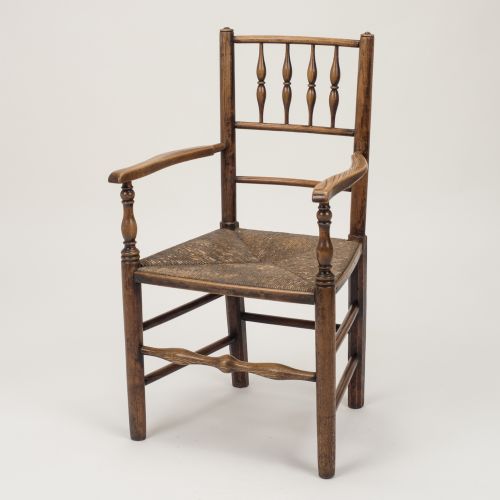
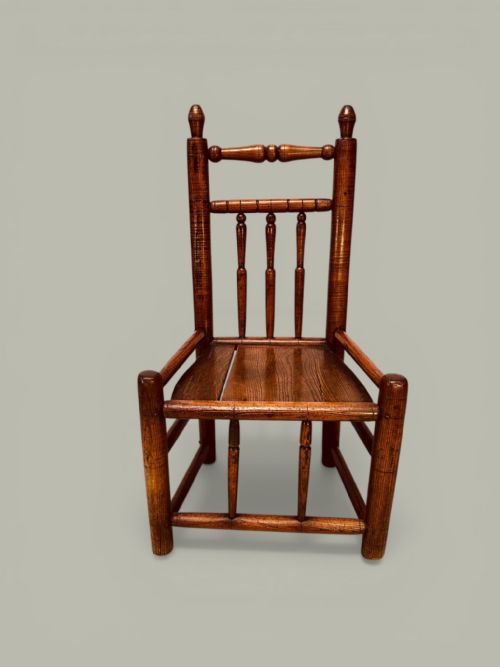


Rustic Ash Arm Chair
A rustic ash arm chair is a vernacular country seat built for strength and comfort, prized by collectors for its honest construction and timber grain.
Rustic Ash Arm Chair
A rustic ash arm chair brings together traditional country craftsmanship and local timber, most often appearing as a Windsor or ladder-back form from the Georgian, Regency, and Victorian periods. Buyers seeking a rustic ash arm chair will find examples ranging from simple low stick-back designs to more elaborate comb-back and spindle-back varieties rooted in English and Welsh vernacular traditions.
The regional diversity within these listings shows distinct local character, from West Country windsors to Lancashire farmhouse seating and early turner's chairs. Surviving examples frequently combine ash with elm, beech, or yew, reflecting the pragmatic choices of rural makers who utilised whatever local woods were available to hand.
How they were made
Makers built these chairs using solid native timbers, turning spindles on a pole lathe and bending green ash for bows and armrests. Seat bases were typically carved from solid elm or shaped to take rush seating, providing a sturdy foundation for the stick-back or spindle construction.
Joinery relied on traditional methods such as wedged tenons and through-joints, allowing the wood to move naturally over centuries of use. The visible grain of ash and the rich burr elm of the seats demonstrate a direct approach to furniture making where structural integrity determined the final shape.
Materials recorded across current items include ash, elm, rush, yew, burr elm, and beech.
What varies in quality
Quality in these rural chairs rests on the balance of proportions, the choice of contrasting timbers, and the survival of the original surface patina. A superior example displays confident turning in the legs and arm supports, whereas simpler pieces show heavier, more utilitarian lines.
The integrity of the construction and the retention of early or original timber components separate standard farmhouse seating from exceptional vernacular pieces. Differences in the complexity of the comb-back or the width of the broad ash arms also distinguish standard production from more ambitious regional work.
The Rustic Ash Arm Chair Glossary
- Comb-back
- A Windsor chair variation where the top rail resembles the spine of a comb, featuring upward-extending spindles. This style offers both structural support and distinct visual elegance.
- Stick-back
- A chair design where turned spindles or plain sticks are tenoned directly into a solid wooden seat. It represents a fundamental vernacular building technique.
- Windsor
- A chair constructed with a solid wooden seat into which the legs and back sticks are independently inserted. These seats gained widespread popularity across English country districts.
- Vernacular
- Objects made by local craftsmen following regional traditions rather than metropolitan academic designs. These pieces prioritise practical function and local material availability.
- Rush
- Dried marsh grass twisted into cords and woven to form flexible chair seats. This material appears frequently on traditional country seating.
Rustic Ash Arm Chair: Frequently Asked Questions
How do I date an ash armchair?
Dating relies on tool marks, timber selection, and construction methods such as the shape of the saddle seat and the turning style of the legs.
Earlier pieces from the eighteenth century often feature primitive comb-back or stick-back forms, while Victorian examples tend to show heavier proportions and broader dimensions.
Were these chairs painted originally?
Many country chairs were finished with plain scrubbed wood or protected with traditional oils and waxes rather than heavy paint.
Some regional examples received dark stains or historic painted finishes to unify different native timbers used in construction.
How do I care for antique ash wood?
Maintain the timber by keeping chairs away from direct heat sources and sudden humidity changes that can cause the ash and elm to split.
Apply traditional beeswax occasionally to nourish the surface and preserve the historic patina without sealing the wood.