



Georgian Primitive Seat
A georgian primitive seat brings honest regional character and unpretentious utility into a modern interior.
Georgian Primitive Seat
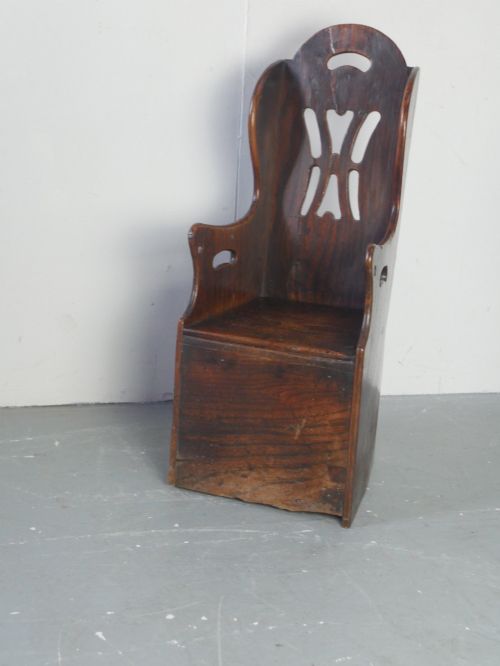
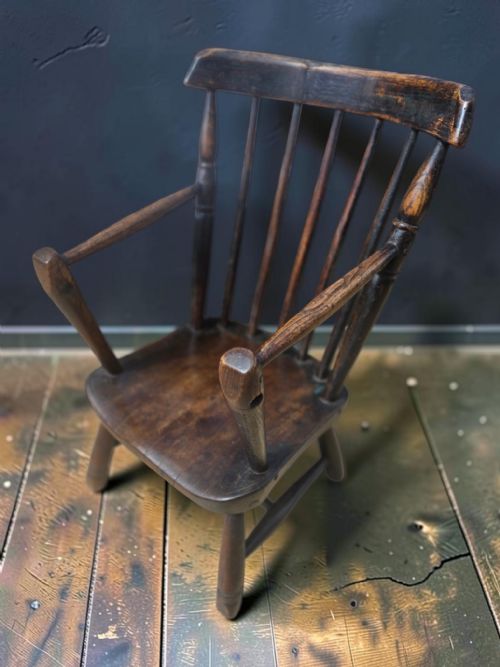
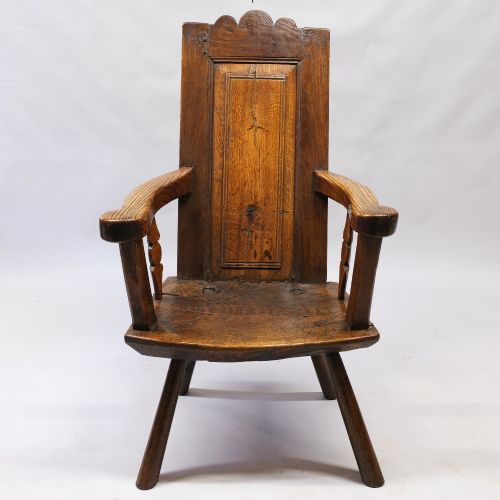
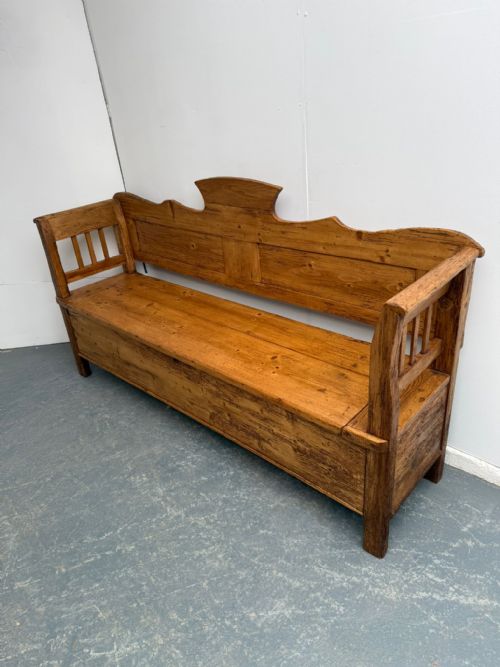
When you search for a georgian primitive seat, you encounter robust domestic furniture shaped by local carpenters rather than metropolitan workshops. The forms include armchairs, children's chairs, benches, stools, and settles produced across the eighteenth and nineteenth centuries.
You are most likely to meet elm, ash, and pine constructions displaying the vernacular styles of English and regional makers. These pieces range from diminutive children's chairs to substantial three-seater box settles and stick-backed armchairs.
Each georgian primitive seat demonstrates straightforward construction methods intended for daily household use rather than formal display. Their proportions vary from neat, compact proportions to broad, low stick-back seating.
How they were made
Makers utilised solid native timbers such as elm, ash, oak, and yew, often combining multiple woods within a single piece for seats, spindles, and legs. Fruitwood and pine also appear, frequently worked into panel backs, comb backs, and sculpted rounded seats.
Construction relied on traditional joinery adapted to regional resources, incorporating rush or rope seating alongside solid timber planks. Surfaces were finished simply, with some examples retaining historic wax or scumble paint treatments.
Listings here feature pieces spanning the eighteenth and nineteenth centuries, constructed from elm, ash, oak, pine, yew, fruitwood, and iron.
What varies in quality
The distinction between ordinary and exceptional examples rests upon the harmony of the timber selection and the retention of original surface patination. Combinations of mixed woods like yew, elm, ash, and fruitwood in a single comb-back armchair elevate the visual interest of a piece.
Structural integrity combined with untouched vernacular proportions defines the better survivals. Pieces displaying unusual regional forms, such as sculpted rounded seats or scumble pine finishes, command greater attention than standard utilitarian variants.
The Georgian Primitive Seat Glossary
- Vernacular
- Furniture made by local craftsmen for regional use, following traditional local patterns rather than metropolitan fashion. These pieces often employ native timbers available close to the workshop.
- Comb back
- A Windsor chair variation where the spindle tops pierce a horizontal top rail, resembling the teeth of a comb. This construction offers robust support for the upper back.
- Stick chair
- Seating constructed by boring legs and back sticks directly into a solid wooden seat slab. It represents one of the oldest and most direct forms of British chairmaking.
- Settle
- A wooden bench with a high solid back, enclosed arms, and frequently a box base for storage. It was designed to block drafts in domestic halls and kitchens.
- Scumble
- A paint technique used to create faux wood grain or mottled decorative surfaces on plain timber. It protected cheap softwoods while imitating more expensive materials.
Georgian Primitive Seat: Frequently Asked Questions
What is a primitive seat?
A primitive seat is a piece of utilitarian furniture made by regional carpenters using local woods and traditional methods, bypassing formal London styles. These items were built for everyday service in country homes and farmhouses.
They include benches, stools, children's chairs, and armchairs produced primarily during the eighteenth and nineteenth centuries. Their appeal lies in their direct construction and honest domestic utility.
How do I identify a Georgian seat?
Georgian seating from the domestic vernacular tradition is identified through its straightforward construction using native timbers like elm, ash, and pine. Look for hand-carved details, panel backs, or stick construction rather than classical ornamentation.
Regional variations often provide clues to the specific county or workshop where the piece originated. The use of mixed woods within a single frame also points toward this vernacular tradition.
Where were these chairs used?
These seats were made for everyday domestic life in cottages, farmhouses, and regional country dwellings. Settles kept drafts away from firesides, while low stick backs and armchairs served around kitchen tables.
Children's chairs and small stools accommodated younger members of the household. Their robust build ensured they could withstand heavy daily use in busy rural environments.