



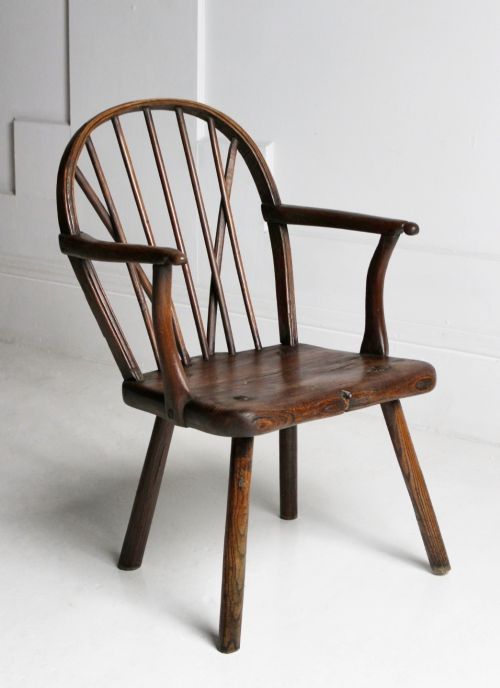


Vernacular Elbow Chair
A vernacular elbow chair is a sturdy regional seat built for comfort, and you will find these heavy-timbered country armchairs rendered in ash, elm, and yew.
Vernacular Elbow Chair
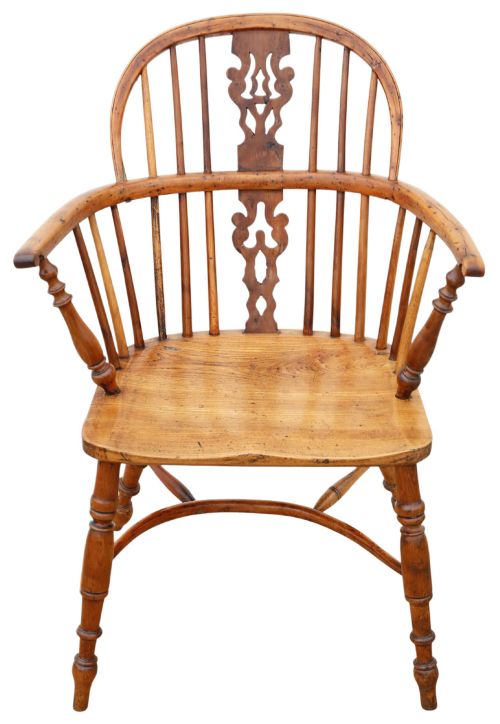
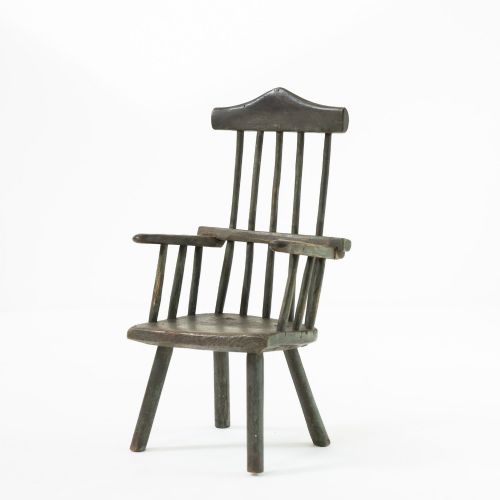
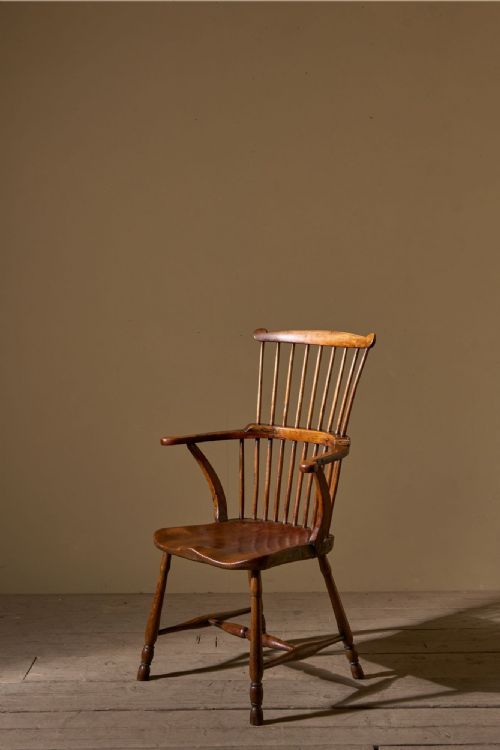
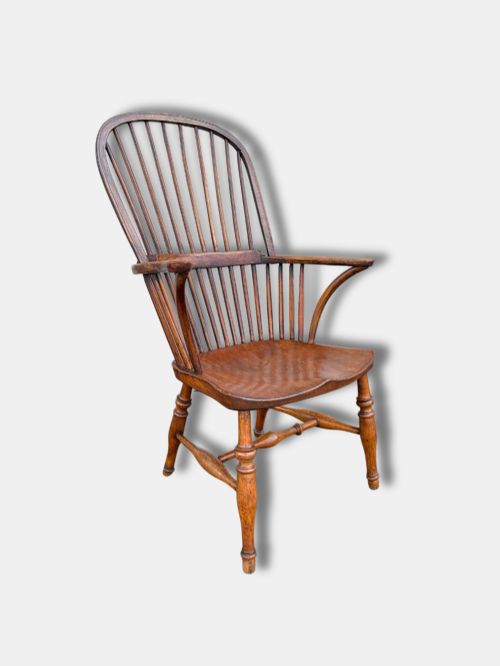
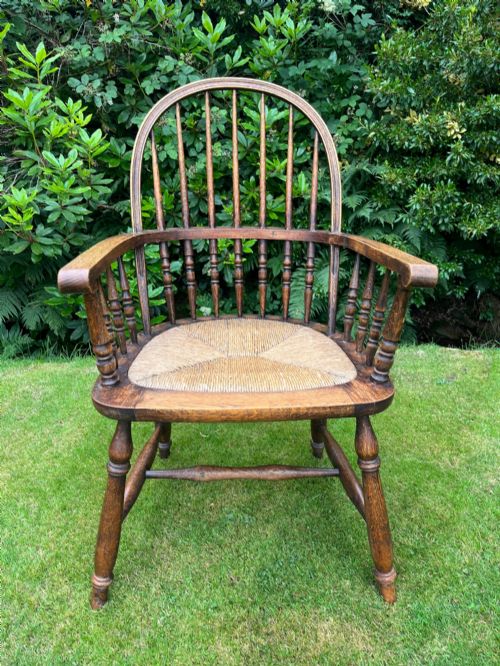
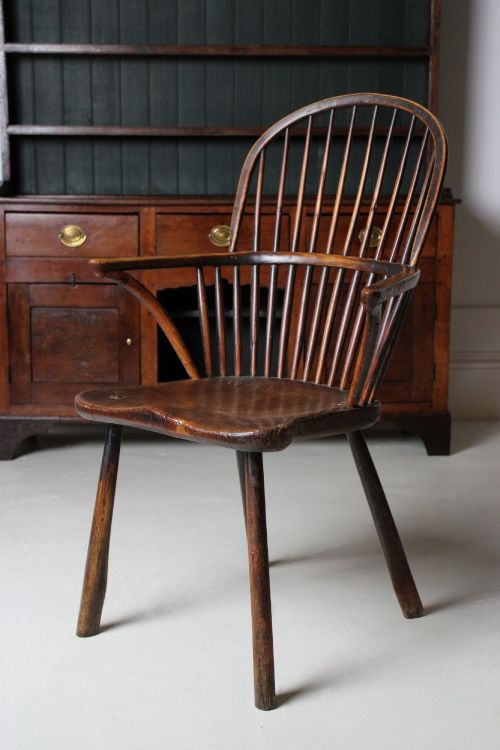
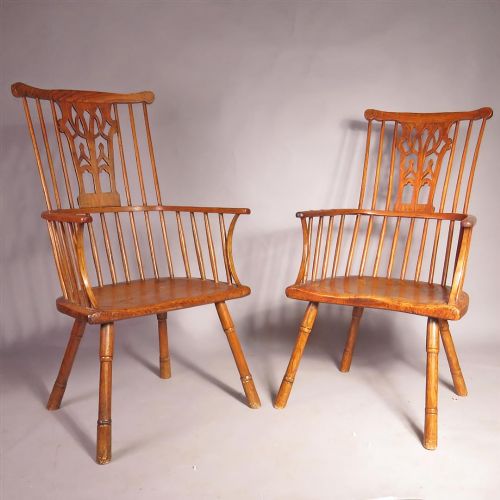
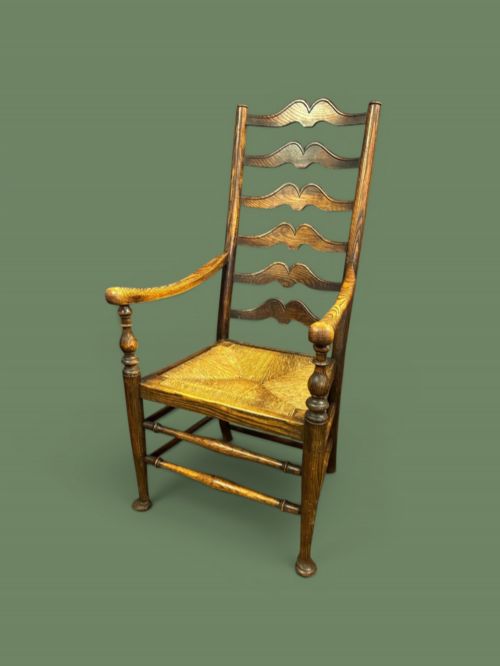
A vernacular elbow chair represents the domestic seating of the English, Welsh, and Scottish countryside, shaped by local tradition rather than metropolitan fashion. These pieces include Windsor armchairs, low-back stick backs, comb backs, and ladderbacks designed for everyday use in farmhouses and cottages.
The specimens seen here span from the seventeenth century through the Victorian era, with nineteenth-century examples and eighteenth-century forms appearing most frequently. Buyers encounter both adult-sized armchairs and smaller children's variants across these periods.
Makers utilised native hardwoods to construct these seats, producing robust frames that often combine several timbers within a single chair. The regional variations range from Yorkshire broadarms to Welsh hoop-backs and West Country Windsors.
How they were made
Traditional makers built these chairs using a combination of turned spindles, bentwood hoops, and solid saddle-shaped seats carved from a single thick slab of timber. Elm serves commonly for the seat because its interlocking grain resists splitting when legs and spindles are wedged into place.
Ash, yew, fruitwood, and oak provide the structural strength for legs, arms, and bow backs, often shaped on a pole lathe or bent with steam. Certain examples incorporate rush for seating or retain traces of early paint on the wooden frame.
The records show children's armchairs alongside full-sized adult seating, incorporating rush seats, paint finishes, and primitive stick-back designs.
What varies in quality
The distinction between standard country seating and superior specimens lies in the selection of timber and the ambition of the form. A chair featuring figured burr yew, varied multi-wood construction, or an expressive comb back demonstrates greater craftsmanship than a plain utilitarian stool.
Proportion and the handling of the wood also set examples apart, with well-balanced armbows and richly patinated surfaces elevating a piece from simple utility to folk art.
Rockley maker·Darvil
The Vernacular Elbow Chair Glossary
- Windsor chair
- A wooden armchair featuring a heavy solid seat into which the legs and back spindles are independently tenoned. This construction method creates a sturdy frame typical of rural cabinet-making.
- Elbow chair
- An armchair designed with low arms intended to support the elbows rather than a full-length rest. These pieces appear frequently in country houses and parlours.
- Comb back
- A Windsor chair variation where the central vertical spindles rise through a top rail to resemble the teeth of a comb. This style offers additional height and back support.
- Stick back
- A chair constructed with simple turned or cleft rods forming the backrest rather than a solid carved splat. It is a hallmark of vernacular and primitive furniture design.
- Broad arm
- An armchair featuring widened wooden armrests designed to provide a writing surface or extra room. Yorkshire examples are particularly known for this generous proportion.
Vernacular Elbow Chair: Frequently Asked Questions
What is a vernacular elbow chair?
A vernacular elbow chair is a regional wooden armchair built by local cabinet makers for domestic use rather than following London court fashions.
These chairs rely on native woods and practical joinery, resulting in sturdy seating forms like the Windsor and stick back.
How do I date an old country armchair?
Dating relies on observing construction methods, tool marks, wood species, and regional stylistic traits recorded across different centuries.
Earlier pieces often show primitive joinery and seventeenth or eighteenth-century panel construction, while later nineteenth-century versions utilise steam-bending and factory-turned spindles.
What woods were used for these chairs?
Makers selected native British hardwoods depending on the specific part of the chair being constructed.
Elm provides a crack-resistant seat slab, while ash, yew, oak, and fruitwood form the bent bows, legs, and delicate back spindles.
Where were these country chairs made?
They were produced across rural regions of England, Wales, and Scotland by local bodgers and joiners using locally available timber.
Distinct regional variations emerged, including Yorkshire broadarms, Welsh hoop-backs, and West Country Windsor designs.