
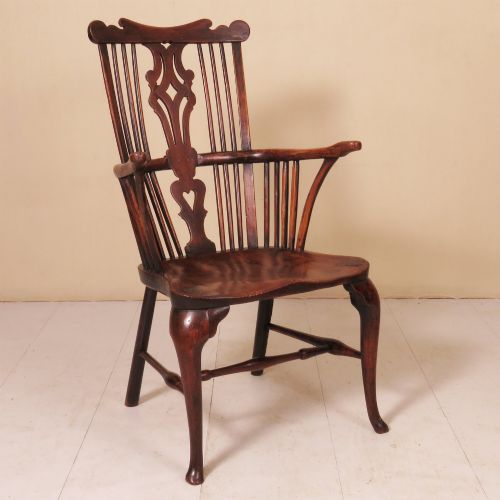
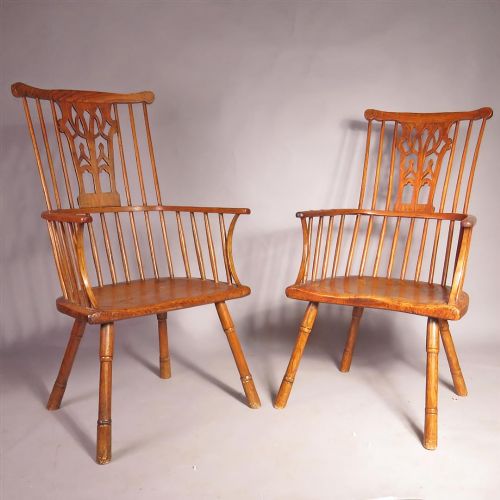
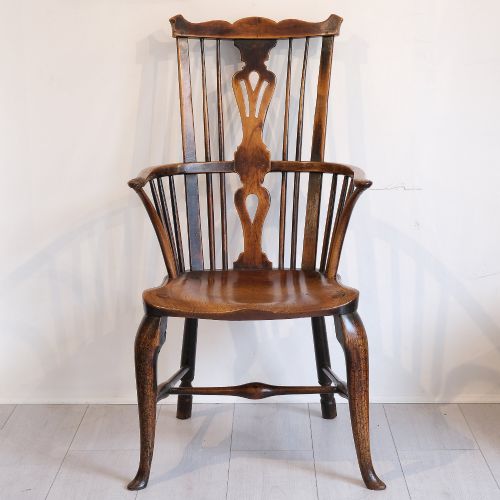
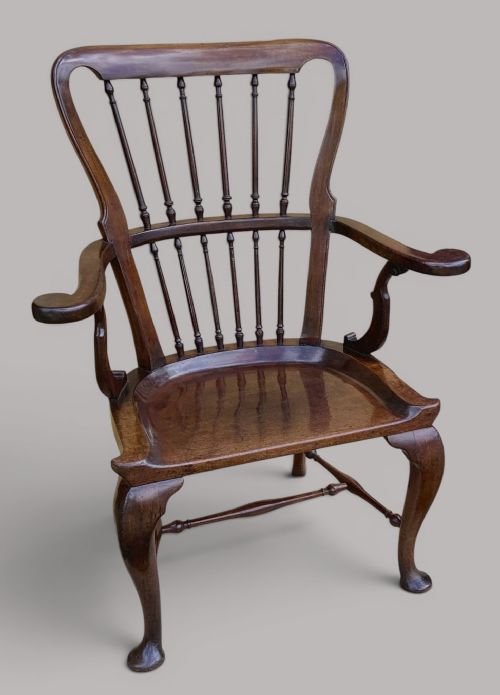
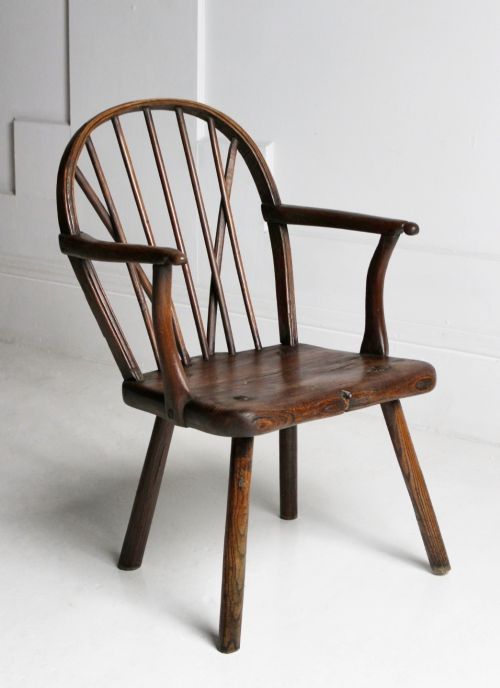


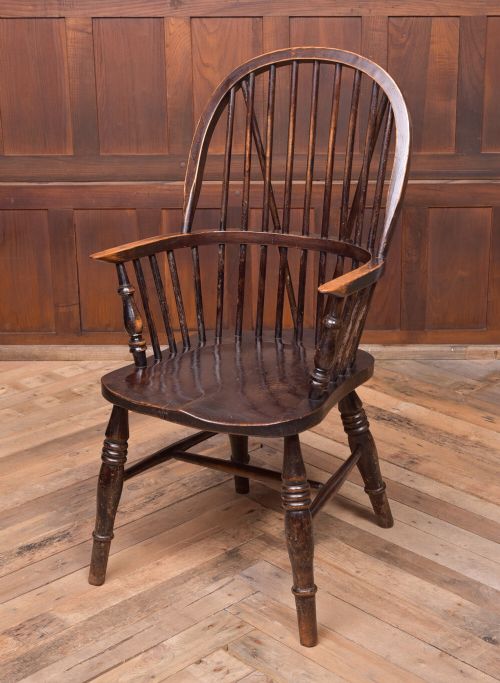
Period Windsor Armchair
A period windsor armchair offers solid country seating, built from native hardwoods with saddle seats and spindle backs designed to mould to the body.
Period Windsor Armchair
When searching for a period windsor armchair, you encounter seating developed in English workshops during the eighteenth and nineteenth centuries. These chairs combine carved wooden seats with steam-bent frames and upright spindles, rooted in vernacular furniture traditions.
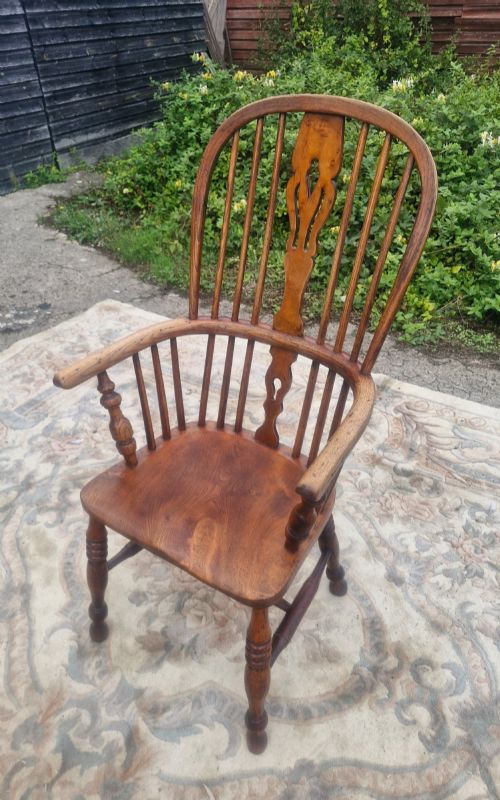
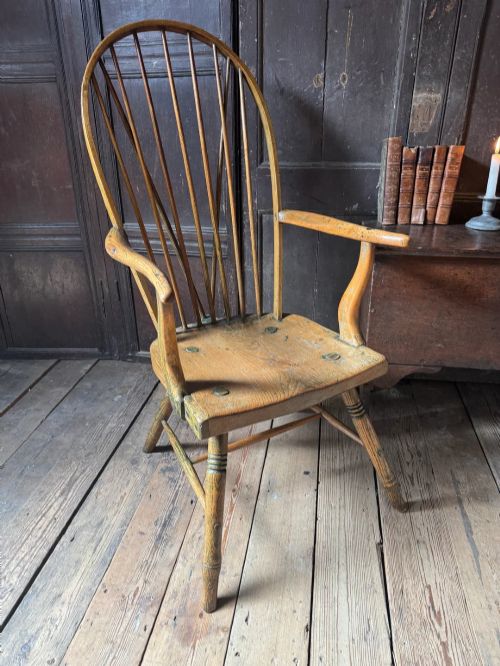
The versions most commonly met on this page date from the Georgian era through to the Victorian period. They appear in high hoop-back, comb-back, and low-back configurations, often formed as pairs or sets rather than isolated examples.
Regional origins shape these chairs, with West Country makers producing distinctive combinations of timber and structural bracing. Whether styled as George III vernacular pieces or later Victorian seating, each chair relies on pegged joints and solid plank construction.
How they were made
Makers constructed these chairs by combining contrasting native timbers, typically using elm for the carved saddle seats alongside ash for the bentwood hoops and spindles. This selection utilised the toughness of ash for flexible components and the grain stability of elm for thick seats.
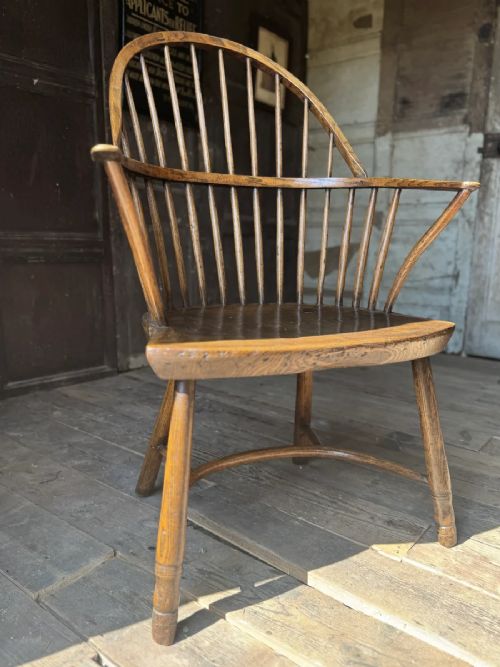
Underframes frequently incorporated crinoline stretchers for added rigidity, connecting the legs beneath the seat with a curved wooden brace. Legs and spindles were turned on lathes before being wedged into bored holes through the seat plank.
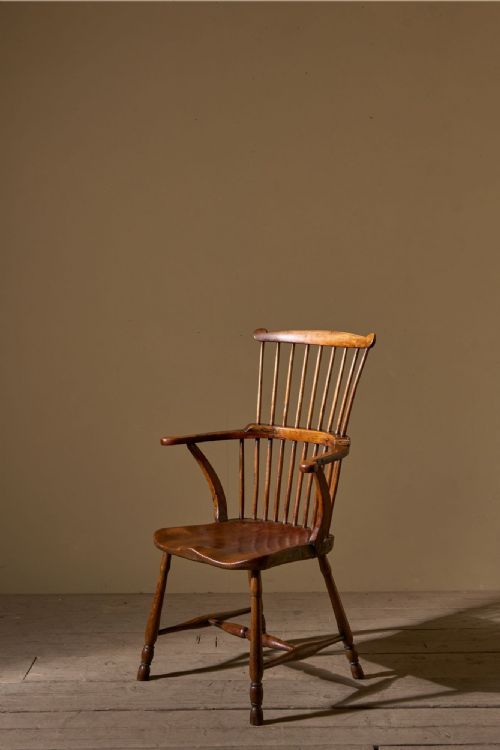
Comb-back chairs were once nicknamed smoker's bows, offering a convenient rest for a gentleman's elbow during an evening pipe.
What varies in quality
Quality rests in the depth of the saddle carving and the proportion of the bentwood hoop. Superior examples display generous proportions in the elm seat and graceful tapering in the ash spindles.
The integrity of the original construction and the preservation of surface patination distinguish finer chairs from heavily restored pieces. Surviving stretchers and undisturbed wedged joints indicate superior regional craftsmanship.
The Period Windsor Armchair Glossary
- Hoop back
- A continuous bentwood rail forming the upper back and arm supports of the chair. This design distributes weight evenly across the wooden frame.
- Comb back
- A style featuring a low lower back topped by a horizontal crest rail with vertical spindles rising above. It resembles the teeth of a comb.
- Crinoline stretcher
- A curved metal or wooden brace connecting the legs of a chair beneath the seat. It provides structural stability and stiffens the underframe.
- Vernacular
- Furniture produced by local craftsmen following regional traditions rather than metropolitan pattern books. These pieces prioritise utility and local materials.
- Saddle seat
- A thick wooden seat plank scooped and carved into a dished contour. This shaping provides ergonomic comfort for the sitter.
Period Windsor Armchair: Frequently Asked Questions
What is a windsor armchair?
A windsor armchair is a wooden seat built with a distinct construction method where the legs and back spindles are fitted directly into a solid carved seat.
Unlike upholstered furniture, these chairs expose their timber framework, relying on turned components and bentwood hoops for structural support.
How do I date a windsor chair?
Dating relies on observing construction details, timber combinations, and the specific profile of the backrest and arm supports. Eighteenth-century examples often feature comb backs and ash-elm construction with native patination.
Later Victorian pieces introduce different proportions and lower back configurations while maintaining traditional stick-back joinery methods.
Where were these chairs made?
Regional workshops across England produced these seating forms, with specific counties developing distinct characteristics in their turning and bracing. West Country makers are frequently noted for particular combinations of timber and underframe design.
Local timber availability influenced whether a chair utilised ash, elm, beech, or occasional mahogany.
How do I live with a windsor chair?
These sturdy chairs suit daily use around dining tables or as standalone seating in living spaces. Their robust timber construction handles regular sitting while adding architectural character to a room.
Keep them away from direct heat sources and extreme humidity fluctuations to protect the traditional pegged joinery and solid wood seats.