

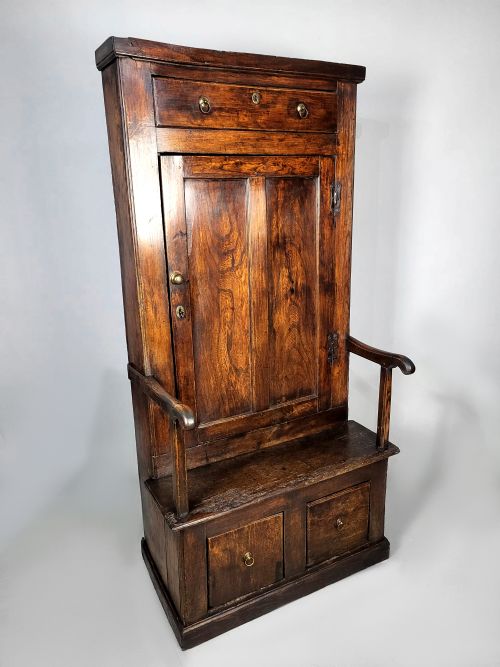


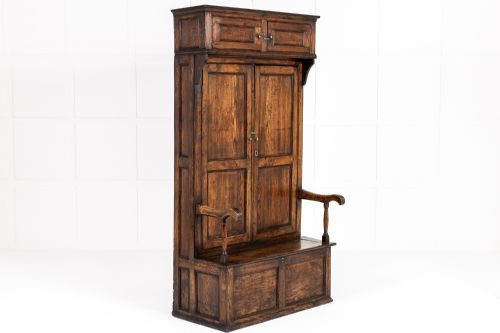


Elm Hall Bench
An elm hall bench brings sturdy provincial character to an entranceway, offering long timber seating shaped by centuries of domestic use.
Elm Hall Bench
An elm hall bench provides linear timber seating designed for hallways, corridors, and large entrance spaces. These items appear across various styles, ranging from rustic country forms to Reformed Gothic and Arts & Crafts designs.
The selection includes 18th Century provincial pieces, 19th Century examples, and early 20th Century French benches. Makers utilised durable native timbers to construct robust seating suited to heavy daily traffic.
Forms extend beyond standard seating to include window seats, settles, and trestle tables incorporating elm components. Buyers encounter single items alongside matched pairs originating from diverse regional workshops.
How they were made
Carpenters constructed these benches primarily from solid elm, frequently pairing the timber with oak, sycamore, or burr elm. Artisans shaped thick planks using traditional hand tools, leaving subtle surface toolmarks that reveal the process of manufacture.
Structural integrity relied on pegged mortise and tenon joints to withstand decades of heavy use. Certain pieces incorporate brass fittings or fabric elements, while others display scrubbed wooden surfaces finished without modern varnishes.
Elm Hall Bench Retail Price Guide 2026
Typical asking prices for elm hall bench among the pieces listed under this phrase on Sellingantiques today, from the lower quarter to the upper quarter. They describe what is for sale here now, not the wider market.
Listings feature periods spanning the 18th Century, 19th Century, and early 20th Century alongside materials including elm, oak, and sycamore.
What varies in quality
Quality rests in the selection of timber, particularly where figured burr elm or high-grade oak highlights the grain. Superior examples retain their original structural proportions without excessive timber shrinkage or clumsy repairs.
The sophistication of the joinery and stylistic detail separates standard utilitarian seating from refined provincial or Gothic Revival pieces. Original surface patination acquired through generations of handling distinguishes untouched examples from heavily stripped surfaces.
The Elm Hall Bench Glossary
- Elm
- A tough, interlocking hardwood valued for its resistance to splitting, commonly used for seating and rustic furniture. It frequently displays a pronounced grain pattern with rich figuring.
- Settle
- A wooden bench with a high back, solid arms, and often a storage box beneath the seat. This form protected occupants from draughts in older domestic interiors.
- Provincial
- Describing items made in regional areas rather than major urban centres, often reflecting local traditions and practical design. These pieces prioritize utility over elaborate ornamentation.
- Trestle table
- A table supported by two or more trestle frames rather than four distinct corner legs. Benches of similar construction often accompanied these dining surfaces.
- Patina
- The surface sheen and mellow colour developed by wood over decades of handling, exposure, and polishing. This quality indicates age and authenticity.
Elm Hall Bench: Frequently Asked Questions
Where should I place an elm hall bench?
These benches suit entrance halls, narrow corridors, and boot rooms where durable linear seating is practical. Their restrained proportions also allow them to sit effectively beneath windows or along wide passage walls.
Ensure the chosen location allows adequate clearance for the depth of the seat and any integrated backrests. Pairing a bench with neutral walls lets the figured grain and natural timber tones remain the focal point of the space.
What is the difference between an 18th and 19th century bench?
Eighteenth-century examples typically display simpler provincial construction methods shaped by local joiners meeting domestic needs. They often feature deep patination and hand-adzed surfaces resulting from early hand-tool techniques.
Nineteenth-century pieces frequently adopt specific revival styles such as Reformed Gothic, Arts & Crafts, or French country designs. These later items may incorporate machine-sawn elements alongside traditional hand joinery.
Can these benches be used for daily seating?
Solid hardwood construction makes these items structurally robust for everyday sitting in busy household environments. The dense nature of elm and supporting timbers ensures they handle regular weight without failing.
Consider adding a simple loose cushion if extra comfort is required during prolonged sitting. The sturdy build allows them to function reliably in active family spaces.