



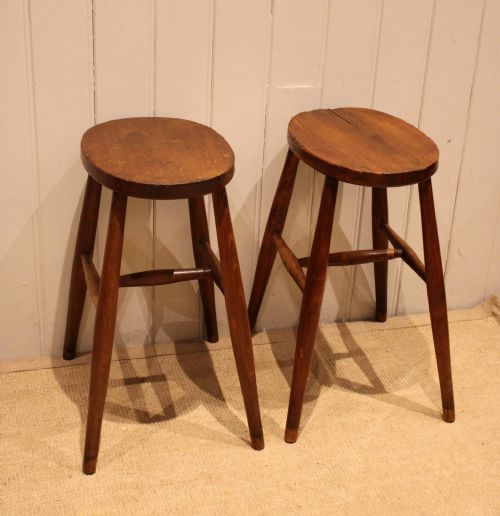
Elm Country Stool
An elm country stool is a sturdy utilitarian seat built from resilient native timber, prized for its honest grain and functional simplicity.
Elm Country Stool
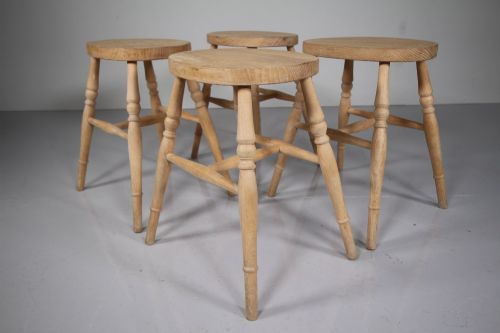
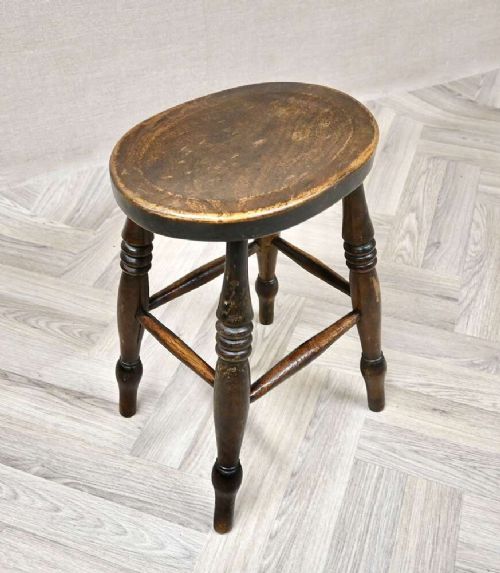
The elm country stool encompasses a broad category of vernacular seating shaped for domestic, agricultural and workshop use over several centuries. Buyers searching this phrase typically encounter nineteenth-century examples alongside earlier Georgian and eighteenth-century forms.
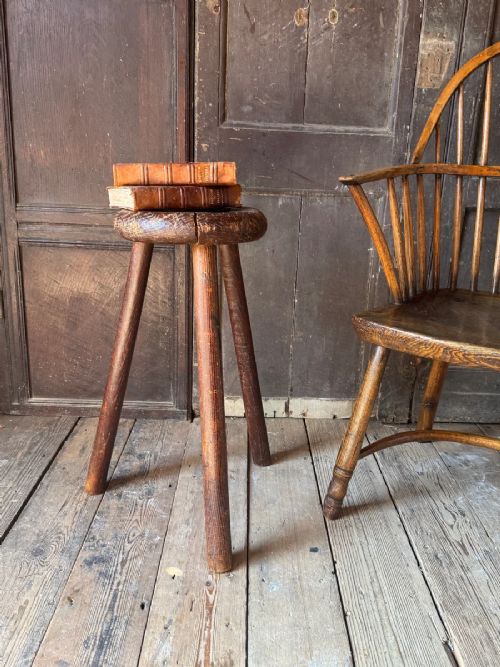
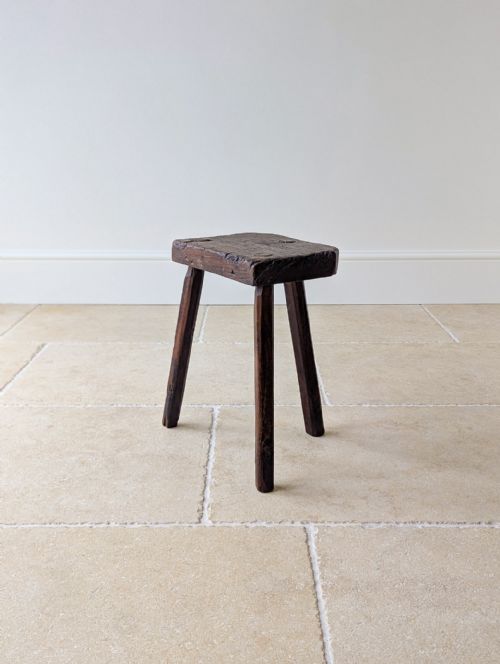
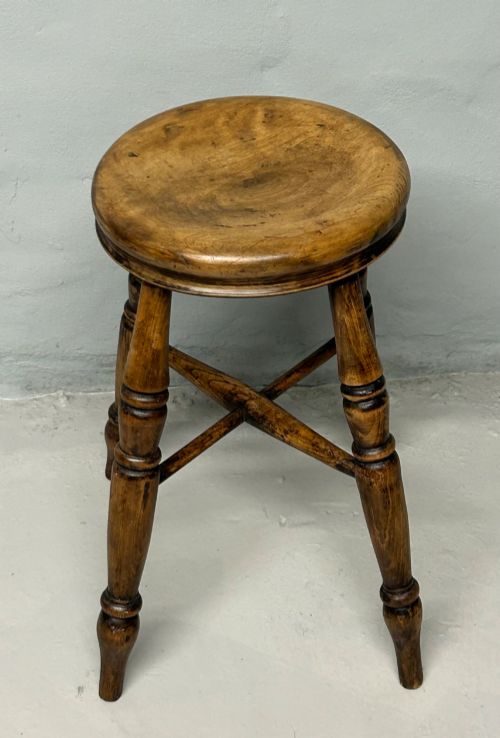
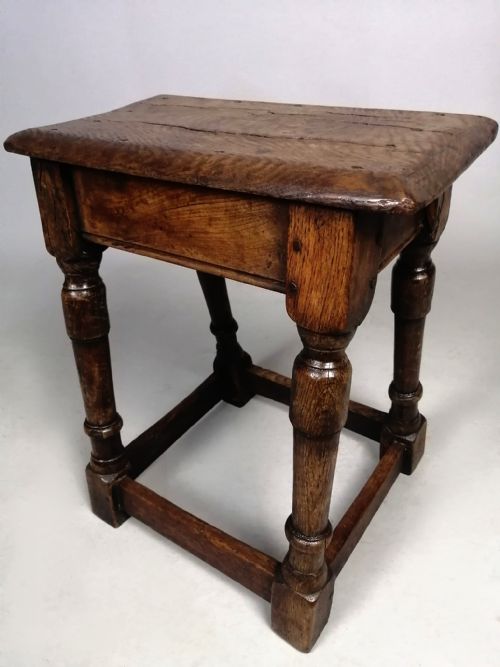
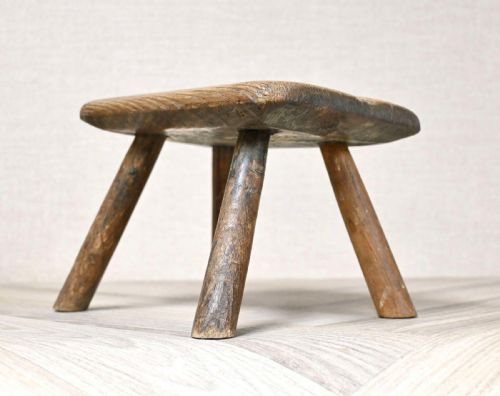
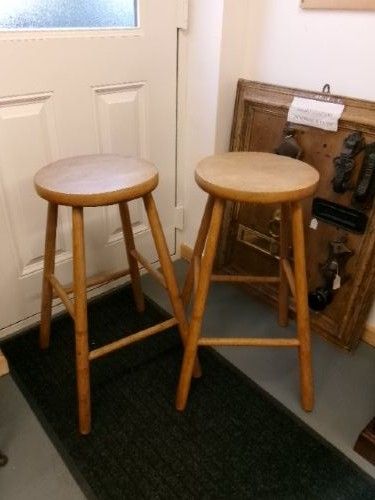
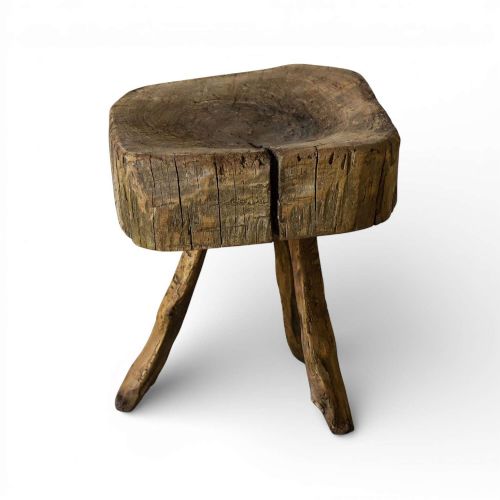
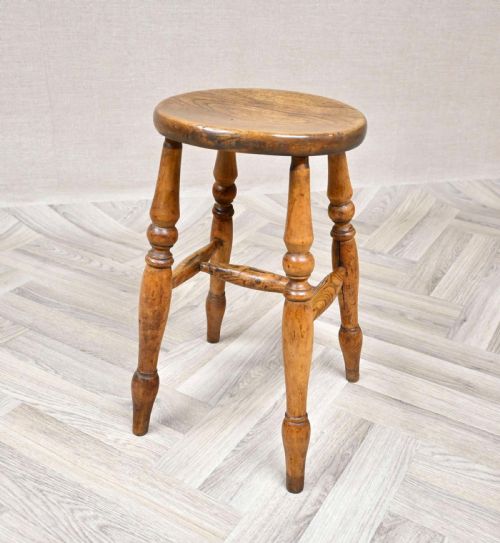
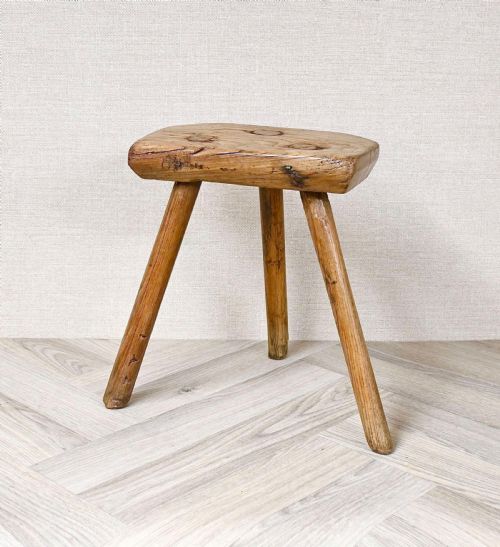
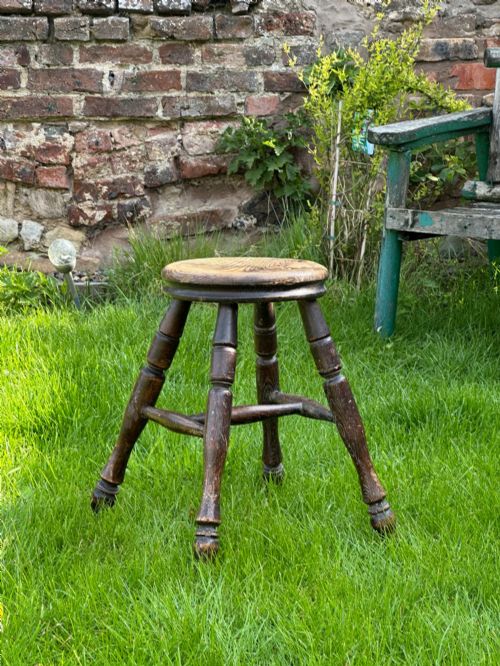
The selection ranges from low three-legged milking seats and tall tavern stools to heavy chopping blocks and joint stools. Most surviving examples pair elm tops with supporting legs fashioned from ash, beech or oak.
Regional variations span English, French, Swiss and Chinese origins, reflecting local timber supplies and practical seating needs. These pieces function equally as minimalist side tables, occasional stands or everyday kitchen seating.
How they were made
Makers relied on elm for seats due to its interlocking grain, which resists splitting when subjected to heavy daily wear and pressure. This resilient wood is frequently combined with ash or beech legs turned on a lathe or shaped with drawknives.
Traditional construction methods involve wedged tenons passing straight through the seat surface, creating a rigid frame without metal fasteners. Surfaces often show traces of original paint, adze marks or live edges left by the rural carpenter.
Listings feature elm combined with ash, beech and oak across eighteenth and nineteenth-century forms.
What varies in quality
The character of the grain dictates much of the visual appeal, with figured, burr or wild elm commanding greater attention than plain boards. Structural integrity depends on how firmly the legs remain wedged into the seat plank without excessive movement.
Surface preservation tells a story of utility, where untouched dry patination or original paintwork elevates an ordinary milking seat into a compelling artefact. Proportion and leg splay also contribute to the balance of the silhouette.
The Elm Country Stool Glossary
- Elm
- A tough, coarse-grained hardwood traditionally utilised for seating due to its resistance to splitting under heavy pressure.
- Windsor
- A style of seating construction featuring turned legs and spindles socketed directly into a solid carved wooden seat.
- Joint stool
- An early form of wooden seating joined with mortise and tenon framing rather than pegged or nailed joints.
- Vernacular
- Everyday objects built by local craftspeople for practical utility rather than following formal academic design rules.
Elm Country Stool: Frequently Asked Questions
How were elm country stools used?
These pieces served practical roles in dairies, workshops, taverns and farmhouses as working seats for daily labour. Their low centre of gravity made them stable on uneven stone floors.
Over time, many transitioned from utilitarian workshop equipment to decorative household accents used for resting books, plants or candles.
How do I live with an elm stool?
An elm country stool fits easily beside a fireplace, next to a sofa or underneath a hallway console table. Their compact footprints allow them to be tucked away until needed for extra seating.
Keep wooden seats away from direct heat sources and sudden humidity shifts to prevent the native timber from drying out or splitting.
How can I tell the age of a stool?
Dating relies on observing construction marks, tool methods and timber wear patterns left by generations of use. Early pieces often feature hand- cleft wood and pegged joinery.
Later nineteenth-century examples frequently show machine-turned components alongside traditional hand-finished seats and wedges.
Why do some stools have three legs?
Three-legged stools remain completely stable on uneven earthen floors found in old barns, dairies and cottages. This practical design prevents the seat from rocking.
Four-legged variants typically appear in more formal domestic settings like farm kitchens and dining parlours.