
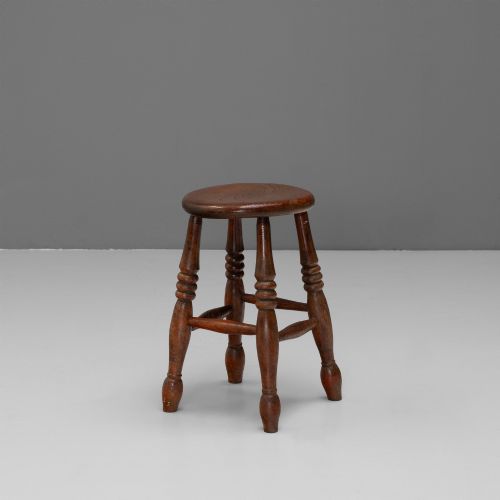
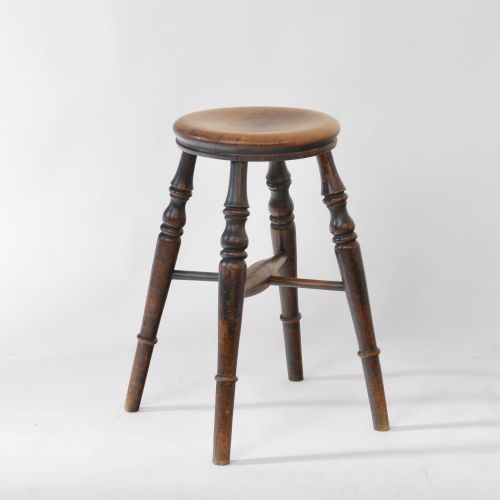
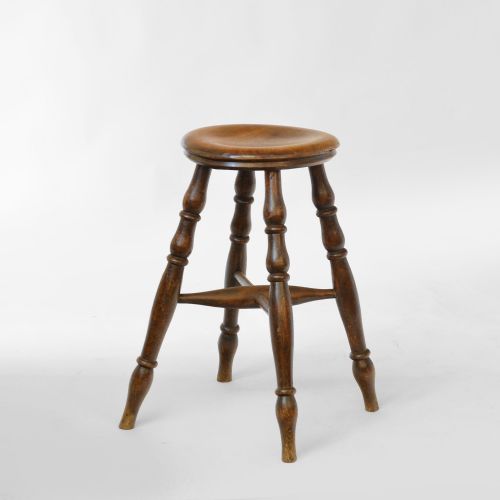
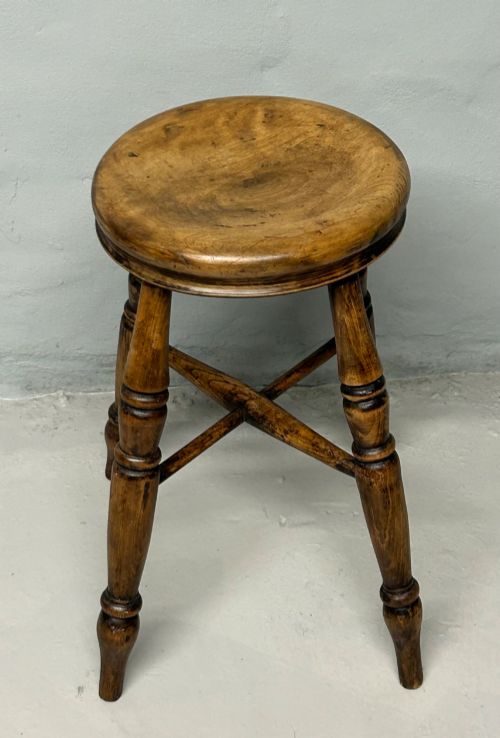

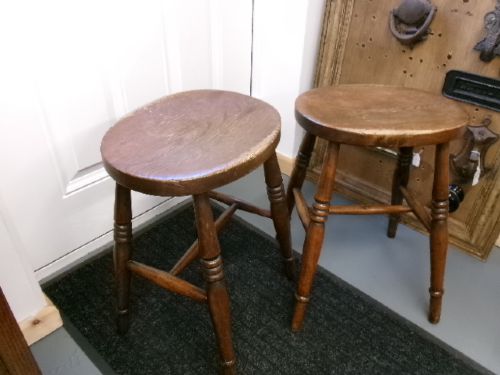


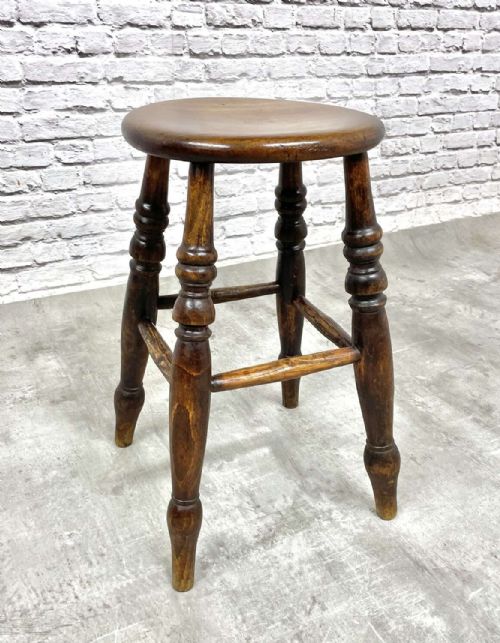
Traditional Tavern Stool
A traditional tavern stool brings honest utility and rugged rural character to a room, offering robust seating built to endure generations of heavy use.
Traditional Tavern Stool
A traditional tavern stool is a sturdy seating form shaped for commercial public houses, alehouses and rural dwellings during the Georgian and Victorian eras. These robust pieces frequently surface in English country styles, often taking the form of three-legged country stools, bar stools or low pub seating.
The version most commonly met on this page is the nineteenth century sycamore pub or tavern stool, alongside ash, elm, beech and oak examples. These items share a lineage with Windsor stools and country house seating, built primarily for functional resilience rather than formal display.
Forms span oval dished tops, simple round seats and low side tables connected to the broader vernacular tradition. They reflect a utilitarian past where public house furniture needed to withstand constant daily traffic and uneven tavern floors.
Materials and construction methods
These stools rely on sturdy domestic timbers like elm for seats, ash and beech for turned legs, and sycamore for shaped or dished tops. Craftsmen selected these local woods for their toughness and resistance to splitting under heavy commercial pressure.
Construction typically employs traditional joined or pegged methods, where legs are wedged securely into underside sockets or mortise and tenon joints. This straightforward joinery ensured the furniture remained rigid and repairable over decades of hard alehouse use.
Distinctions in quality and character
Quality in a traditional tavern stool rests in the integrity of the timber selection and the depth of the patination built through generations of handling. Finer examples display thoughtfully dished seats and well-balanced turned underframes that show the maker's eye for proportion.
The distinction between ordinary utility items and superior country pieces lies in the integration of harder woods like pollard oak or figured elm, coupled with uncompromised structural tightness in the leg joints.
The Traditional Tavern Stool Glossary
- Dished top
- A seat surface hollowed into a shallow concave dish for comfortable seating. This shaping was carved directly into solid timber blocks.
- Vernacular
- Everyday objects designed for practical local use rather than high architectural fashion. These pieces derive their form from utility and regional tradition.
- Turned leg
- A wooden support shaped on a lathe to create cylindrical or tapered profiles. It represents standard joinery practice for nineteenth century seating.
- Cricket table
- A small three-legged table sharing construction principles with tripod country stools. The three legs ensure stability on uneven flagstone floors.
Traditional Tavern Stool: Frequently Asked Questions
What is a traditional tavern stool?
A traditional tavern stool is a robust, utilitarian seat built from domestic hardwoods like elm, oak, beech and sycamore for use in public houses and rural homes.
These pieces date primarily from the eighteenth and nineteenth centuries, reflecting English country vernacular styles designed for heavy daily use.
How were tavern stools used?
They served as portable or fixed seating around public house counters, tavern tables and alehouse hearths where durability mattered most.
Their compact footprints allowed patrons to crowd close to bars or move them easily across flagstone floors.
How do I live with a tavern stool?
These versatile pieces work well as standalone side tables, bedside surfaces or accent seating in hallways and living spaces.
Their understated wood tones blend naturally with both rustic interiors and modern minimalist rooms.
How can I tell the period?
Dating relies on timber selection, tool marks, joinery methods and the natural wear accumulated on the seat surface over centuries.
Georgian and Victorian country examples show distinct hand-tooling and regional turning characteristics that evolved from earlier vernacular designs.