
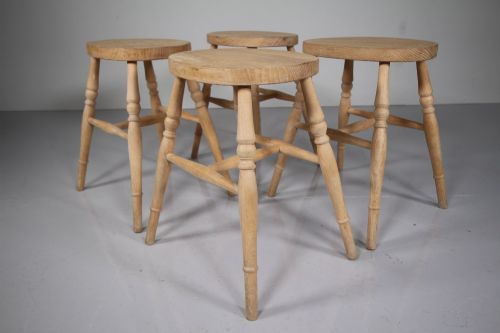
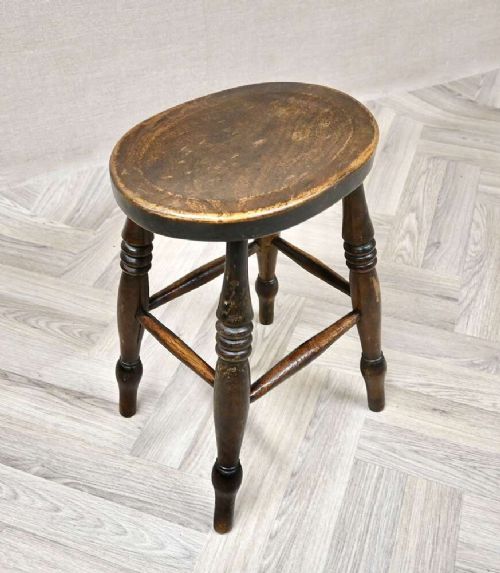
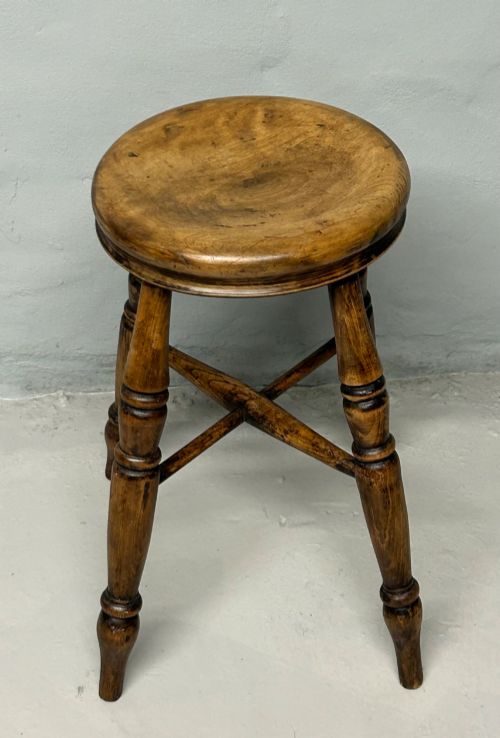
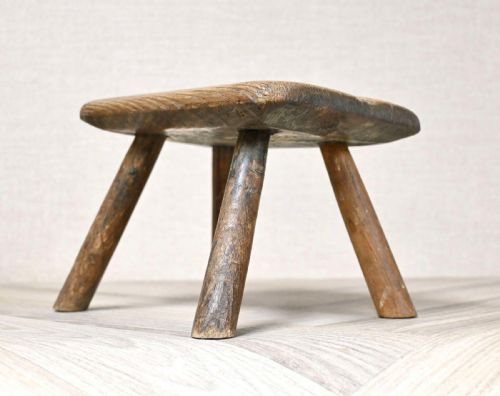



Elm Seat Stool
An elm seat stool brings honest vernacular timber and sturdy utility to a room.
Elm Seat Stool
An elm seat stool serves as a practical, unpretentious seat shaped by traditional country use and vernacular workshop methods. When searching for an elm seat stool, buyers encounter examples spanning from the Georgian and 18th century periods through the 19th century and into early 20th century industrial contexts.
The form stretches from low milking stools and footstools to tall bar stools, tavern stools, and Windsor variants. English and French country traditions dominate the listings, alongside Chinese provincial hardwood examples and industrial workshop seating.
Materials and construction
Makers utilised resilient elm for seats due to its interlocking grain, which resists splitting under heavy daily wear. Supporting frames and legs frequently pair this timber with beech, oak, ash, or cast iron.
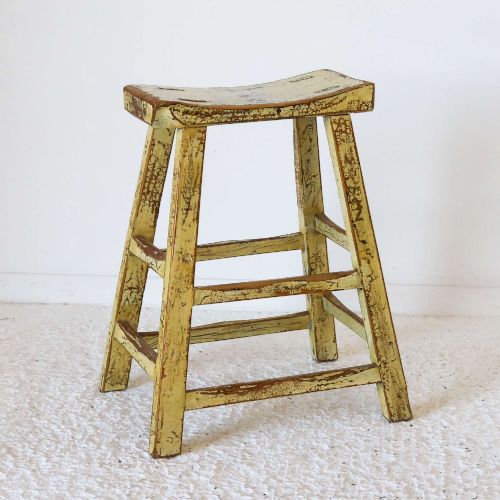
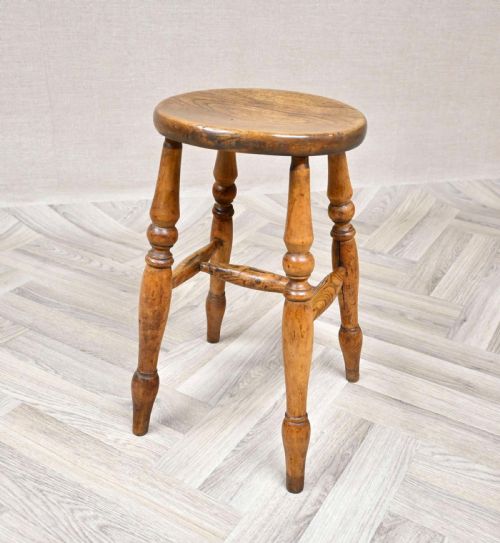
Turned legs, saddle-shaped dished seats, and pegged joints define the construction methods across country and industrial pieces alike. Finish treatments range from original lacquer to stripped natural timber.
Some hardworking mill workers and lace makers unknowingly sat on future collector pieces.
Separating top examples from ordinary pieces
Quality rests in the depth of the timber figuring, particularly within burr elm or wild elm variants, and the strength of the original joinery. A well-sculpted saddle seat with harmonious proportions elevates a piece beyond a basic utility stool.
The integrity of the structural frame, whether traditional turned wood or industrial metal, dictates the durability and visual balance of the seating.
The Elm Seat Stool Glossary
- Windsor
- A style of chair or stool featuring a solid wooden seat into which legs and spindles are wedged directly. This construction provides robust stability for everyday seating.
- Milking stool
- A low, typically three-legged stool designed for agricultural work. These pieces often feature simple tapered legs joined to a compact wooden top.
- Saddle seat
- A seat base carved with a scooped, ergonomic contour resembling a horse saddle. This shaping offers comfort during extended periods of sitting.
- Vernacular
- Architecture and furniture built by local craftsmen to meet practical daily needs using regional materials. Such pieces reflect traditional local construction habits rather than academic design rules.
- Burr elm
- A woody growth deformity on the elm tree that produces highly figured, swirling grain patterns. Cabinet makers prize this timber for its decorative visual impact.
Elm Seat Stool: Frequently Asked Questions
What is an elm seat stool used for?
These stools served practical daily roles in dairies, workshops, taverns, and country homes. Today they function as flexible seating, side tables, or display surfaces in contemporary interiors.
Their compact footprints allow them to fit easily into hallways, kitchens, and living spaces without overwhelming the room.
How do I date an elm stool?
Dating relies on observing tool marks, wood patination, assembly methods, and stylistic cues from periods like the Georgian era or the 19th century. Machine-sawn components and cast iron elements typically point toward industrial 20th century production.
Hand- turned spindles, pegged joints, and heavy wear patterns indicate earlier country craftsmanship.
Are elm seats durable?
Elm timber possesses a famously tangled grain structure that makes it exceptionally resistant to splitting under pressure. This toughness explains why centuries-old examples survive in daily usable condition.
Regular care and stable indoor humidity keep the timber strong and prevent historical joints from loosening.
What styles of elm stool exist?
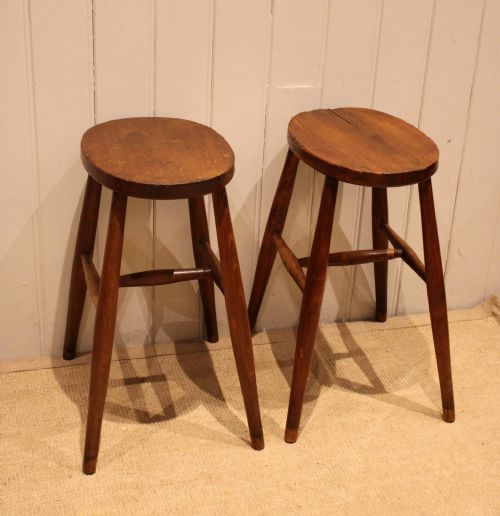
The category encompasses English and French country designs, Chinese provincial work, and industrial shop seating. Forms range from low footstools and milking stools to tall tavern and bar chairs.
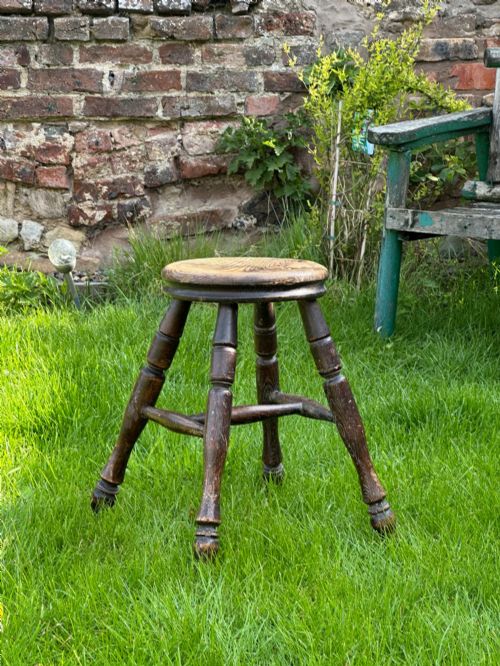
Details like ball feet, Windsor framing, and saddle seats distinguish the regional and functional types.