

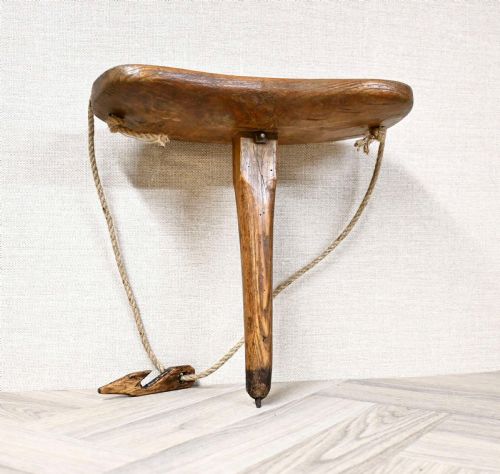
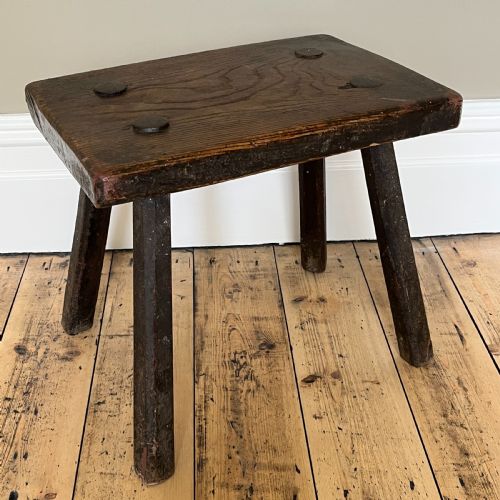


Vernacular Oak Stool
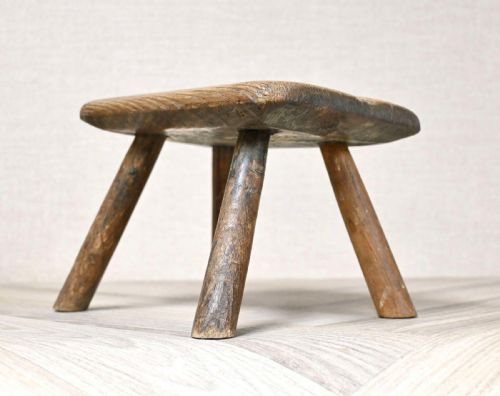
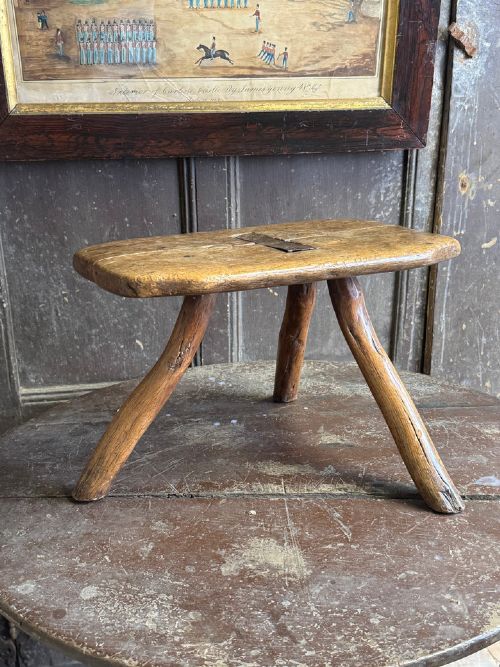
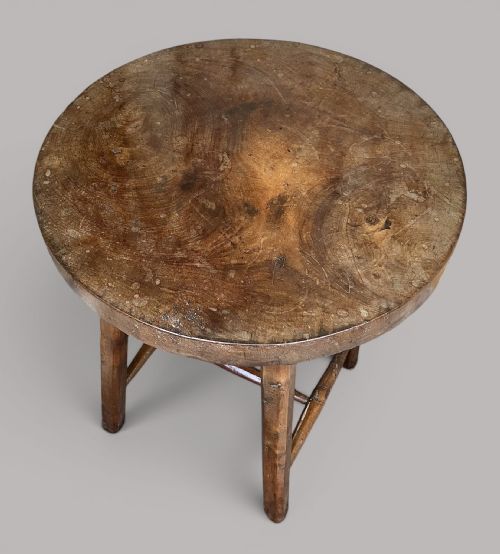
These robust vernacular oak stool examples offer straightforward utility and honest rural character for any interior.
Vernacular Oak Stool
A vernacular oak stool represents the practical domestic seating produced by regional makers using local timber. These pieces emerge from periods spanning the eighteenth and nineteenth centuries, carrying simple forms shaped by everyday utility. The most common examples on this page are sturdy timber stools designed for hearths, dairies, and workshops.
Makers shaped these utilitarian objects from native hardwoods without adherence to formal urban design canons. Regional variations appear in the leg splay, seat thickness, and joint construction rather than grand stylistic shifts. Buyers encounter everything from low milking stools to substantial hearth benches carrying the marks of daily labour.
The aesthetic relies entirely on honest construction and the rich patination accumulated over generations of use. Surfaces show the straightforward honesty of country craftsmanship, where function dictates every dimension and detail.
Factors of Quality and Age
Quality in a vernacular oak stool rests on the integrity of its original construction and the depth of its surface patination. Pieces that retain their unreduced proportions and early pegging stand apart from examples altered by later restorations or shortened legs. The balance between the bulk of the seat and the rake of the legs dictates visual success.
Surfaces untouched by modern sanding reveal the authentic texture of historic tools and decades of handling. The presence of early blacksmith repairs or original surface wear adds historical weight, provided the structural bonds remain sound and stable.
Listings feature oak, elm, ash, and solid walnut across eighteenth and nineteenth-century forms.
The Vernacular Oak Stool Glossary
- Vernacular
- Artefacts made by local craftsmen for everyday regional use rather than to a high academic design. These objects reflect local traditions and available materials.
- Splayed legs
- Legs angled outward from the centre for greater stability on uneven floors. This technique is common in country seating.
- Patina
- The surface sheen and colour developed by timber over long periods of handling, light exposure, and polishing. It serves as an indicator of age.
- Hearth stool
- A low seat positioned near a fireplace for warmth or domestic tasks. These pieces often feature thick timber tops to withstand heat.
- Joint stool
- A rigid wooden seat constructed with mortise and tenon joints pegged together. They predate fully upholstered chairs in common households.
Vernacular Oak Stool: Frequently Asked Questions
How do I spot a genuine antique?
Examine the construction methods and surface wear to verify age. Hand-cut joinery and authentic timber shrinkage indicate historic production.
Look for honest patination that develops naturally from decades of handling and use. Modern reproductions often lack the subtle tool marks and tonal depth found on older pieces.
Were these stools used in homes?
These practical seats served multiple functions around the domestic interior and workplace. They provided movable seating near hearths and workspaces where heavy furniture was impractical.
Many examples originated in dairies, workshops, and kitchens before entering private collections. Their modest scale allowed them to move easily from room to room.
Can I use them every day?
These sturdy timber seats remain fully functional for daily domestic use. Their robust construction handles regular weight without difficulty.
Ensure joints remain stable and place protective pads beneath legs if used on delicate modern flooring. Regular polishing maintains the dry timber surface against moisture.
What is a pig bench?
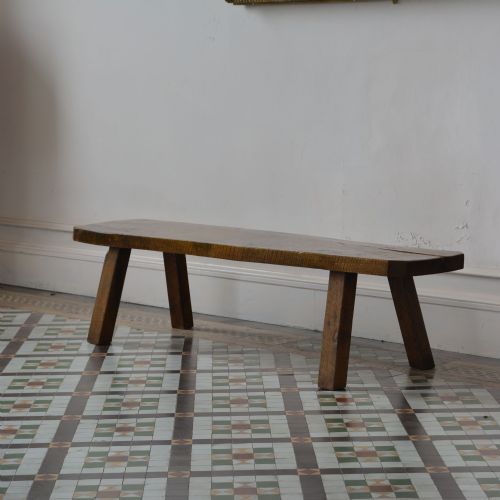
A pig bench is a low, elongated wooden form used historically in rural butchery and farm tasks. These heavy timber surfaces needed to withstand substantial weight and daily wear.
Today they function effectively as low coffee tables or display benches in country interiors. Their thick tops and simple legs showcase utilitarian carpentry at its most direct.