




Eighteenth Century Style Chest
An eighteenth century style chest brings classical proportions and rich timber into a room, offering timeless storage fashioned with traditional cabinet-making craft.
Eighteenth Century Style Chest
When you search for an eighteenth century style chest, you encounter substantial storage furniture designed with the restrained elegance of the Georgian period or the decorative curves of European revival movements. These pieces range from authentic eighteenth-century examples to later revival interpretations produced during the Victorian, Edwardian, and early twentieth-century eras.
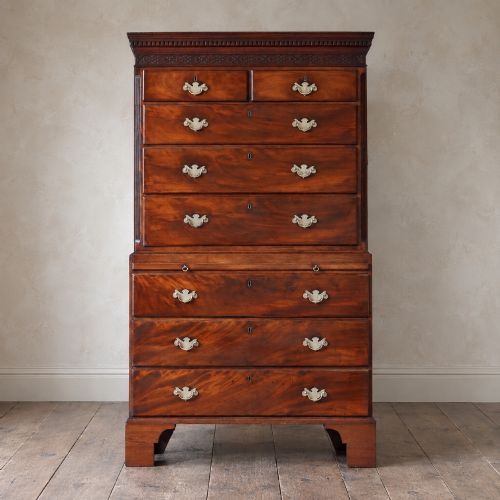
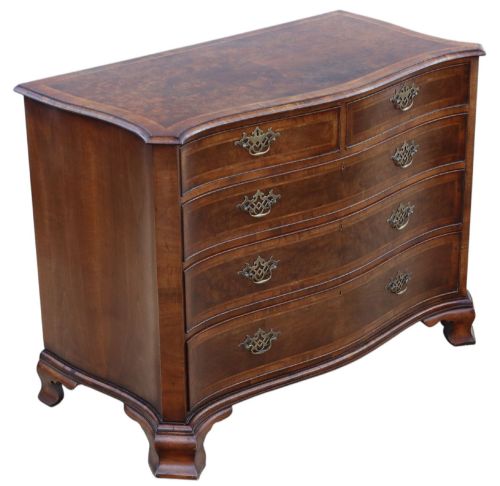
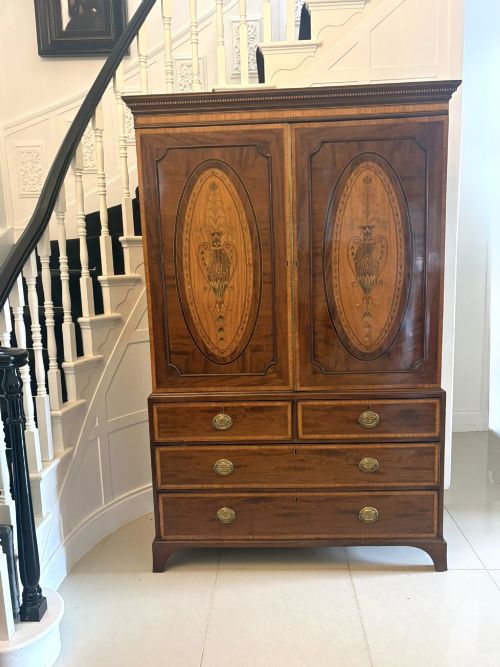
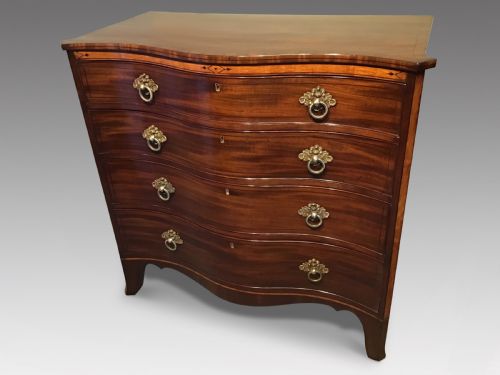
The selection here encompasses various practical forms, including tall chests on chest, serpentine commodes, linen presses, and compact bedside or dressing chests. Mahogany, walnut, and oak dominate the offerings, frequently enhanced by crossbanding, satinwood inlay, or painted lacquer finishes.
Buyers frequently find that these chests serve as striking focal points in bedrooms and living spaces alike, combining functional drawer space with distinguished historical character. The inventory balances genuine period construction with later stylistic homages that mirror the same traditional silhouettes.
How they were made
Cabinet-makers relied on solid hardwoods such as mahogany, walnut, and oak for the structural carcass and drawer frames, often applying finely figured veneers to the exterior surfaces. Wood inlay, satinwood banding, and hand-painted lacquer finishes provided decorative contrast, reflecting prevailing European tastes.
Traditional joinery methods governed the construction, ensuring durability through dovetailed drawer boxes and solid timber panelling. Brass handles and escutcheons were fitted to each drawer, completing pieces built to withstand generations of daily use.
Periods represented span from the eighteenth century through Georgian, Victorian, Edwardian, and up to the 1920s.
What varies in quality
The calibre of timber selection dictates the visual impact, with figured mahogany and burr walnut commanding attention through rich grain patterns and warm patination. Superior examples display meticulous attention to detail in their crossbanding, marquetry, and the crisp execution of serpentine or block-front shapes.
Structural integrity and the preservation of original hardware further distinguish finer iterations from simpler utilitarian items. Master cabinet-making is evident in the seamless movement of drawers and the harmonious balance of proportions across the entire piece.
The Eighteenth Century Style Chest Glossary
- Serpentine commode
- A chest of drawers featuring an undulating front profile with a convex centre flanked by concave curves. This sophisticated shape demands high woodworking skill to execute properly.
- Chest on chest
- A tall storage unit comprising one chest stacked directly upon a larger base chest, also known as a tallboy. It maximises vertical storage while maintaining a compact footprint.
- Brushing slide
- A pull-out shelf integrated into the upper section of a chest, historically used for folding garments or writing. It sits discreetly above the uppermost drawers.
- Crossbanding
- A decorative border technique where thin strips of veneer are laid perpendicular to the grain of the main surface. This frames the drawer fronts or top panels with contrasting timber grain.
- Linen press
- A tall cabinet featuring upper doors enclosing sliding trays for textiles, positioned above a base of wider drawers. These pieces served as primary wardrobe storage in traditional homes.
Eighteenth Century Style Chest: Frequently Asked Questions
Where should I place a chest of drawers?
These versatile pieces suit bedrooms, hallways, or living rooms where both surface display and deep drawer storage prove useful.
Ensure adequate clearance in front of the piece so that drawers and any pull-out brushing slides operate without obstruction.
How do I care for walnut and mahogany furniture?
Maintain the timber by keeping the piece away from direct sunlight and sudden temperature changes that might dry out the wood.
Apply a quality beeswax polish periodically to nourish the grain and preserve the historic finish without building up heavy residue.
What is the difference between a commode and a standard chest?
A commode typically refers to a decorative, low chest of drawers influenced by French or Continental European furniture designs.
Standard chests of drawers often follow simpler British or Scandinavian forms focused primarily on vertical storage capacity.
How do I identify a reproduction from an older piece?
Examine the timber shrinkage, interior drawer construction, and tool marks to understand the manufacturing methods employed by the maker.
Older pieces often display hand-cut dovetails and natural wear patterns that differ noticeably from twentieth-century revival interpretations.