
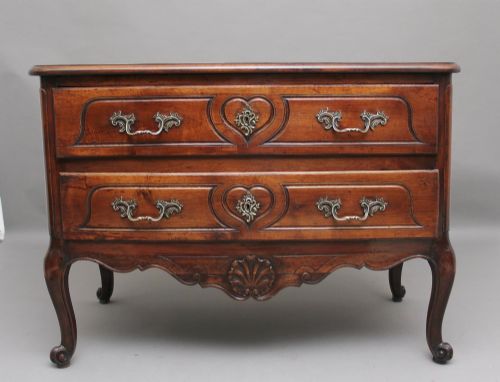


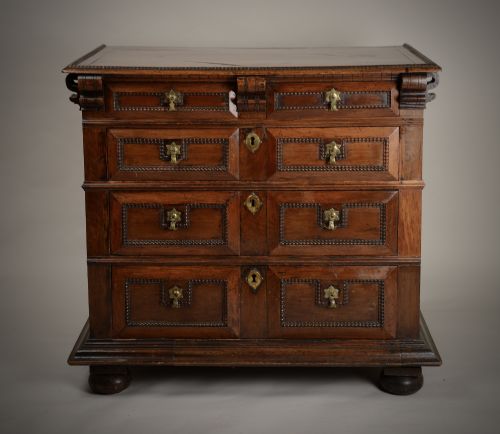
Carved Walnut Commode Chest
A carved walnut commode chest brings rich timber grain and serpentine lines to a room, offering deep storage with distinct period character.
Carved Walnut Commode Chest
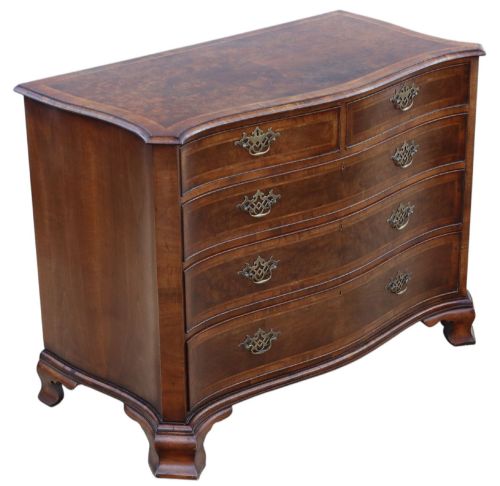
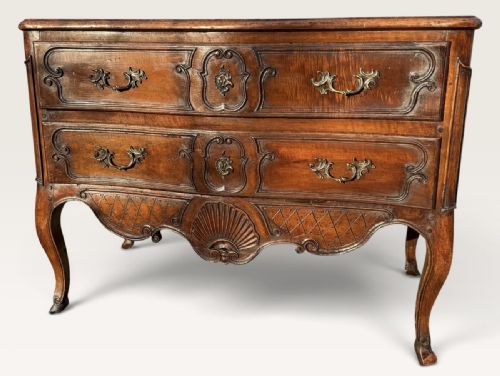
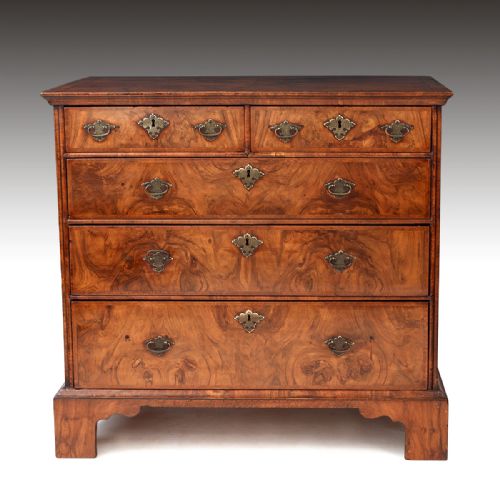
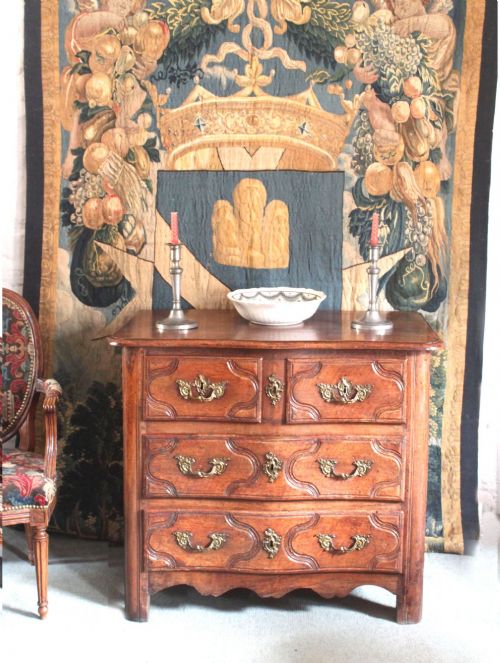
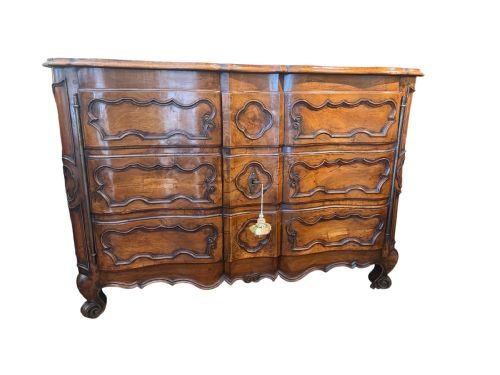
A carved walnut commode chest provides substantial drawer storage while displaying the rich figuring of walnut timber across its facade. Buyers seeking a carved walnut commode chest will find examples ranging from seventeenth-century William and Mary pieces to eighteenth-century French provincial commodes and later revival styles.
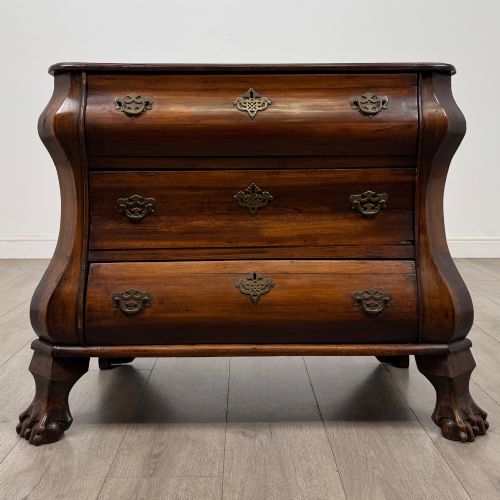
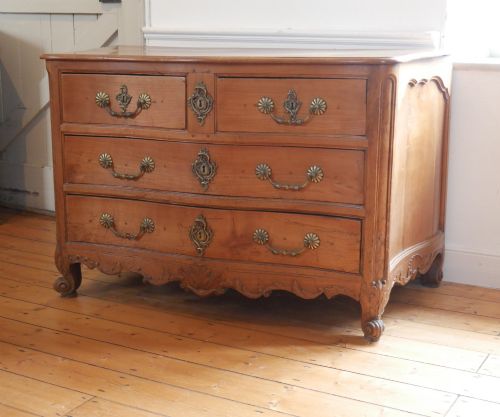
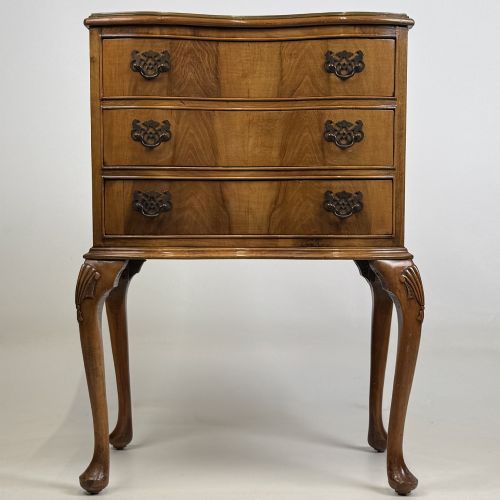
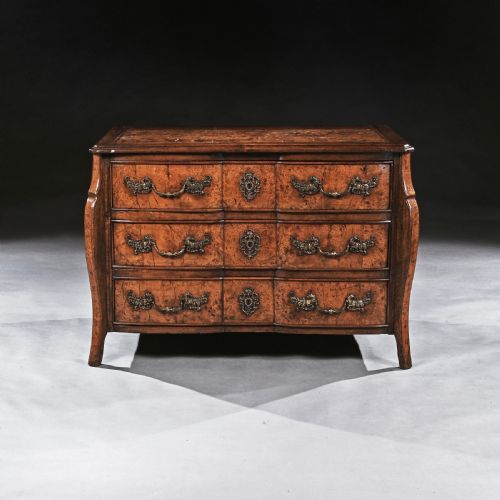
The form shifts between straight fronts, serpentine contours, and bombe profiles, often paired with brass handles and escutcheons. French provincial and Louis XV styles appear frequently, alongside English walnut chests from the Georgian and Victorian periods.
Originating primarily from Britain, France, and the Netherlands, these chests serve as prominent statement storage in a bedroom or hallway. The selection includes both compact country house examples and grander serpentine pieces topped with marble.
What varies in quality
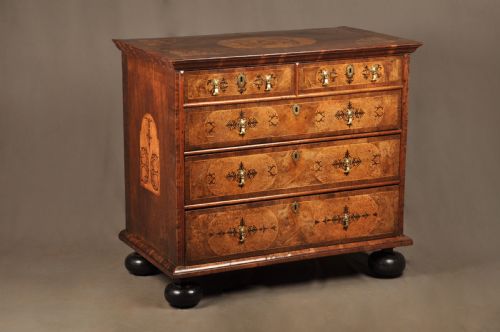
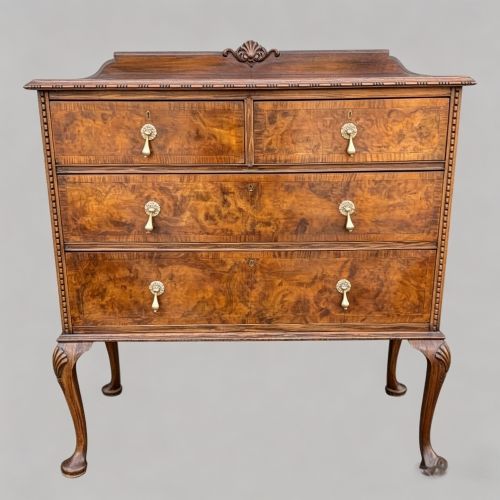
The choice and execution of timber veneer set finer pieces apart, particularly where symmetrical burr walnut or intricate arabesque marquetry covers the top and drawer fronts. Superior examples maintain intact, unblemished veneer without extensive patching or lifting.
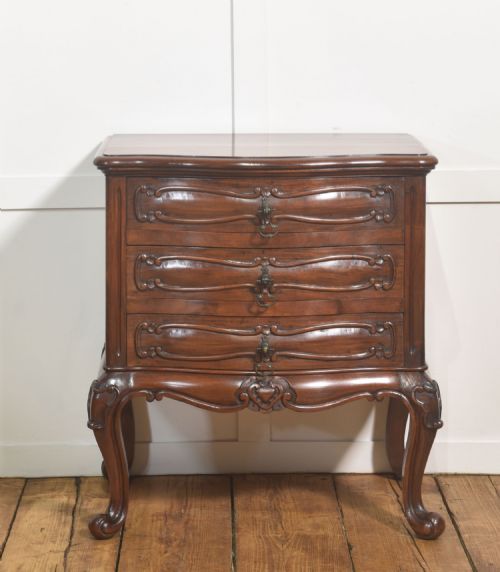
Carving depth and sharpness distinguish workshops, with high-tier pieces displaying crisp, undercut foliage rather than shallow, mechanical moulding. The fluidity of serpentine and bombe contours also varies, requiring considerable skill to shape solid and veneered timber harmoniously.
Originality of brass hardware and the integrity of internal drawer construction influence the standing of each chest. Pieces retaining their period locks, brasses, and smooth-running drawers represent the pinnacle of surviving stock.
Several chests hide their drawers behind subtle serpentine curves and faux bamboo turnings, keeping their storage habits discreet.
The Carved Walnut Commode Chest Glossary
- Serpentine
- A front or top shaped with a convex centre flanked by concave curves, creating a gentle undulating line. This contour requires expert joinery to execute successfully in solid wood and veneer.
- Burr Walnut
- Timber taken from the abnormal growth of a walnut tree, yielding dense, swirling grain patterns. Cabinet makers prized this figure for veneering prominent surfaces.
- Bombe
- A swollen or outward-curving chest profile associated with continental furniture, particularly Dutch and French commodes. This voluminous shape demands advanced framing techniques.
- Commode
- A low chest of drawers or cabinet originating in France during the seventeenth century. The term typically denotes decorative storage furniture intended for principal rooms.
Carved Walnut Commode Chest: Frequently Asked Questions
How do I date a walnut chest?
Dating relies on examining construction methods, timber choice, and hardware styles. Early pieces from the seventeenth century often show oak linings and geometric panel or marquetry designs.
Later eighteenth and nineteenth-century examples introduce serpentine shapes, French provincial carving, and finer burr walnut veneers.
Where should I place a commode?
These chests function well in hallways, living rooms, or bedrooms where their decorative grain and carved details can command attention. Their substantial storage capacity makes them practical for holding linens, tableware, or clothing.
Avoid placing them in direct sunlight or near heat sources to protect the walnut veneer from drying out.
What is the difference between a chest and a commode?
While both provide drawer storage, a commode generally refers to continental European low chests of drawers with decorative serpentine or bombe profiles. English pieces from similar eras are more commonly designated simply as chests of drawers.
Both forms utilise high-grade walnut and intricate marquetry depending on their origin.
How do I care for walnut veneer?
Maintain a stable room temperature and humidity to prevent the timber and underlying glue from expanding or contracting. Clean surfaces gently with a soft, dry cloth and apply occasional specialist wax.
Keep antique chests away from radiators and direct sunlight to preserve the rich colour of the walnut.