
Inlaid Wooden Chest Drawers
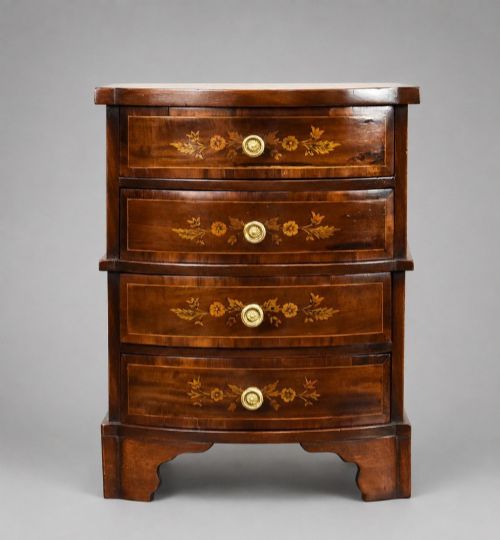
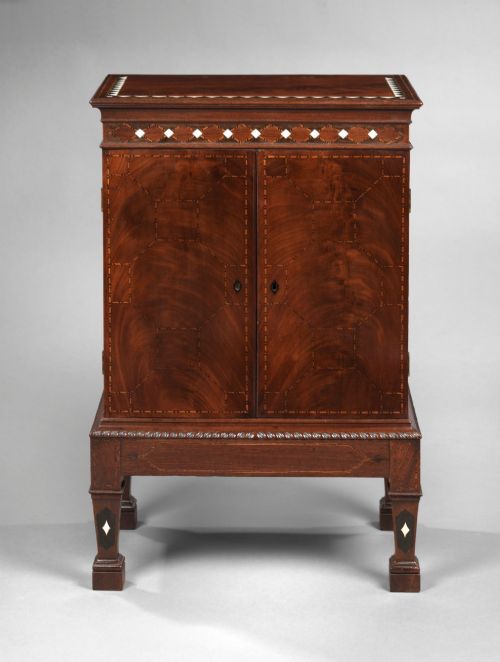
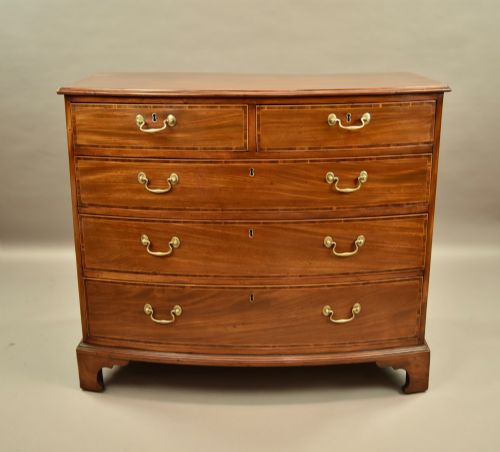
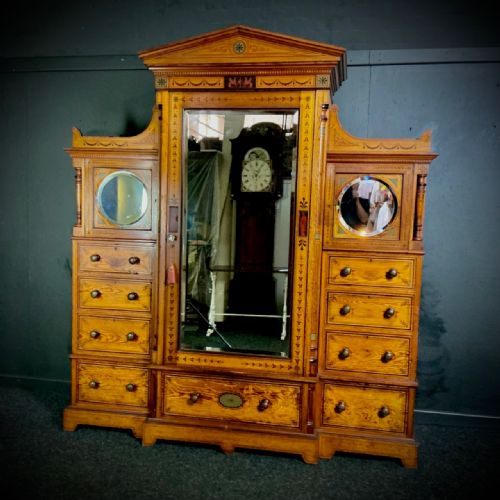
These inlaid wooden chest drawers bring together centuries of cabinet-making skill, offering practical storage alongside rich decorative veneers.
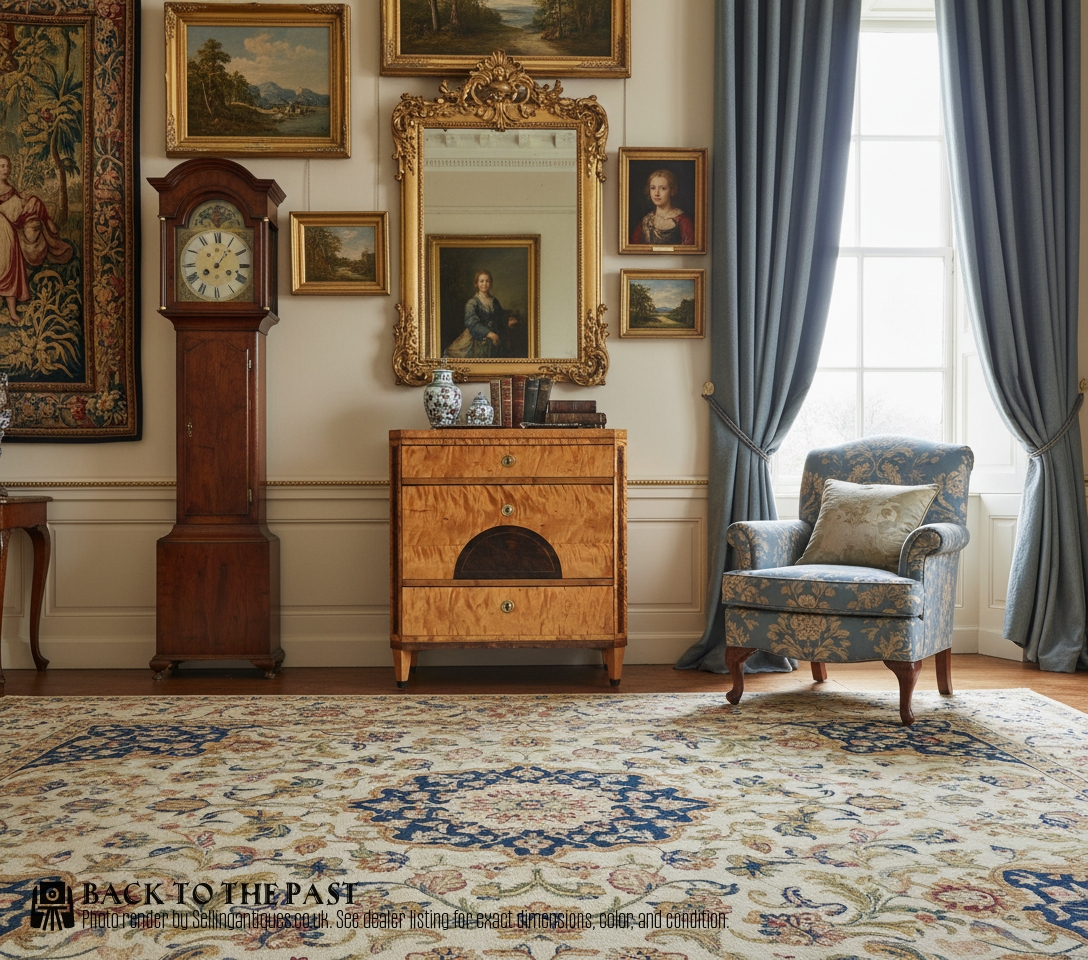
Inlaid Wooden Chest Drawers
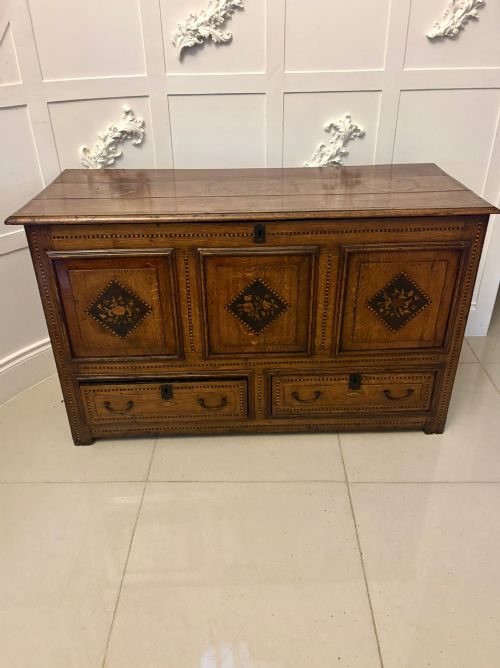
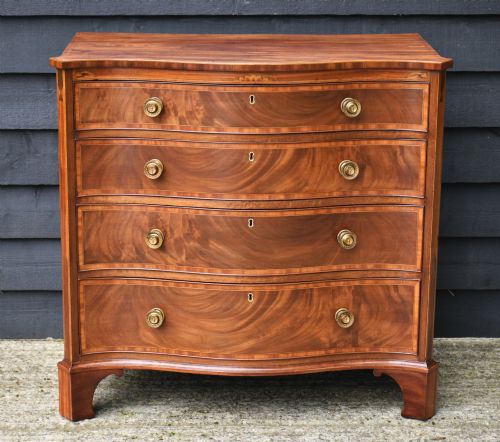
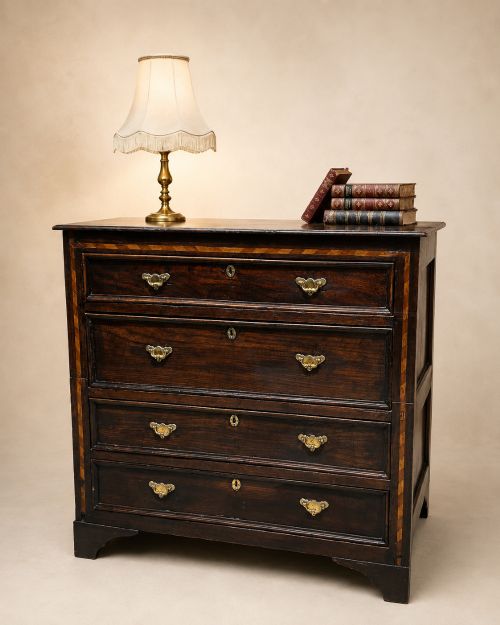
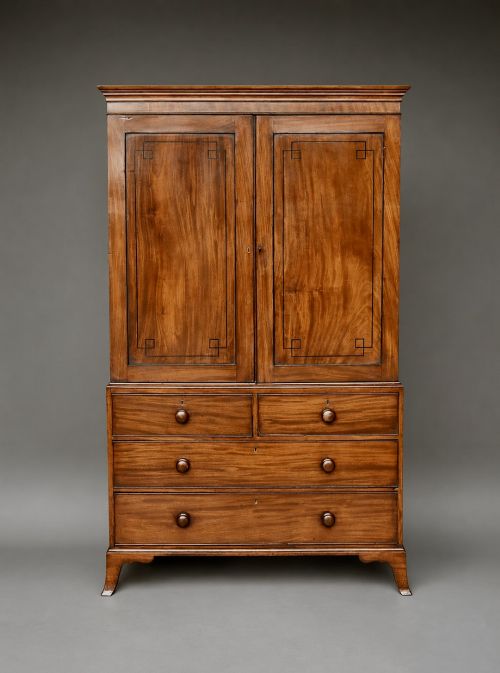
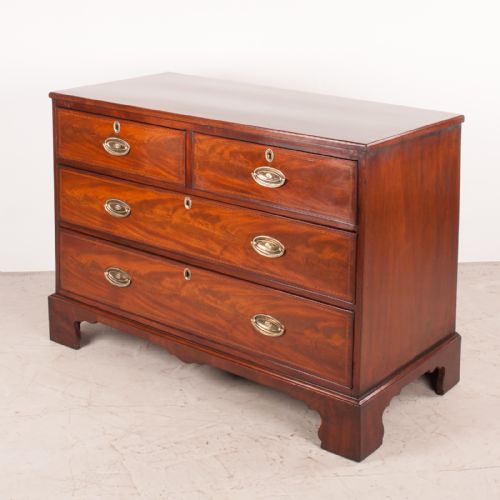
When you search for inlaid wooden chest drawers, you encounter a wide variety of forms spanning several centuries. The selection ranges from early oak mule chests and walnut pieces to Georgian mahogany designs and later Victorian or Edwardian examples.
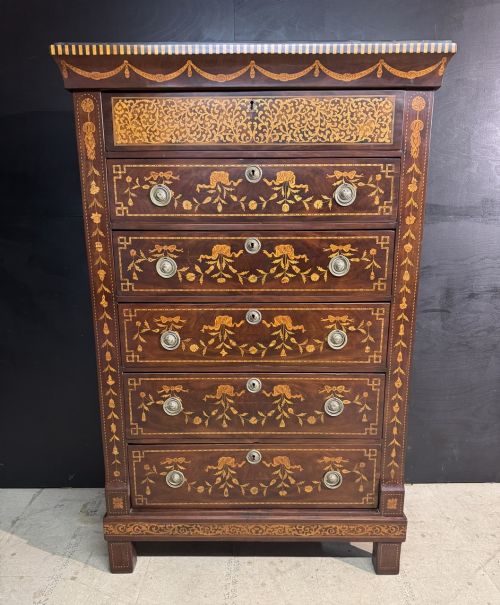
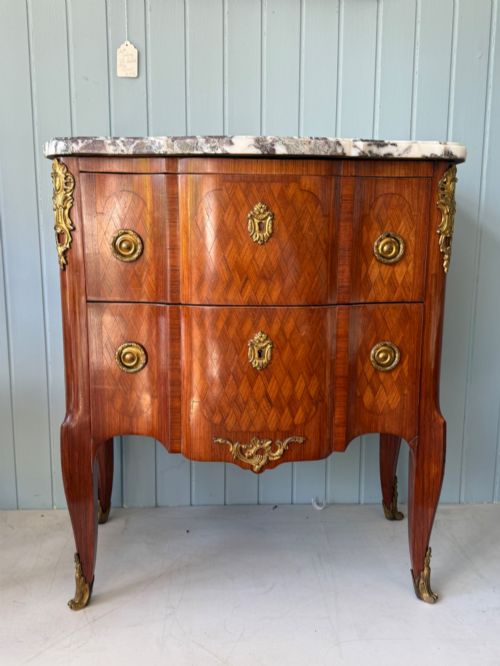
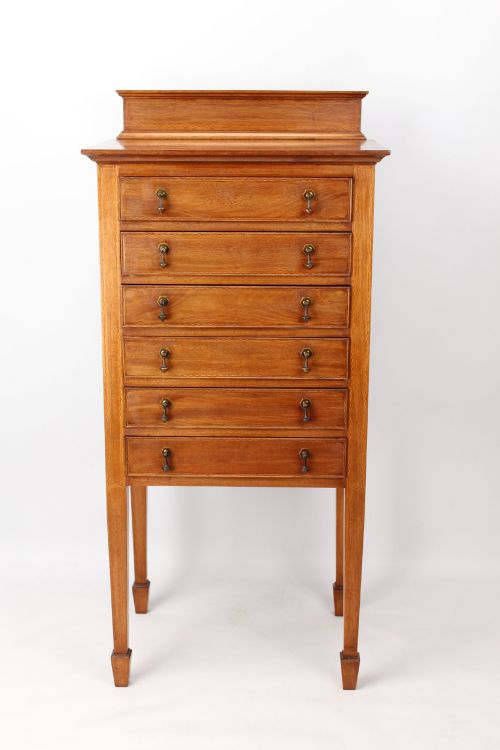
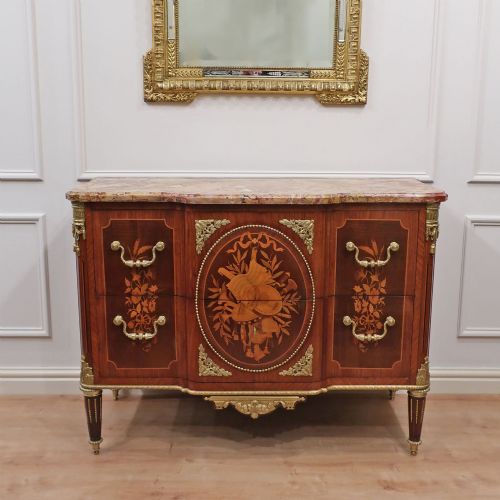
Most pieces on this page take the traditional form of drawer chests, alongside related storage pieces such as commodes, tallboys, wardrobes, and bedside cabinets. The origins stretch across British, French, Dutch, and Anglo-Indian workshops.
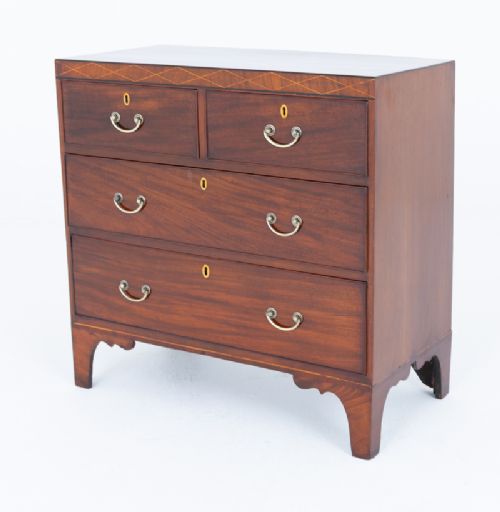
Earlier pieces from the seventeenth and eighteenth centuries often utilise sturdy oak or figured walnut, while later nineteenth-century examples lean heavily towards rich mahogany adorned with contrasting line inlay and crossbanding.
Materials and Technique
Cabinet-makers relied on solid timbers such as mahogany, oak, and walnut for the primary structure, applying finer woods like satinwood, boxwood, and kingwood as decorative veneers. These timbers were selected for their natural grain patterns and durability.
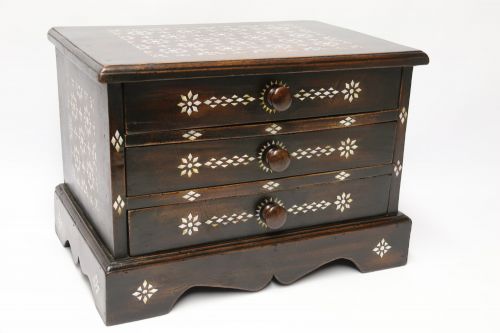
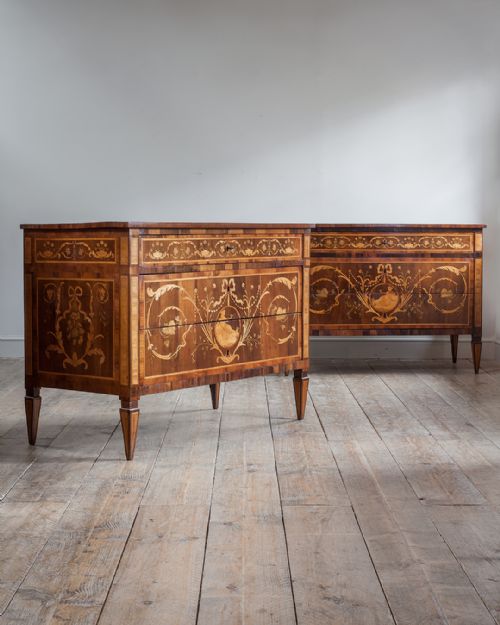
Decoration relied on skilled techniques including marquetry, parquetry, and feather-banding to create intricate geometric or floral patterns across the drawer fronts and top surfaces. Inlaid contrasting strips defined the borders, framing the primary wood figures.
Listings feature items built from oak, walnut, mahogany, satinwood, boxwood, marble, and kingwood across several centuries.
Quality and Execution
The standard of a piece depends heavily on the precision of the cabinet-making and the complexity of the veneer work. Finer examples display seamless integration of contrasting woods and crisp, detailed marquetry without distortion.
Proportion and timber selection drive the distinction between standard items and exceptional pieces. Highly figured flame mahogany, rich walnut, and well-preserved surface patination separate the finest commissions from simpler utilitarian furniture.
The Inlaid Wooden Chest Drawers Glossary
- Marquetry
- The art of creating decorative pictures or patterns by arranging small pieces of veneer onto a wooden structure. This technique allowed makers to produce elaborate floral or pictorial designs.
- Crossbanding
- A strip of veneer applied to the border of a drawer front or tabletop so that its grain runs at right angles to the central panel. It provides a neat contrasting frame.
- Commode
- A low French-style chest of drawers often standing on elegant cabriole legs. These pieces frequently incorporate marble tops and elaborate marquetry.
- Feather-banding
- A decorative inlay technique using two strips of veneer laid side by side to create a V-shaped pattern resembling a feather. It is commonly found on walnut furniture from the Georgian era.
- Serpentine
- A curved furniture front characterised by a convex centre flanked by concave ends. This undulating shape requires advanced woodworking skill to execute properly.
Inlaid Wooden Chest Drawers: Frequently Asked Questions
What periods do these chests come from?
The pieces span multiple eras, including seventeenth-century oak, eighteenth-century Georgian designs, nineteenth-century Victorian pieces, and early twentieth-century Edwardian work.
Each period introduced distinct proportions and timber preferences, moving from solid native oaks to richly veneered foreign hardwoods.
How do I identify a commode from a chest?
Commodes generally originate from continental European traditions, particularly French workshops, and frequently incorporate marble tops or curved serpentine fronts.
Traditional British chests tend to follow stricter geometric lines, though regional variations often blur these stylistic boundaries.
What is line inlay?
Line inlay involves embedding thin strips of contrasting timber, such as boxwood, into shallow channels cut into the primary wood surface.
This technique outlines drawer edges and tops to create a neat, graphic border.
Are all these pieces British?
While many pieces reflect British cabinet-making traditions, the selection includes Dutch marquetry, French commodes, and Anglo-Indian collector's chests.
Each region employed distinct regional timbers and decorative motifs unique to their local workshops.