





Eighteenth Century Meissen
Eighteenth century meissen brings European hard-paste porcelain at its most ambitious into your home through figures, sweetmeat dishes, and milk jugs.
Eighteenth Century Meissen
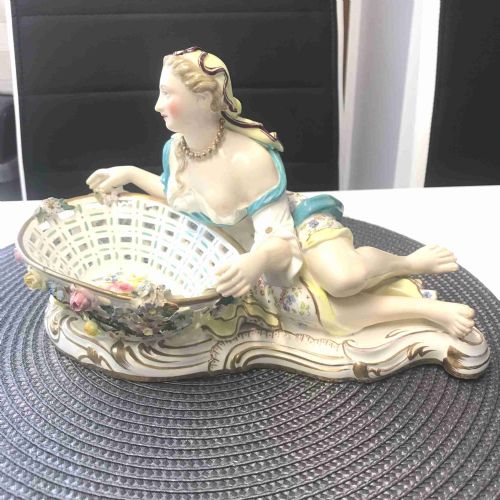
When you search for eighteenth century meissen, you encounter delicate hard-paste porcelain items that capture the essence of the period. The selection on this page centres on porcelain figurines, sweetmeat dishes, milk jugs, and decorative bowls.
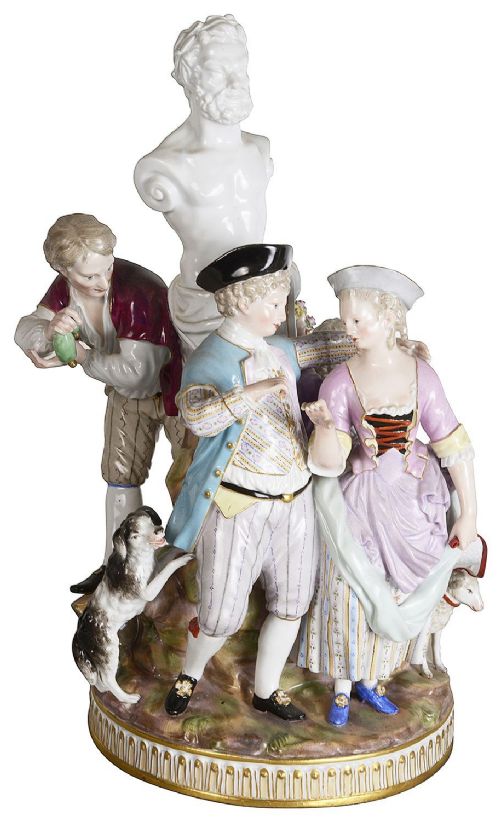
Most items belong to the eighteenth century, including specific dates around 1740, 1750, 1760, and the Marcolini period around 1775. Figures range from street traders selling grapes and pairs of lovers to sweet basket carriers and cherubs holding tricolor hats.
Moulded forms reflect the prominent Rococo style of the era. You will also find functional pieces such as milk jugs with covers, inkwells, and bowls featuring puce grounds.
How they were made
Manufactured using hard-paste porcelain, these pieces rely on high-firing ceramic techniques developed in Germany. Artisans shaped the clay into complex figurative groups and functional vessels before initial firing.
Surface decoration depends on detailed enamel painting and hand-applied gilding. Certain elements incorporate gold leaf or delicate gilt highlights to accentuate the Rococo modelling.
A tiny cherub proudly clutches a tricorne hat, capturing eighteenth-century fashion in miniature porcelain.
What varies in quality
Quality in these porcelain pieces rests on the sharpness of the moulding and the delicacy of the hand-painting. Finer examples display crisp facial expressions and intricate details on garments and accessories like sweet baskets.
The precision of the enamel work and the application of gilding distinguish standard production from superior output. Well-preserved painted surfaces and intact modelled limbs elevate the standing of a figurine or bowl.
Johann Joachim Kändler
The Eighteenth Century Meissen Glossary
- Hard-paste porcelain
- A dense, vitrified ceramic material composed of kaolin and petuntse, fired at high temperatures. It forms the durable body of eighteenth-century German wares.
- Rococo
- An ornate artistic style characterised by asymmetry, scrollwork, and naturalistic motifs. This aesthetic dictates the fluid curves seen on eighteenth-century figures and dishes.
- Marcolini period
- A specific phase in the factory's production history dating to the late eighteenth century. Pieces from this era often bear distinct factory marks associated with Count Marcolini's directorship.
- Sweetmeat dish
- A small, decorative vessel designed to hold confectionery or dried fruits at formal dining tables. These objects often feature elaborate figurative supports and basketry elements.
- Puce
- A brownish-purple colour derived from manganese, frequently used for monochrome underglaze or enamel landscapes and ground colours on bowls.
Eighteenth Century Meissen: Frequently Asked Questions
What is eighteenth century meissen?
It encompasses porcelain figures, tableware, and decorative bowls produced at the German factory during the 1700s.
These items showcase early European hard-paste ceramic manufacturing and sophisticated enamel decoration.
How were sweetmeat dishes used?
Hosts placed them on dining tables to serve small sweet treats, nuts, or confectionery during dessert courses.
Their intricate figural designs also served as conversational centrepieces for wealthy guests.
How do I identify a Rococo figure?
Look for asymmetrical compositions, swirling scroll motifs, and naturalistic poses reflecting mid-eighteenth-century design tastes.
Clothing and facial expressions typically display a theatrical, lively quality.
What materials make up these objects?
They consist of hard-paste porcelain decorated with hand-applied enamel colours and gilding.
Some examples incorporate gold leaf highlights to emphasise the sculpted details.
How do I care for antique porcelain?
Keep pieces out of direct sunlight and wash them by hand using mild soap when cleaning is necessary.
Avoid abrasive sponges or harsh chemicals that might damage the enamel and gilt surfaces.