


Edwardian Turquoise Pin
An Edwardian turquoise pin brings together vibrant blue cabochons and delicate goldwork, offering a distinct piece of early twentieth-century jewellery.
Edwardian Turquoise Pin
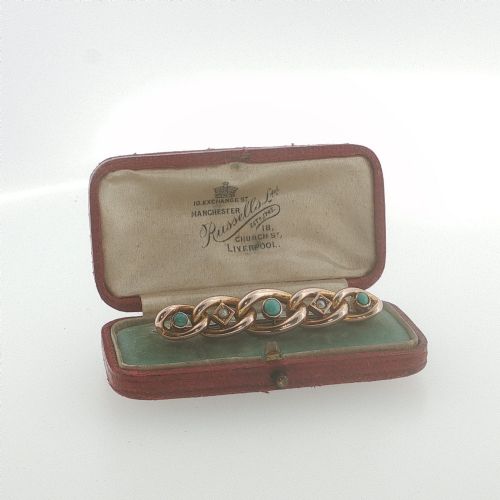
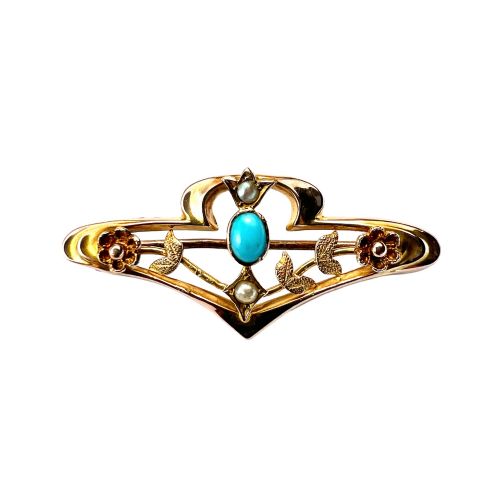
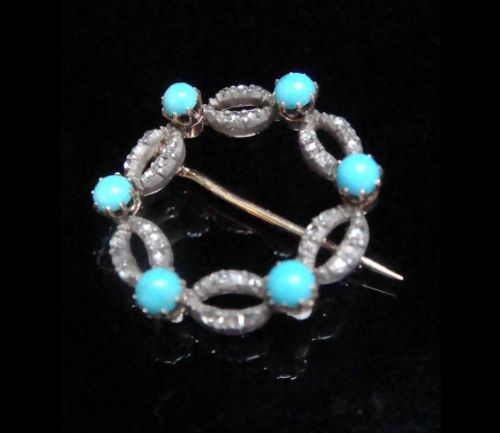
When you search for an edwardian turquoise pin, you encounter brooches and pins fashioned from gold, silver, and rolled gold. These pieces display motifs such as hearts, bows, floral clusters, horseshoes, and winged designs.
The versions you are most likely to meet on this page hail from the Edwardian period and the Victorian era, alongside pieces dated around 1900 and 1910. They frequently combine turquoise with seed pearls, diamonds, and enamel.
Brooches dominate the selections available, appearing alongside occasional jewellery sets and collar pins. The metals span 9ct gold, 15ct gold, 18ct gold, and silver.
How they were made
The construction relies on precious metals shaped into intricate frameworks of gold and silver to securely hold the stones. Artisans utilised 9ct, 15ct, and 18ct gold alongside silver and rolled gold substrates.
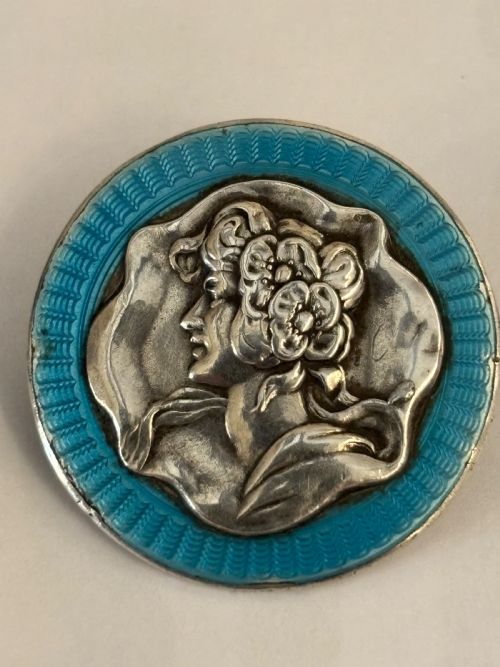
Gemstones including turquoise, seed pearls, and diamonds are meticulously set alongside guilloche enamel details. These materials are combined to form cohesive floral, heart, and crescent compositions.
Several pins take the form of tiny winged hearts, proving that even Edwardian jewellers knew how to give romance a lift.
What varies in quality
The calibre of an edwardian turquoise pin is determined by the selection and matching of the turquoise stones and accompanying pearls or diamonds. Uniform colour across the turquoise cabochons and fine metalwork elevate a piece.
The complexity of the design, such as winged hearts or multi-gem butterfly and dragonfly configurations, dictates the intricacy of the craftsmanship. Substantial gold weights in 15ct or 18ct compositions further distinguish finer examples from standard rolled gold or silver variants.
The Edwardian Turquoise Pin Glossary
- Cabochon
- A gemstone shaped and polished with a smooth, rounded surface rather than faceted. This style highlights the natural sky-blue colour and matrix of the turquoise.
- Seed pearl
- A very small, natural or cultured pearl, often used in clusters or borders around larger stones. They add a delicate white lustre to Edwardian and Victorian designs.
- Guilloche enamel
- Decorative enamel applied over a metal surface that has been engraved with a repetitive geometric pattern. This technique creates a shimmering, translucent background beneath the colour.
- Rolled gold
- A manufacturing method where a layer of gold is mechanically bonded to a base metal core. This provides the appearance and wearability of solid gold at a different material weight.
Edwardian Turquoise Pin: Frequently Asked Questions
How were these pins worn?
These pieces were typically pinned to the lapels of jackets, collars of blouses, or fastened securely to scarves and stoles. Their construction allowed them to function both as decorative accents and practical garment closures.
Some designs also incorporated pendants loops, enabling the wearer to suspend the piece from a chain as well as pin it directly to fabric.
How do I care for my pin?
Turquoise is a relatively soft and porous gemstone that requires gentle handling and protection from harsh chemicals, cosmetics, and prolonged immersion in water. Clean the metal and stones gently with a soft, dry cloth after wearing.
Store the brooch in a dedicated jewellery box or pouch away from harder gems that might scratch the gold surface or damage the delicate seed pearls.
How can I tell Edwardian from Victorian?
Edwardian jewellery often exhibits lighter, airier platinum and high-karat gold settings with lacy motifs, whereas Victorian pieces can appear somewhat heavier and more robust. The transition around 1900 brought brighter stones and distinct floral or symbolic shapes.
Examining the metal hallmarks and stylistic cues helps place a piece within its correct historical decade between the late nineteenth century and the outbreak of the First World War.