


Victorian Heart Pin
These Victorian heart pin examples combine sentiment and metalwork, offering collectors wearable history and decorative trinket forms from the nineteenth and early twentieth centuries.
Victorian Heart Pin
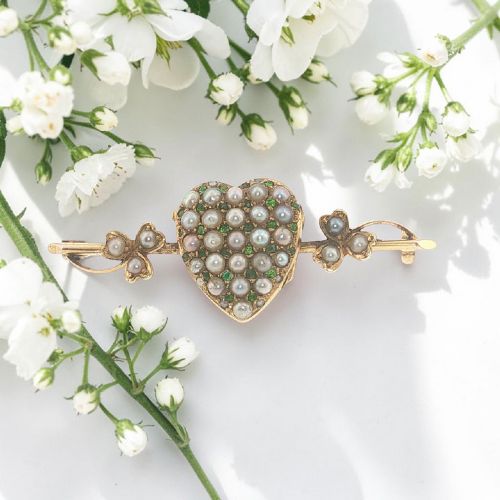
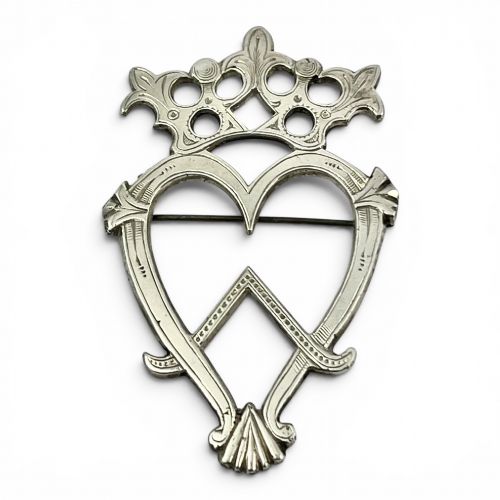
A victorian heart pin typically manifests as a brooch, stick pin, or decorative dish shaped around the universal symbol of affection. Buyers searching for a victorian heart pin encounter various configurations, from small precious metal brooches set with gems to desk accessories and pin cushions.
The selections span the Victorian period, Edwardian era, and early twentieth century. Most items seen here are brooches fashioned from gold or silver, frequently augmented by pearls, garnets, turquoise, and diamonds.
Beyond personal adornment, the category includes utilitarian items like silver pin cushions and trinket dishes. These domestic pieces share the heart motif, serving dressing tables as often as lapels.
Materials and construction
Goldsmiths and silversmiths utilised fifteen-carat and eighteen-carat gold alongside sterling silver to build the foundational mounts. Stones such as seed pearls, turquoise cabochons, garnets, and old-cut diamonds were then flush-set, claw-set, or pinned directly into the metalwork.
Specialised techniques include plique-à-jour enamel, which creates stained-glass effects within gold frames, and fine wirework or pierced detailing. Textile versions incorporate felt, glass beads, and beadwork to construct soft pin cushions.
Hallmarks and maker marks stamped into the silver and gold provide evidence of origins in assay offices such as Birmingham and Inverness. These physical manufacturing methods dictate the enduring weight and structure of each surviving piece.
Victorian Heart Pin Retail Price Guide 2026
Typical asking prices for victorian heart pin among the pieces listed under this phrase on Sellingantiques today, from the lower quarter to the upper quarter. They describe what is for sale here now, not the wider market.
Assessing craftsmanship
Complexity of design marks the difference between standard production and superior workshop output. Pieces exhibiting plique-à-jour enamel, intricate piercing, or multi-gem settings demand advanced bench skills that elevate the finished object.
George W Shiebler·Atkin Brothers·Deakin and Francis
The Victorian Heart Pin Glossary
- Cabochon
- A gem polished to a smooth convex dome rather than faceted with flat planes. This cut is common in turquoise and chalcedony heart brooches.
- Plique-a-Jour
- An enamelling technique where enamel is applied in cells without a backing, allowing light to shine through the transparent colour. It appears on gold heart-shaped brooches from the turn of the twentieth century.
- Seed Pearl
- A very small natural or cultured pearl, often drilled and strung or wired onto jewellery. They frequently outline gold heart frames in Victorian designs.
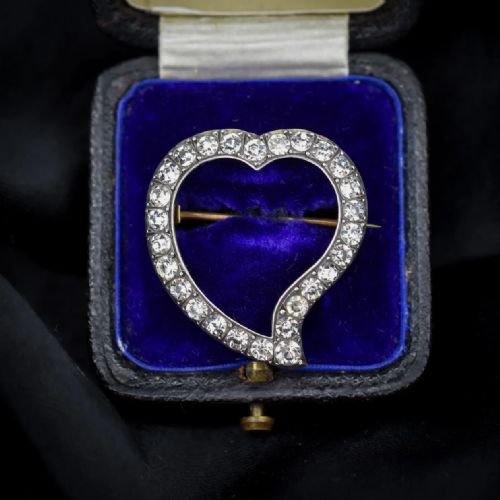
- Witches Heart
- A heart shape with a twisted tail pointing to one side, traditionally symbolising falling head over heels in love. These appear in silver with paste stones.
- Paste
- Hand-cut lead glass used to imitate gemstones in antique jewellery. It offers sparkle in silver settings without using mined diamonds.
Victorian Heart Pin: Frequently Asked Questions
What materials are used in these pins?
The pieces utilise fifteen-carat and eighteen-carat gold, sterling silver, and various gemstones including seed pearls, turquoise, garnets, and diamonds. Some variations incorporate enamel or glass beads.
Textile examples rely on felt and beadwork structures, particularly within the pin cushion category.
How do I date a heart brooch?
Dating relies on hallmarks, material composition, and stylistic clues such as the transition from Victorian sentimentality to Edwardian lightness or Art Nouveau plique-à-jour enamel.
Assay office marks and stamped registration numbers on the metal components provide precise chronological markers.
Were these items worn daily?
Victorian and Edwardian wearers utilised brooches and stick pins to fasten garments, secure lace collars, or display sentiment on lapels.
Trinket dishes and pin cushions remained stationary on dressing tables for daily domestic use.