

Antique Heart Jewellery
Antique heart jewellery brings together romantic symbolism and fine goldsmithing across rings, padlocks, and lockets from the Victorian and Edwardian eras.
Antique Heart Jewellery
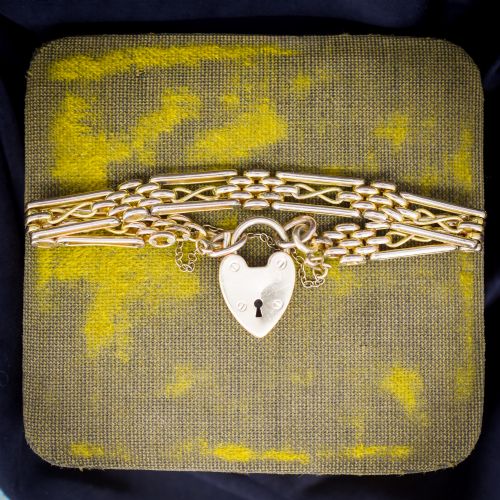
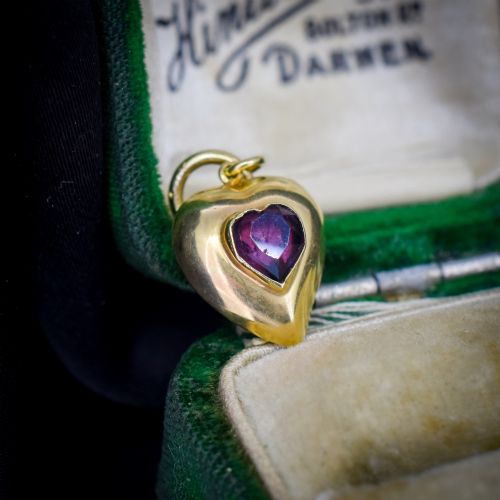
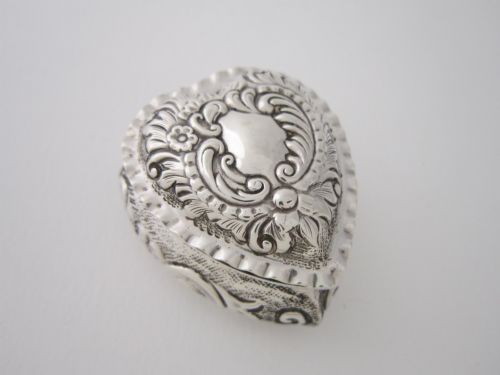
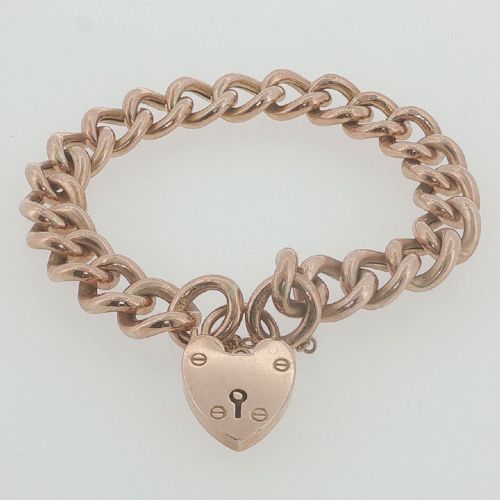
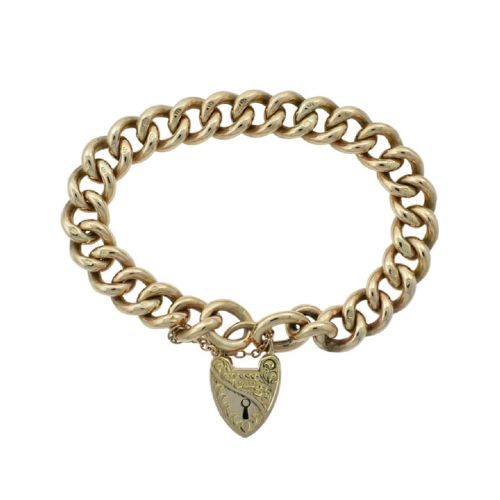
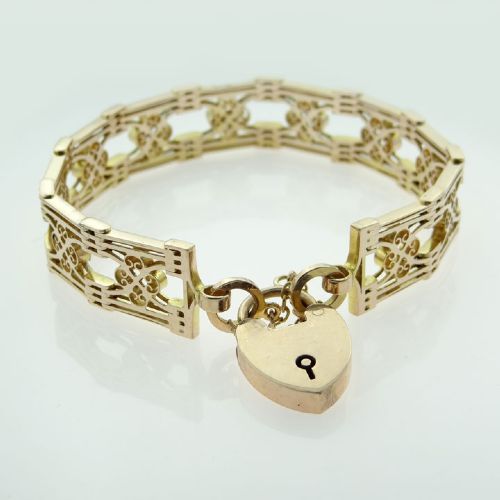
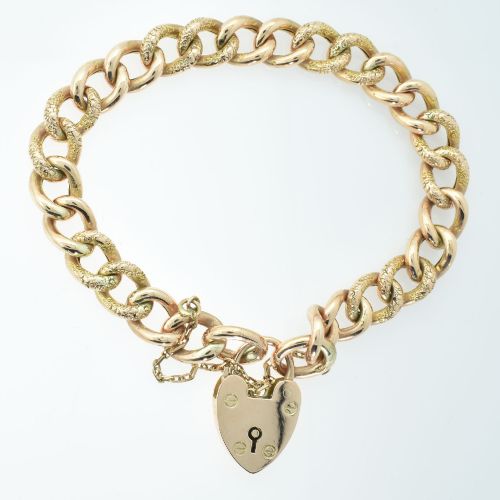
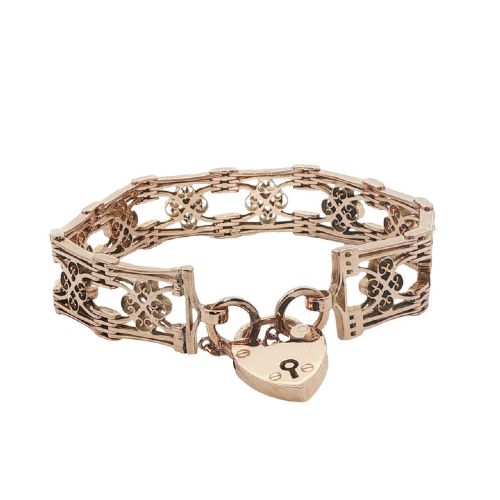
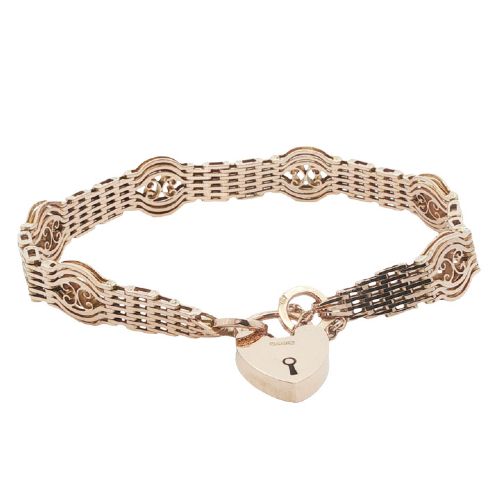
Antique heart jewellery encompasses a diverse array of wearable sentimental items, from structural gate bracelets secured with heart padlocks to puffy pendants and gem-set rings. The pieces span the Victorian, Edwardian, and later periods, capturing shifting expressions of affection through precious metals and gemstones. Bracelets fitted with heart-shaped padlocks and miniature silver trinket boxes are among the most frequent forms encountered within this selection.
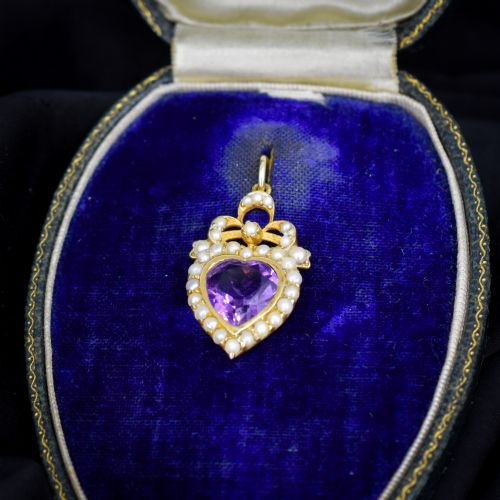
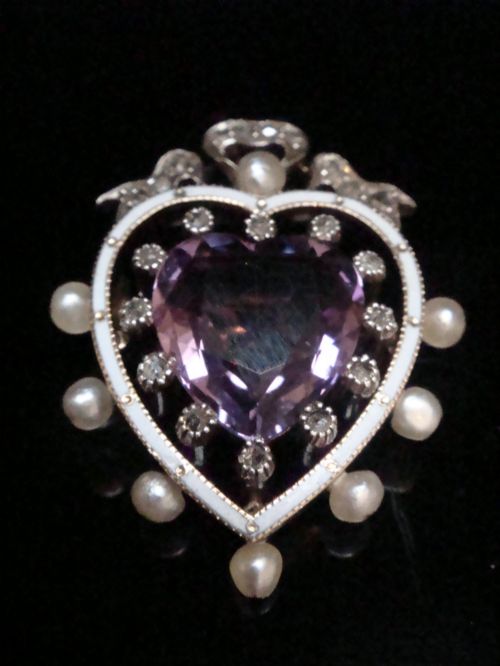
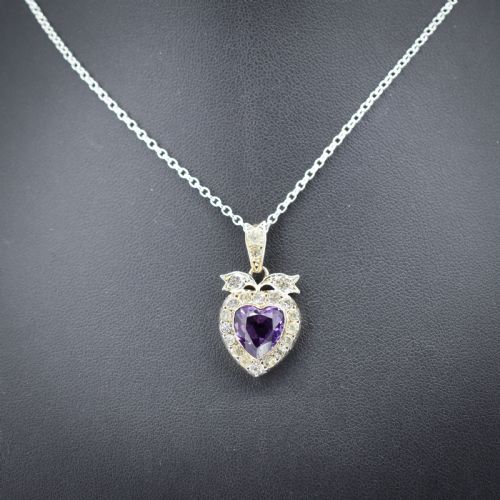
Makers utilised distinct motifs such as witches hearts, double heart configurations, and intricate engravings to denote romantic attachment or personal milestones. Items range from everyday silver charms to substantial fifteen-carat gold lockets adorned with seed pearls, garnets, and diamonds. Each surviving object preserves the craftsmanship of late nineteenth and early twentieth-century workshops.
Materials and Technique
Goldsmiths worked extensively in nine-carat and fifteen-carat yellow and rose gold, alongside sterling silver and rolled gold, shaping metal into hollow puffy forms or solid cast bands. Chain construction relied on sturdy curb links and fancy gate links designed to support substantial heart padlocks and charms. Silversmiths also incorporated organic materials, mounting tortoiseshell and agate within sterling silver frames for desk boxes and brooches.
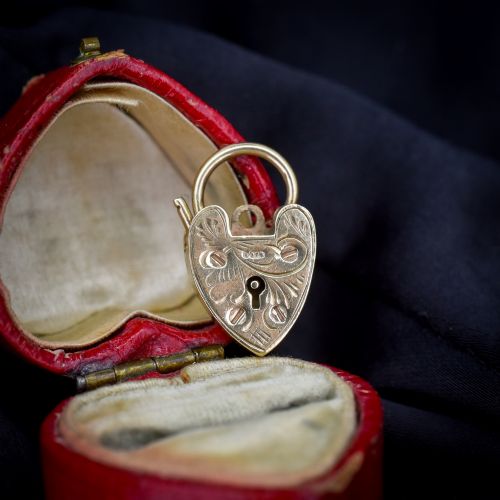
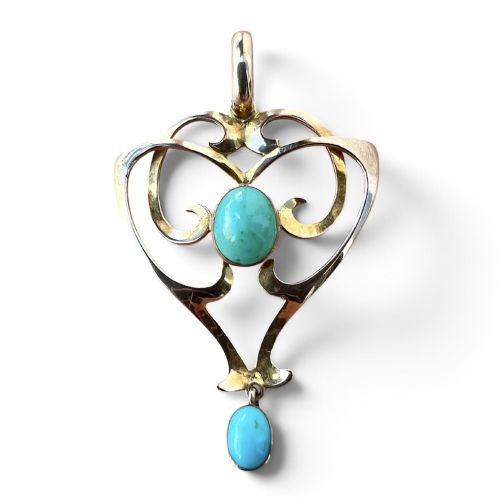
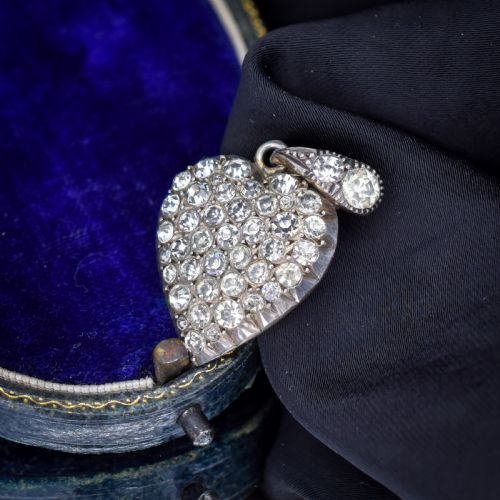
Gemstone setting involved old-cut paste, amethysts, turquoise, green garnets, and natural pearls, often secured via collet or bezel techniques. Enamelling, particularly guilloche work, added vibrant colour to gold and silver pendants during the Edwardian period. Hand engraving and chased surface patterns completed the ornamentation on lockets, rings, and sovereign holders.
Some lockets hide miniature glazed compartments specifically designed to preserve locks of hair from secret admirers.
Standards of Execution
The distinction between standard commercial pieces and finer examples rests upon the weight of the gold or silver and the depth of the hand engraving. Substantial fifteen-carat gold mountings and fully hallmarked components indicate superior workshop production compared to lighter rolled gold alternatives. Crispness in chased details and the precision of guilloche enamel work further separate ordinary items from exceptional survivals.
Gemstone selection dictates the upper tier of quality, with natural pearls, diamonds, and genuine coloured stones outranking paste glass in both value and craftsmanship. The structural integrity of hinges on lockets and trinket boxes, alongside original clasps on gate bracelets, demonstrates the enduring skill applied during manufacture.
Deakin & Francis·James Deakin & Sons
The Antique Heart Jewellery Glossary
- Heart padlock
- A functional or decorative clasp shaped like a heart, frequently attached to Victorian and Edwardian curb and gate bracelets. These padlocks often bear full hallmarks indicating the year and city of assay.
- Puffy heart
- A three-dimensional, hollow pendant formed from two convex pieces of gold or silver soldered together. They were often engraved with floral motifs or dates.
- Guilloche enamel
- Decorative metalwork covered in translucent enamel over an engine-turned background. This technique was favoured by Edwardian jewellers for pendants and lockets.
- Gate bracelet
- A wide bracelet constructed from parallel linked bars connected by central vertical links, usually fastened with a padlock. This design dominated the late nineteenth and early twentieth centuries.
- Paste
- Faceted lead glass cut and polished to imitate gemstones. In antique jewellery, paste stones were hand-set in silver or gold settings.
Antique Heart Jewellery: Frequently Asked Questions
How do I date a gate bracelet?
Gate bracelets are typically dated by examining the heart padlock and individual links for British hallmarks, which reveal the assay office and year of manufacture.
Most surviving examples originate from the late nineteenth century through to the Edwardian era.
What are silver trinket boxes used for?
Antique silver trinket boxes with heart-shaped lids served as elegant desktop containers for pins, rings, and small keepsakes during the late Victorian period.
They often feature velvet or silk interiors and detailed repousse work depicting romantic motifs.
Are heart lockets double-sided?
Many antique heart lockets are constructed with hinged compartments designed to hold two separate photographs or locks of hair behind glass panels.
Makers achieved this using gold or silver casings stamped with front and back plates.