


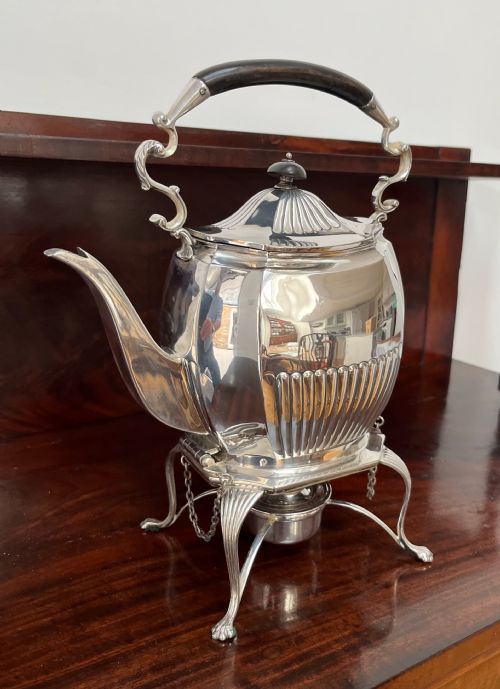


Edwardian Tea Urn
An edwardian tea urn provides the table centrepiece for pouring hot water, combining practical metalware with period decorative style.
Edwardian Tea Urn
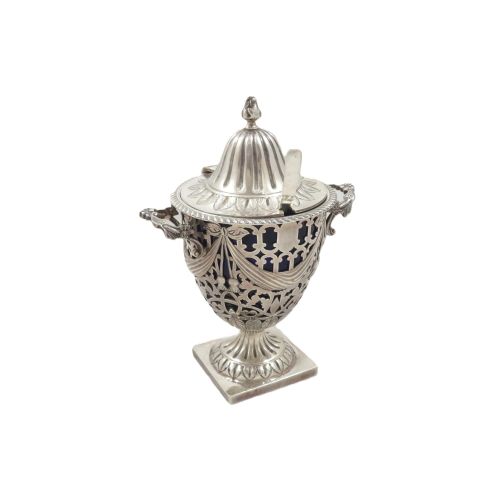
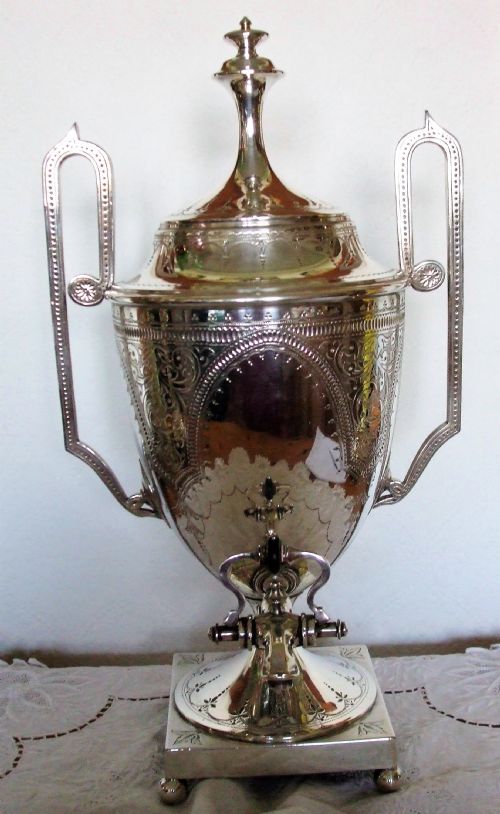
The search phrase edwardian tea urn brings together silver plated samovars, table kettles on stands, and urn-style tea caddies. Most examples appearing here date from the Edwardian period or share the prevailing revival styles of the early twentieth century.
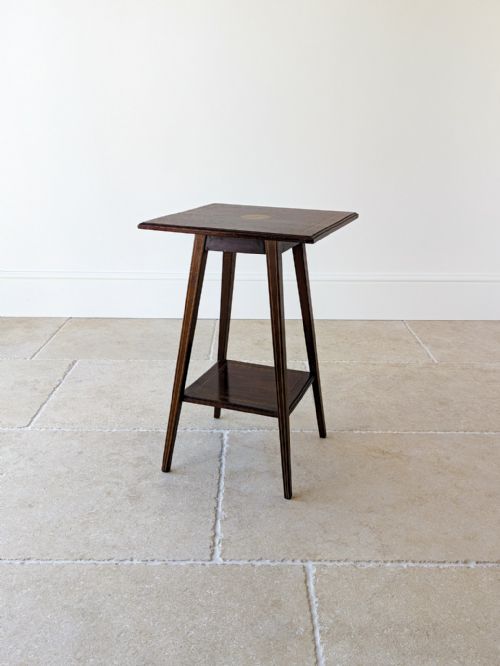
Makers and manufacturers produced these vessels in silver plate, solid silver, brass, and copper, often pairing them with occasional tables in mahogany and satinwood. Alongside true samovars, buyers frequently encounter spirit kettles on stands equipped with burners.
The form spans formal neoclassical revival vessels with intricate handles and taps down to simpler arts and crafts copper designs. Each piece reflects the social rituals of tea service that remained central to the period home.
How They Were Made
Silversmiths constructed metal urns and kettles using silver plate over base metals, alongside solid brass, copper, and sterling silver. Many metal bodies feature applied handles, spigots, and burners designed for spirit heating.
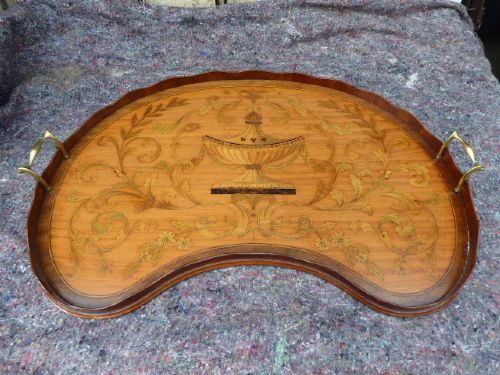
Cabinetmakers built supporting tables and stands in mahogany and satinwood, frequently incorporating marquetry inlays, ebony stringing, and painted details. These wooden pieces draw on Chippendale, Sheraton, and neoclassical design vocabularies.
Makers applied japanning and hand-beating techniques to copper and brass vessels, particularly within arts and crafts production. Surface decoration balances utilitarian strength with refined decorative flair.
Some versatile nineteenth-century mahogany frames doubled as peat buckets and knitting baskets alongside their duties as tea stoves.
What Varies in Quality
Quality rests on the crispness of chased or engraved detail on the metal body and the structural integrity of handles, taps, and stands. Superior silver plated samovars retain their plating evenly across high-wear areas like spigots and handles.
In wooden tables and kettle stands, the refinement of the satinwood or mahogany grain and the precision of the marquetry inlay dictate the tier of the piece. Workshops known for high output invested heavily in balanced proportions and durable joinery.
Walker and Hall·Edwards and Roberts·Goldsmiths and Silversmiths Co·Benetfink and Co·Fenton Brothers
The Edwardian Tea Urn Glossary
- Samovar
- A heated metal container traditionally used to boil and heat water for tea. These large vessels often feature an internal vertical metal tube that holds burning charcoal or a spirit burner.
- Spirit Kettle
- A kettle mounted on a dedicated metal stand above a small spirit burner used to keep water hot at the table. They frequently accompany occasional or lamp tables.
- Marquetry
- Decorative veneer work created by fitting together small pieces of wood, shell, or ivory to form pictorial or geometric patterns. Makers applied this technique to satinwood and mahogany table tops.
- Japanning
- A European imitation of East Asian lacquerwork achieved through the application of heat-dried varnish layers. It appears on metal wares such as nineteenth-century tea urns.
- Sterling Silver
- An alloy containing ninety-two point five percent silver by mass and seven point five percent other metals, usually copper. Makers stamped higher-end tea caddies and sugar baskets with hallmarks confirming this standard.
Edwardian Tea Urn: Frequently Asked Questions
How were tea urns used?
Hosts used tea urns and spirit kettles during formal afternoon tea gatherings to maintain boiling water at the table without returning to the kitchen. The integrated burners kept the water hot throughout the service.
They stood upon side tables, occasional tables, or dedicated metal stands while guests socialised in the drawing room.
Are these urns made of solid silver?
Most surviving tea urns and samovars from this period consist of silver plate over a base metal such as copper or brass, though solid sterling silver examples do exist for smaller caddies and baskets.
Makers also produced utilitarian and decorative versions entirely in copper, brass, or japanned metal without any silver coating.
How do I care for silver plated urns?
Silver plated surfaces require gentle cleaning with specialised silver cloths or non-abrasive polishes to preserve the thin metal layer over the base substrate. Avoid harsh scrubbing that might wear down the plating on raised details.
Wooden stands and occasional tables benefit from occasional wax polishing to nourish the mahogany or satinwood grain.