



Edwardian Silver Plated Urn
An edwardian silver plated urn brings substantial presence to a room, offering both decorative dignity and functional heritage.
Edwardian Silver Plated Urn
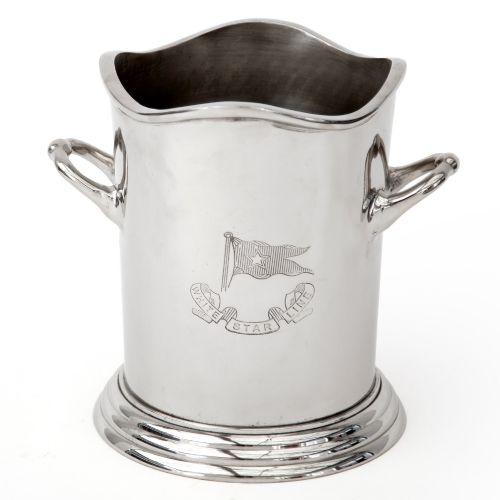
When you search for an edwardian silver plated urn, you encounter vessels designed for heating water, cooling wine, or holding tea, originating primarily from the Edwardian era alongside related Georgian Revival and Victorian examples.
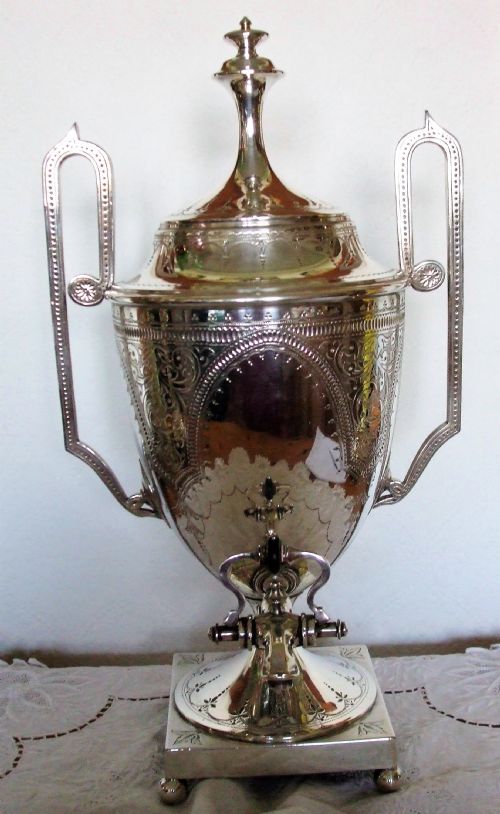
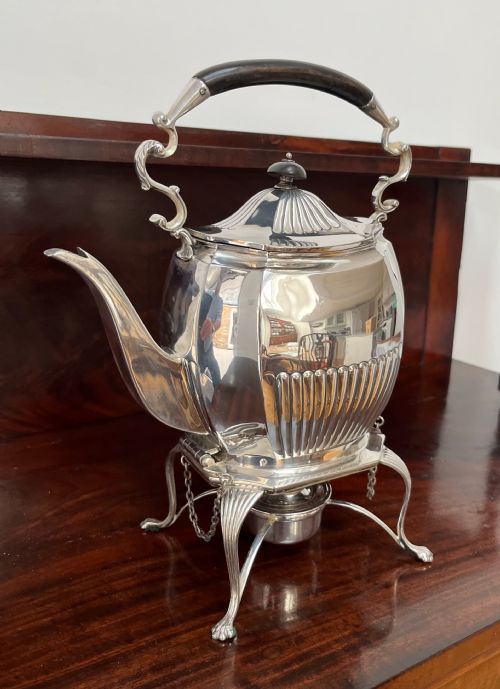
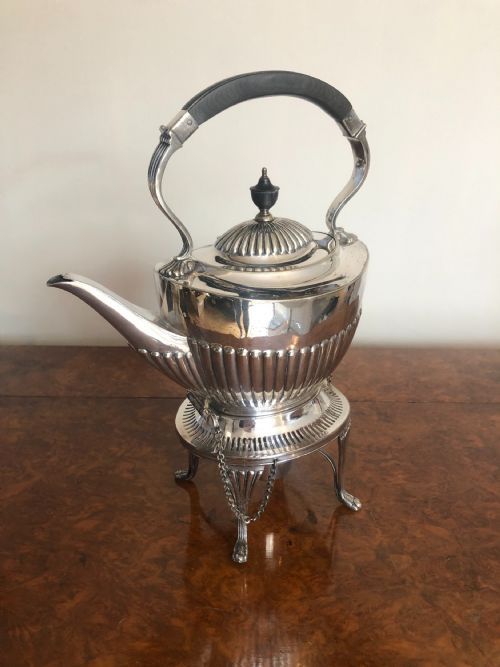
The most common forms on this page are spirit kettles on stands complete with burners, alongside larger samovars and wine coolers shaped in the neoclassical tradition.
These pieces bridge the gap between practical dining accessories and display metalwork, reflecting the formal hospitality of their period.
Materials and Construction
Makers utilised silver plate over a base metal, frequently employing EPNS for durability and bright finish across vessels and stands.
Details such as handles, knobs, and burners incorporate secondary materials like ebony, ebonised wood, bone, and glass to insulate heat and provide contrast against the polished metal.
Listings feature items from the Edwardian period alongside Victorian, Georgian Revival, and 1930s examples.
Distinctions in Quality
The standard of manufacture shows in the crispness of neoclassical cast mounts, the balance of the supporting stands, and the integrity of the silver plating over the underlying metal.
Superior examples retain original burners, well-fitted internal components, and makers' marks that indicate esteemed workshops rather than anonymous production.
Walker & Hall·Fenton Brothers·James Dixon & Sons
The Edwardian Silver Plated Urn Glossary
- EPNS
- Electroplated Nickel Silver, a common base metal process used for durable silver plating.
- Samovar
- A heated metal container traditionally used to boil and heat water for tea.
- Spirit Kettle
- A water kettle mounted on a metal stand with an integrated spirit burner underneath.
- Neoclassical
- A style drawing inspiration from classical antiquity, often featuring urn shapes and symmetrical ornamentation.
Edwardian Silver Plated Urn: Frequently Asked Questions
How do I use a spirit kettle?
Fill the main vessel with water and place it securely on the fitted metal stand above the burner.
Fill the burner with methylated spirit, ignite it carefully, and allow the flame to heat the water for tea service.
What is the difference between a samovar and a spirit kettle?
A samovar is typically a larger, upright urn designed with an internal heating tube or tap for dispensing hot water.
A spirit kettle is a smaller vessel that tilts or lifts from its stand to pour water into cups.
How do I clean silver plate?
Wipe the surface gently with a soft cloth and a specialised silver polish designed not to abrade the thin plated layer.
Avoid harsh scrubbing or chemical dips that can damage ebonised wooden parts, bone insulators, or the underlying metal.
Can I display these urns in a modern interior?
These pieces sit comfortably on sideboards, dining tables, or mantelpieces as focal decorative objects.
Their reflective surfaces and classical proportions complement both traditional period rooms and contemporary settings.