
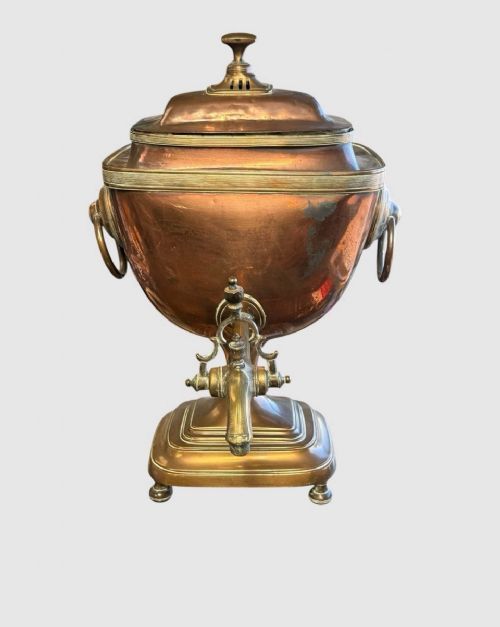


Vintage Hot Water Vessel
These vintage hot water vessel selections comprise traditional metal heaters, urns and jugs designed to supply heated water for domestic tea and washing.
Vintage Hot Water Vessel
When you search for a vintage hot water vessel, you are exploring a functional family of metal containers spanning the eighteenth, nineteenth and early twentieth centuries. These pieces encompass Georgian and Regency samovars, Victorian spirit kettles, Edwardian warming cans and Georgian warming flasks designed to hold and dispense heated water.
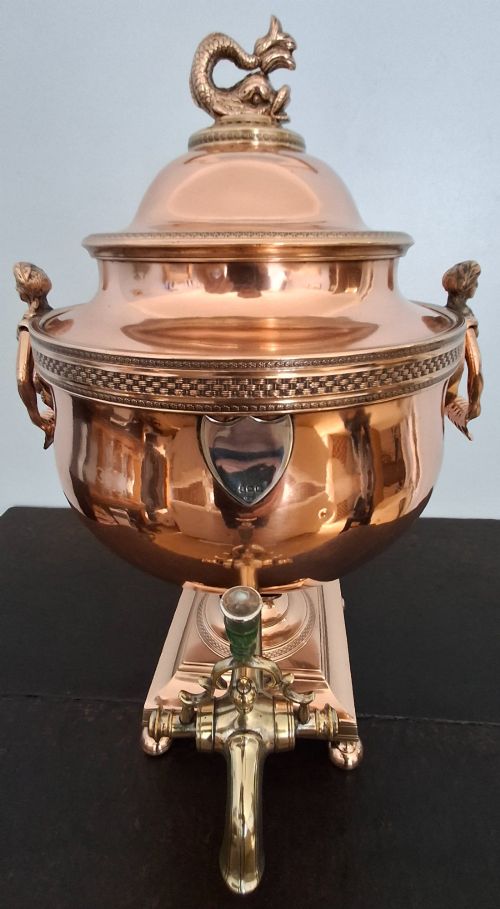
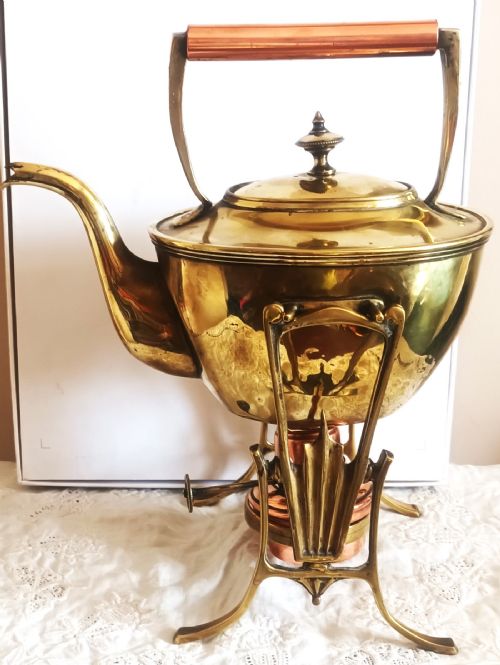
The versions you are most likely to encounter on this page are generous copper and brass tea urns, samovars and spirit kettles from the Victorian period. Alongside these, occasional Georgian copper coffee pots, Edwardian watering and hot water cans, and tinned metal jugs appear, reflecting the diverse domestic needs of past households.
Originating primarily from English workshops, these items served central roles in entertaining and daily routines, whether mounted on stands with spirit burners or fitted with detachable wooden handles for safe carrying. Their forms range from moon-shaped flasks to large columned urns and graduated jugs.
Materials and construction
Copper and brass form the structural core of these vessels, shaped through hand-beating, spinning and joining techniques to withstand heat and daily use. Makers frequently combined these metals, pairing polished copper bodies with contrasting brass taps, handles and feet.
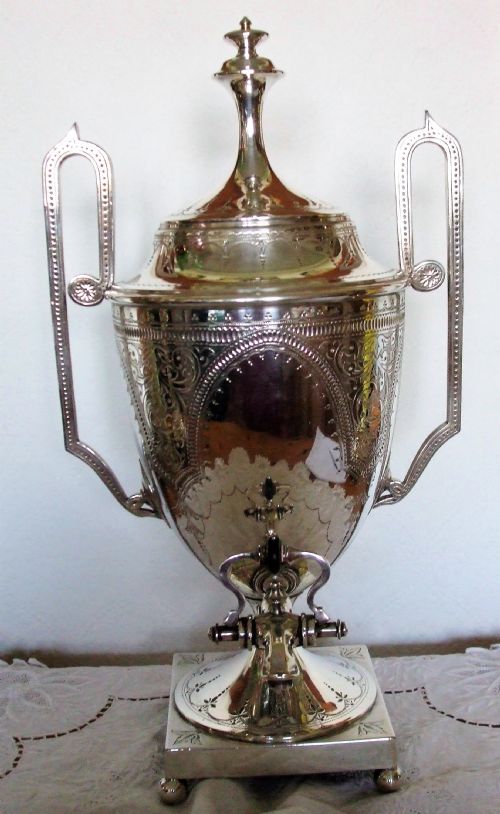
Surface finishes and secondary materials introduce further tactile variety, including silver plating over base metal, painted toleware surfaces, and ebonised wood or solid oak components. Handles often incorporate wood to insulate against heat, while internal fittings utilise tinplate lining to maintain water quality.
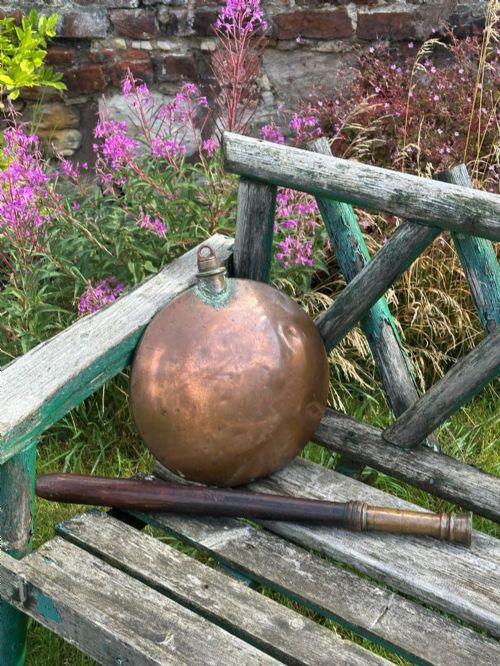
One unusual eighteenth-century piece takes a moon shape, proving that warming water once involved considerable geometric ambition.
Distinctions in quality
The upper tier of these pieces displays superior weight of metal, crispness in chased or cast brass mounts, and the documented mark of a notable maker such as William Soutter and Sons, Walker and Hall, Joseph Sankey, or Orme Evans and Company. Finer examples maintain structural integrity across complex assemblies like spirit stands, taps and handles.
Simpler or more utilitarian items rely on basic plate and plain spun metal, showing less decorative flourish in handles, spouts and pedestals. The presence of original matching stands, burners and detachable wooden elements elevates a piece above standard domestic utilitarian ware.
William Soutter and Sons·Walker and Hall·Joseph Sankey·Orme Evans and Co
The Vintage Hot Water Vessel Glossary
- Samovar
- A heated metal container traditionally used to boil and heat water for tea, featuring an internal vertical metal tube for solid fuel or equipped with an external heat source.
- Spirit Kettle
- A portable water kettle mounted on a metal stand above a small spirit burner, designed to keep water hot at the table or tea service.
- Toleware
- Enamelled and painted sheet metal, commonly tinplate, finished to resemble Japanese lacquer and utilised for decorative domestic containers like hot water cans.
- Warming Flask
- A flat or moon-shaped vessel filled with hot water and used for warming beds or spaces, often fitted with an insulated wooden handle.
- Tea Urn
- A large vessel with a tap at the base, built to hold and dispense hot water during large gatherings.
Vintage Hot Water Vessel: Frequently Asked Questions
What is a vintage hot water vessel used for?
These vessels were utilised in past homes to heat, hold and dispense hot water for tea preparation, washing and general domestic tasks.
Larger samovars and urns stood in reception rooms or tea tables, while spirit kettles and warming cans provided portable heat.
How do I identify a Georgian hot water vessel?
Georgian pieces often display classical proportions, hand-hammered copper construction and distinctive details like moon-shaped bodies with detachable oak handles.
They tend to pre-date the heavier cast brass mounts and elaborate aesthetic styles seen in later Victorian and Edwardian examples.
Are these hot water vessels still functional?
While many retain their taps, stands and burners, their primary role today is decorative or collectible rather than for modern culinary use.
Internal linings and historical repairs mean they are best appreciated as historic metalwork and interior display pieces.
What materials were used to make these vessels?
The listings show a heavy reliance on copper and brass, often complemented by oak, ebonised wood and tinplate linings.
Later pieces introduced silver plating over base metal and painted toleware finishes to suit changing domestic tastes.