


Metal Hot Water Dispenser
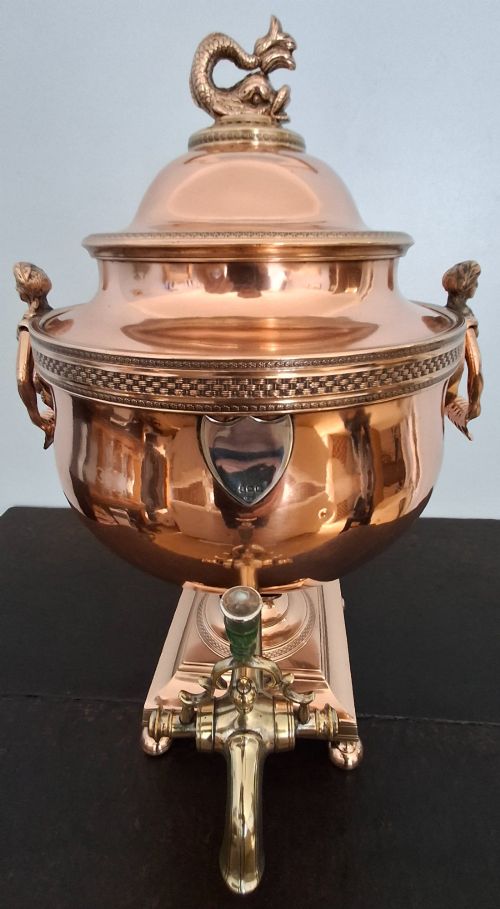
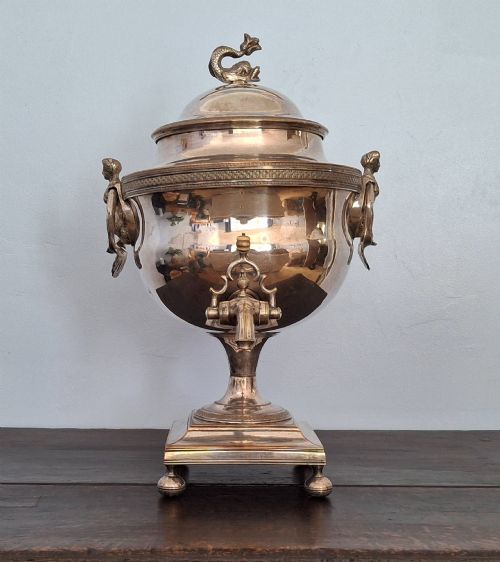
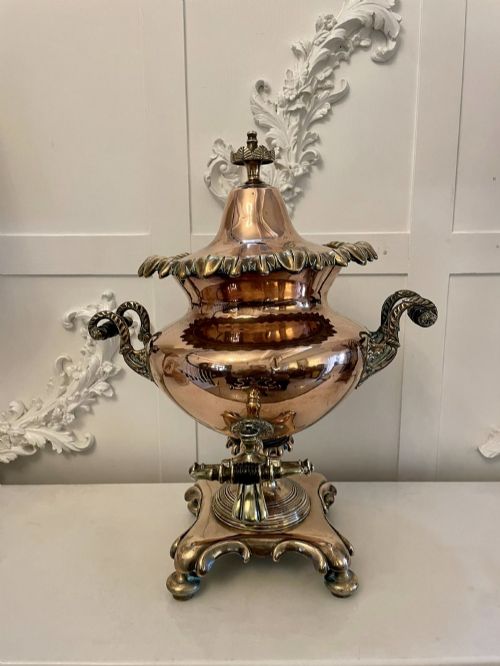
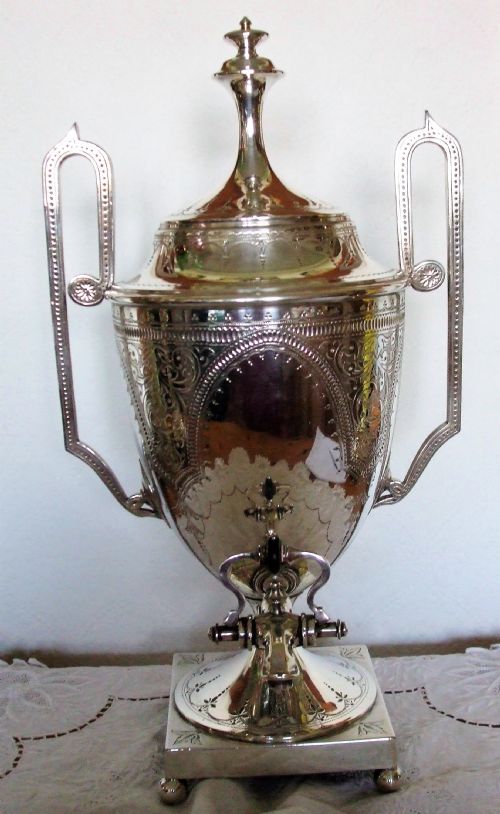
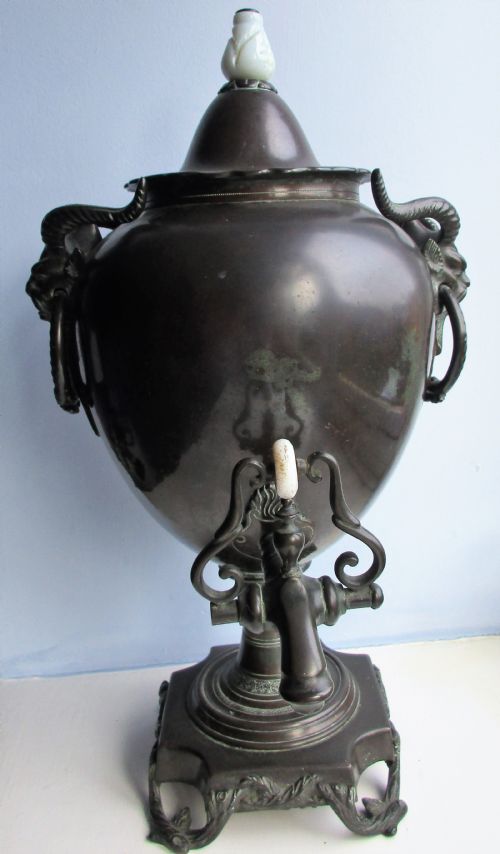
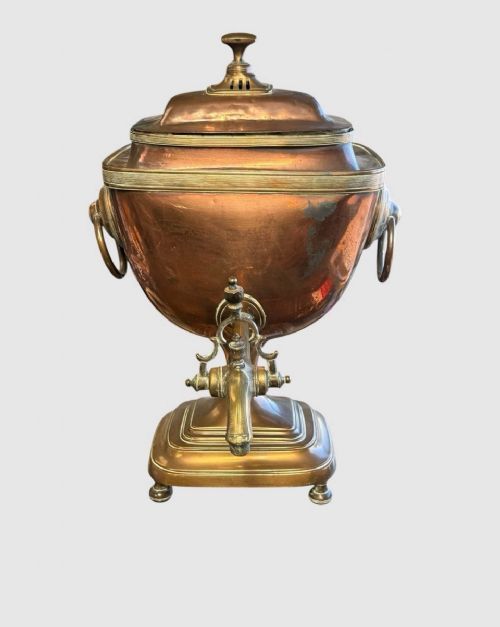
A metal hot water dispenser brings the architectural gravity of a tea urn or samovar straight to the sideboard.
Metal Hot Water Dispenser
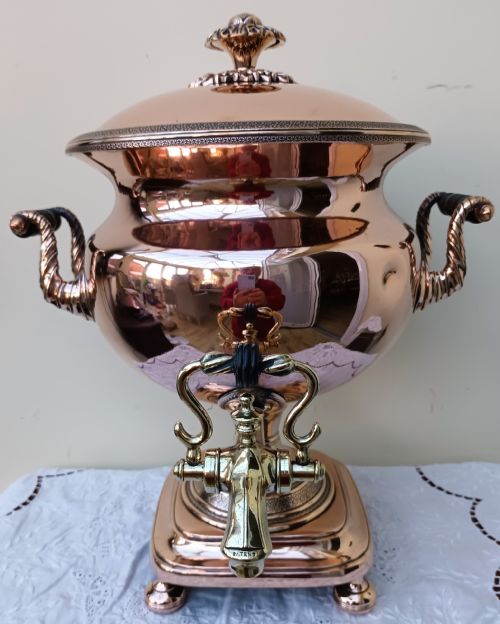
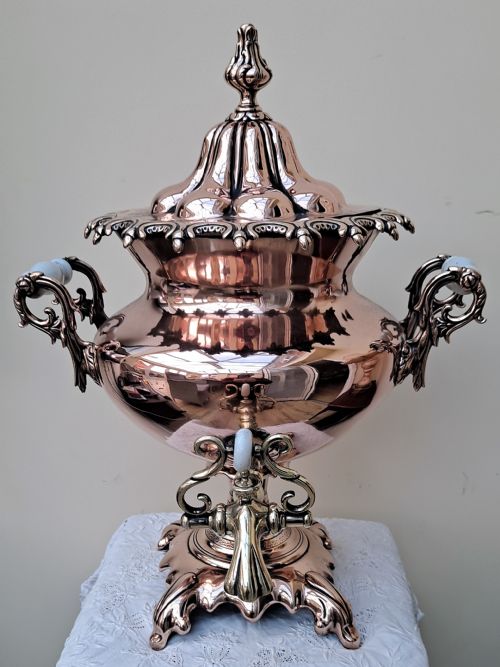
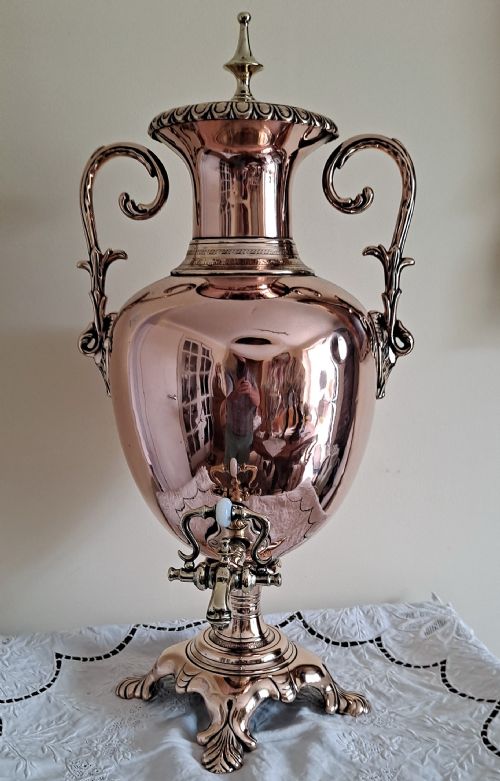
When you search for a metal hot water dispenser, you encounter substantial vessels designed to heat and serve water for tea or coffee in formal domestic settings. These pieces primarily manifest as tea urns and samovars spanning the Georgian, Regency, and Victorian periods.
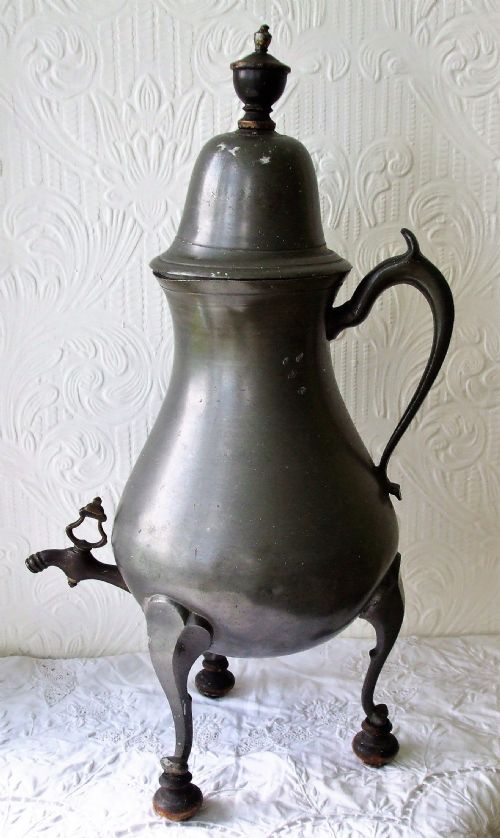
The domestic forms on this page range from small Regency examples in copper and bronze to large Victorian copper samovars and silver plated vessels by makers such as Walker & Hall. You will also find pewter coffee urns and japanned Pontypool ware pieces originating from the eighteenth and nineteenth centuries.
Construction and materials
Metals form the core of these constructions, with copper, brass, and silver plate dominating the inventory alongside pewter, bronze, and bell metal. Artisans shaped these conductive metals into body vessels, incorporating functional taps for dispensing hot water.
Makers integrated contrasting materials such as bone and wood for handles and insulators, while decorative treatments included japanning on Pontypool ware. Original fittings remain present on several Georgian and Victorian examples.
Materials represented across the catalogue include copper, brass, silver plate, pewter, bronze, bell metal, ceramic, bone, and wood.
Factors of quality
The hierarchy of quality rests upon the integrity of original fittings, the weight of the metal body, and the crispness of period styling such as Georgian Neoclassical or Regency detailing. Substantial copper vessels with intact brass spigots and handles demonstrate superior original manufacture.
Silver plated items from Sheffield show distinction through the preservation of the plating layer over the base metal. Maker attribution, such as signed pieces by Benetfink and Co or Walker and Hall, further elevates the standing of an individual urn.
Walker and Hall·Benetfink and Co
The Metal Hot Water Dispenser Glossary
- Samovar
- A heated metal urn traditionally used to boil water for tea. Most examples feature an internal heating tube or a spigot near the base.
- Tea Urn
- A large vessel designed for holding and dispensing hot water during tea service. These objects frequently adopt neoclassical urn profiles on pedestal bases.
- Pontypool Ware
- British japanned metalware produced in Wales, known for its durable gloss finish. Pieces often feature dark lacquered surfaces with decorative highlights.
- Sheffield Plate
- An early composite material made by fusing a thin sheet of silver to a thicker copper base. This technique preceded modern electroplating.
- Bell Metal
- An alloy of copper and tin traditionally used for bells and durable metal vessels. It provides a resonant, hard structure for utilitarian items.
Metal Hot Water Dispenser: Frequently Asked Questions
How do you operate a metal hot water dispenser?
These vessels typically hold pre-heated or boiling water for service rather than acting as standalone kettles on a modern hob. Users draw water directly through the front tap into teapots.
Historical models often relied on internal cylinders or heated metal blocks to maintain water temperature during long gatherings.
Where were these urns used in the home?
Georgian and Victorian households placed these large dispensers on sideboards or dedicated tea tables in formal dining rooms and drawing rooms. Servants or hosts operated the tap during social gatherings.
Their substantial weight and decorative presence made them permanent fixtures of hospitality rather than portable kitchenware.
How do I clean a vintage copper samovar?
Preserving the aged patina is standard practice for antique metalware unless a bright polished finish is specifically desired. Gentle dusting and non-abrasive cleaning protect the underlying copper or silver plate.
Harsh chemical polishes can strip historic surfaces and reduce the visual depth accumulated over centuries.
How do I distinguish Regency styles from Victorian pieces?
Regency designs lean heavily on classical antiquity, displaying clean geometric lines, bronze accents, and restraint in ornament. They often date from the early nineteenth century.
Victorian models tend toward larger proportions, heavier embossing, and diverse finishes like japanning or extensive silver plating from Sheffield makers.