


Victorian Samovar
A victorian samovar stands ready to anchor a tea service, offering both monumental form and practical warmth.
Victorian Samovar
A victorian samovar is a large vessel designed for heating and dispensing water for tea, appearing in various grand forms across the nineteenth century. These pieces serve as commanding centrepieces on a sideboard or table, combining functional utility with decorative presence.
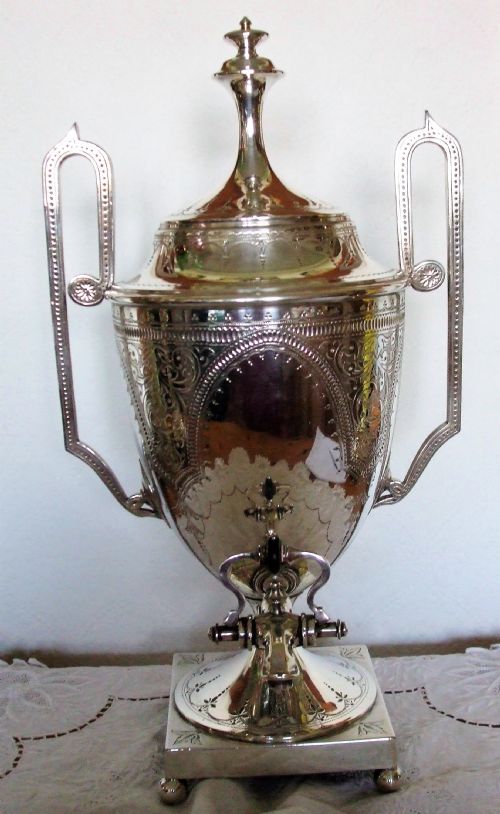
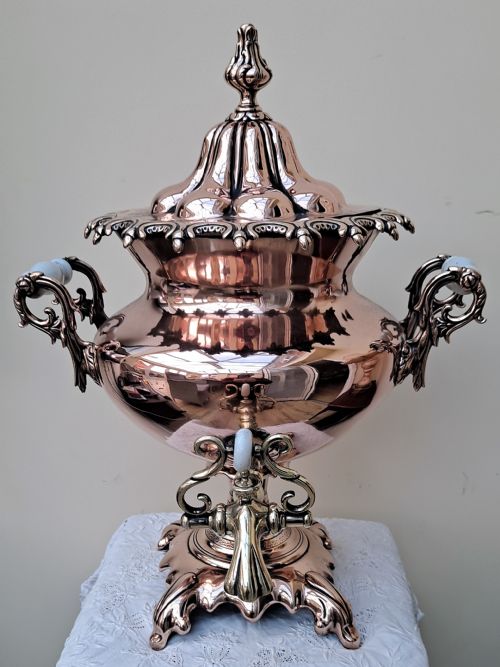
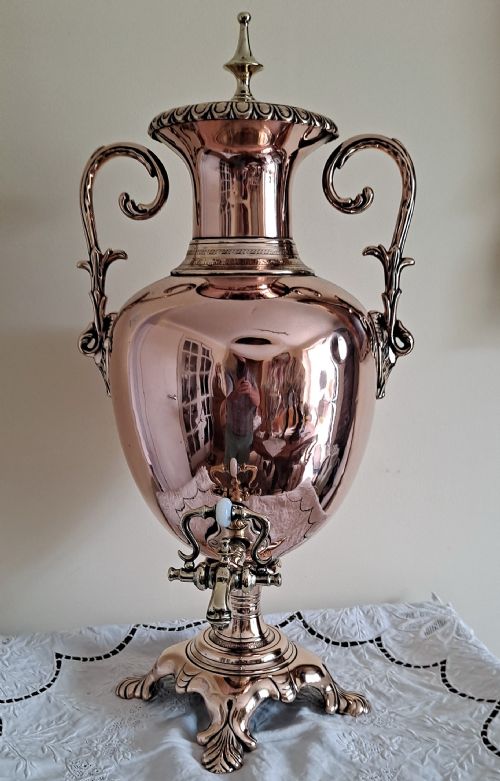
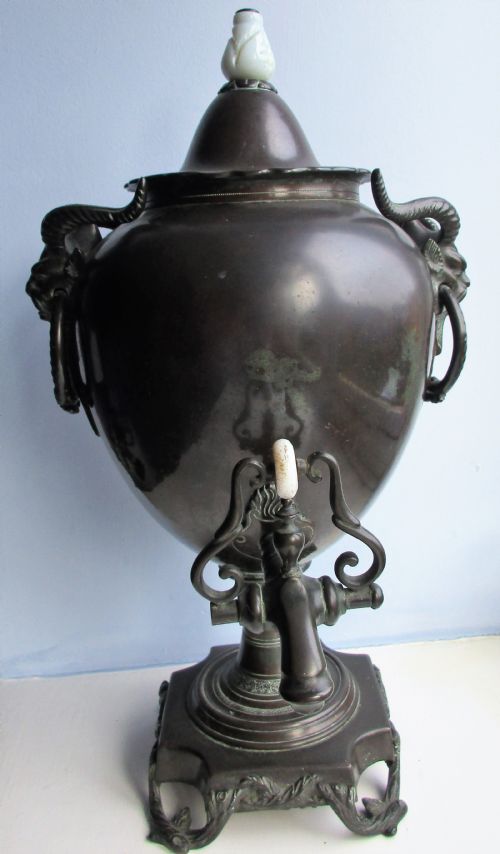
The version met most often on this page is the copper samovar, frequently detailed with brass handles and spigots. Alongside these, silver plated tea urns and Japanned Pontypool ware emerge from the period production.
Origins span English workshops, Welsh centres, and French makers, showing styles from Georgian neoclassical through to Victorian and Edwardian periods.
Materials and construction
Construction relies heavily on sheet copper and brass, hammered, shaped, and joined to form the body and internal heating tubes. Makers also utilised silver plating over base metals, alongside japanning techniques on tinware.
Details incorporate wood and bone for insulating handles and spigot keys, protecting hands from hot metal during use.
Listings feature copper, brass, and silver plated materials across the Victorian, Edwardian, and Georgian periods.
Assessing quality and manufacture
Quality shows in the weight of the metal and the crispness of the chased or cast brass mounts, handles, and spigots. Better examples retain their internal heating cylinders and functional brass taps without crude repairs.
The distinction between standard production and top tier work rests on the harmony of proportions, the integration of materials like ebonised wood or bone, and the prominence of the maker or retailer name.
Walker & Hall·Benetfink & Co·Risler and Carré Paris·Adams & Sons·Pearce & Sons·Benham & Sons·John S. Pyrke and Sons
The Victorian Samovar Glossary
- Pontypool Ware
- Tinned metalware finished with a japanned lacquer process, often associated with Welsh production centres. This technique created a glossy, durable surface resembling oriental lacquer.
- Japanned
- A European imitation of East Asian lacquerwork, applied as a hard, dark resin finish on metal objects. It provided both decoration and protection against rust.
- Spigot
- A tap or faucet fitted near the base of the urn to control the flow of hot water. Quality pieces feature finely turned brass keys.
- Spirit Burner
- A small lamp positioned beneath the vessel to maintain water temperature using alcohol or spirit fuel. These often accompany kettles on stands.
Victorian Samovar: Frequently Asked Questions
What is a victorian samovar used for?
These vessels were designed to boil water and keep it hot for large gatherings and formal tea service.
The spigot at the base allowed water to be drawn easily into teapots as needed throughout the room.
How do you clean a copper samovar?
Maintenance requires gentle cleaning with appropriate metal polishes to preserve the finish without removing the aged surface character.
Interior cleaning depends on whether the piece is intended for display or active use.
Are silver plated samovars authentic?
Silver plating was common during the nineteenth century, applied over base metals like copper or brass by reputable firms.
Maker marks and retailer stamps help confirm the period and method of manufacture.
How do I distinguish a samovar from a tea urn?
The terms often overlap in nineteenth-century listings, though samovars traditionally included an internal heating tube for charcoal.
Tea urns generally relied on external heat sources or simply held pre-heated water for service.