


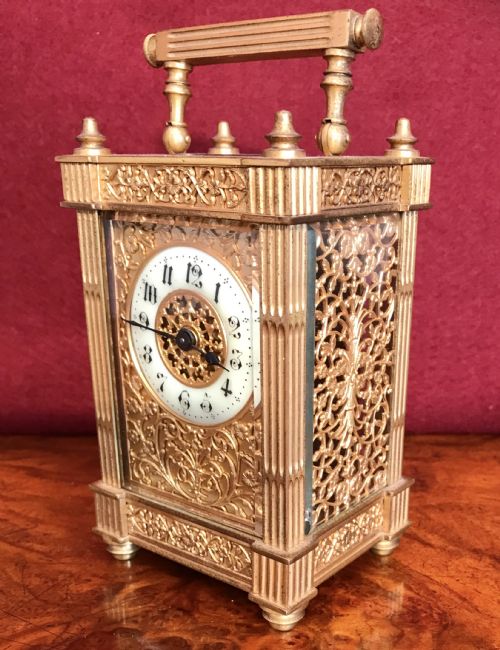


Edwardian Tabletop Clock
An edwardian tabletop clock brings refined proportion and reliable mechanics to a desk or mantel.
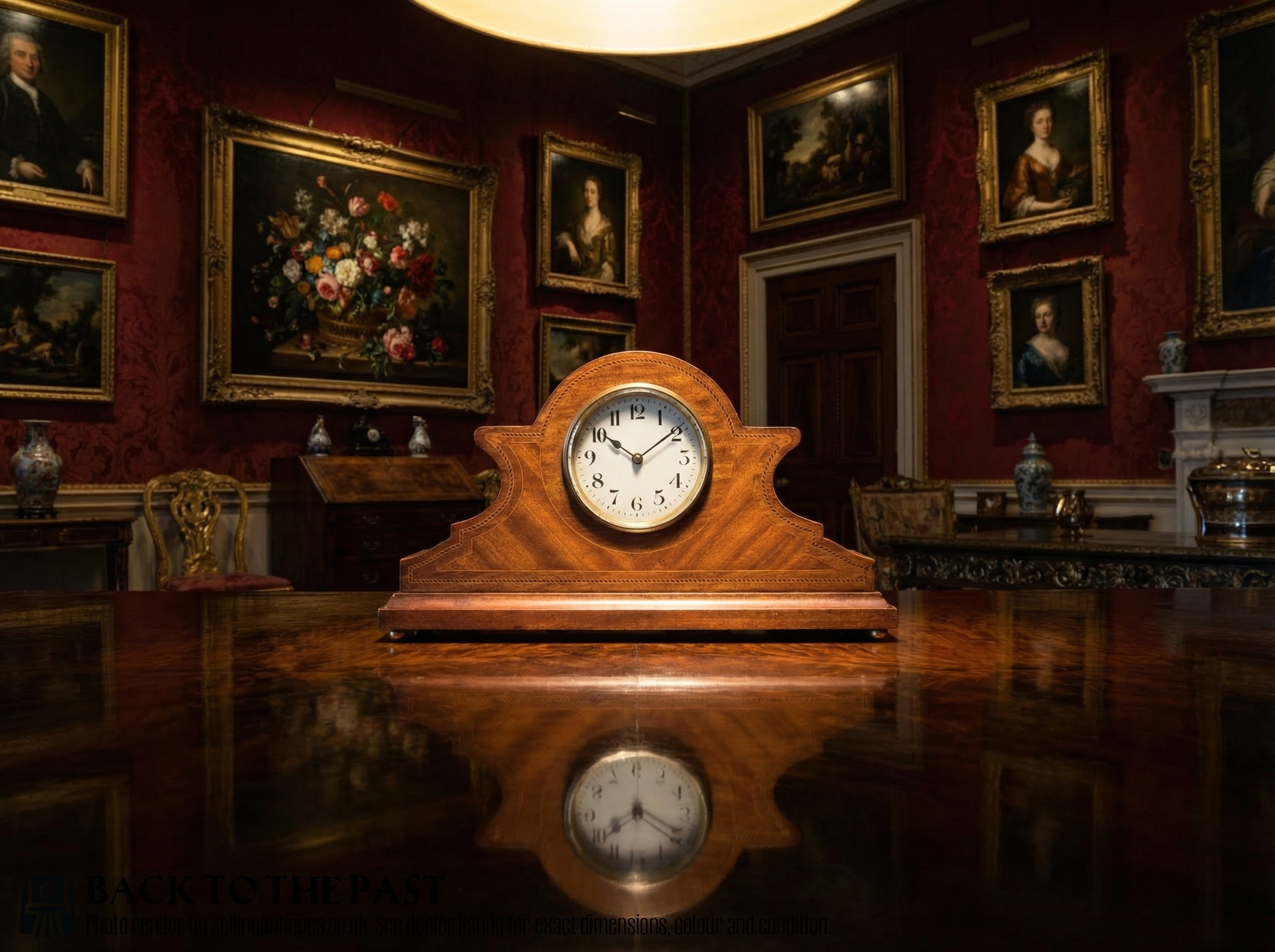
Edwardian Tabletop Clock
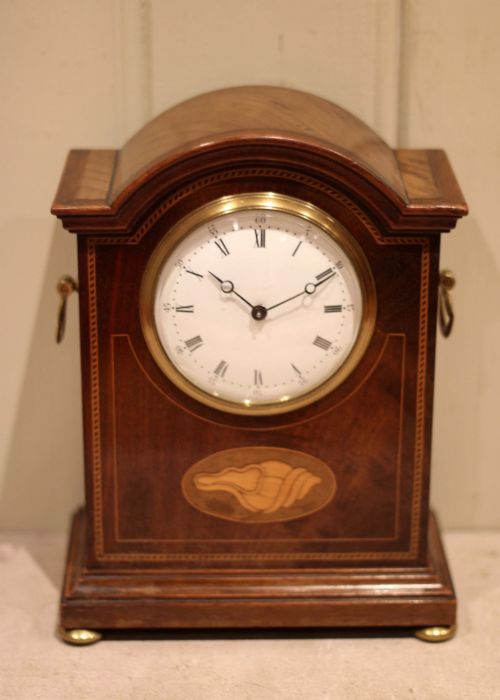
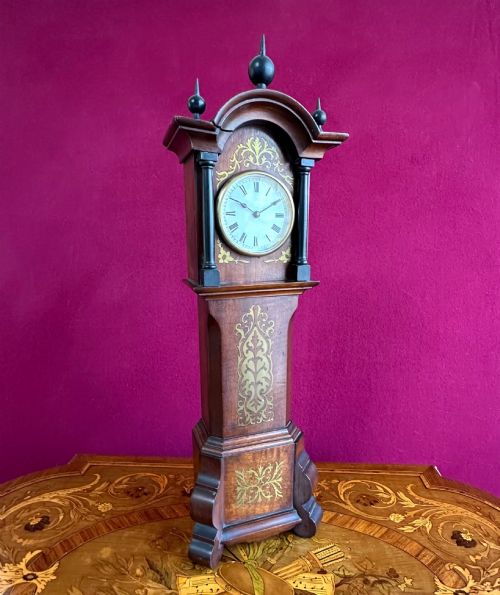
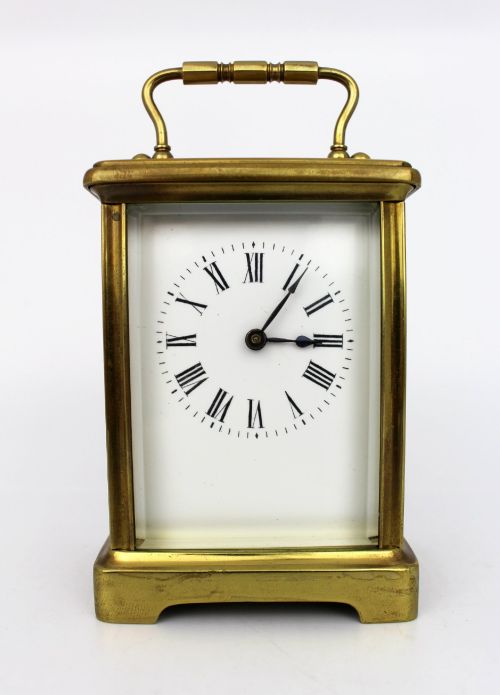
When you search for an edwardian tabletop clock, you enter a field defined by compact domestic timekeeping from the early twentieth century and adjacent periods. The selection on this page centres on mantel clocks, desk clocks, and carriage clocks, alongside miniature longcase and grandfather forms. Mahogany cases, often featuring satinwood inlay or lancet tops, sit alongside brass, silver, and gilded brass housings.
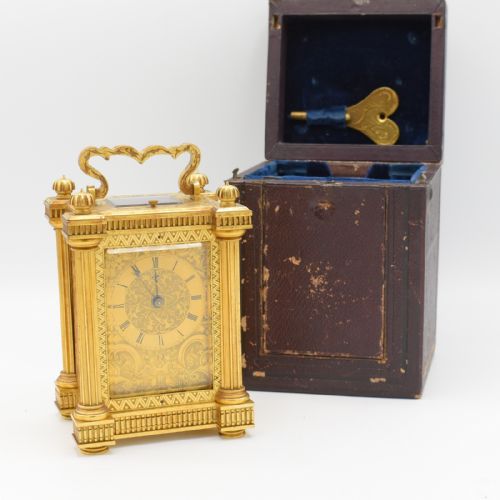
Most pieces meet the eye as mahogany mantel clocks or brass carriage clocks, frequently accompanied by travel cases or bevelled glass panels. Alongside Edwardian examples, the listings embrace Victorian and 1920s traditional pieces, as well as French Art Nouveau designs. Forms range from simple domed desk pieces to ornate gilded brass miniature longcases and floral enamelled silver boudoir timepieces.

Materials and Construction
Makers utilised dense hardwoods such as mahogany and walnut for wooden cases, frequently embellishing them with delicate satinwood inlay or shaping them into lancet and dome profiles. Metal housings rely upon brass, gilt brass, and silver, often paired with bevelled glass to expose the internal mechanics. Dials frequently incorporate enamel work, whilst specialised iterations include leather travel cases and filigree masks.
Movements span Swiss mechanisms and repeater functions, fitted carefully within compact enclosures designed for desks, tables, and mantelpieces. The combination of cabinetmaking skills and precision metalworking produced robust yet decorative objects capable of daily service.
Listings feature brass, mahogany, and silver across Edwardian, Victorian, and Art Nouveau styles.
Distinctions in Quality
Quality in these timepieces rests upon the crispness of the case joinery and the finesse of any inlaid woodwork. Mahogany with well-figured grain and precise satinwood stringing stands above plain or poorly fitted timber construction.
In metal pieces, the weight and cast detail of the brass or gilded housing create a clear division. Intricate filigree work, clean enamel dials, and the inclusion of original travel cases or Swiss movements elevate an example far above standard production.
Howell & James London
The Edwardian Tabletop Clock Glossary
- Carriage clock
- A portable spring-driven clock originally designed for travel, typically featuring a brass case with glass panels and a swing handle on top.
- Lancet top
- A Gothic-inspired architectural case shape featuring a pointed, arched top resembling a lancet window.
- Repeater
- A mechanical complication that chimes the hours and quarters on demand when a lever or button is pressed.
- Boudoir timepiece
- A small, elegant clock intended for a private dressing room or bedroom.
- Satinwood inlay
- Decorative contrasting wood veneer inserted into the primary mahogany surface to create geometric or floral patterns.
Edwardian Tabletop Clock: Frequently Asked Questions
Where should I place a tabletop clock?
These clocks suit mantelpieces, desks, bedside tables, and small shelves where their compact proportions can be appreciated.
Ensure the surface is level so the movement runs evenly without needing constant adjustment.
How do I wind an antique clock?
Use the correct key for the winding arbor and turn it gently until you feel firm resistance, avoiding overwinding.
Most traditional timepieces require winding once a week, depending on the movement.
What is a carriage clock travel case?
A sturdy leather or fitted outer housing designed to protect brass carriage clocks during journeys.
Many surviving examples retain these original cases to guard the glass panels.
How do I identify an Edwardian clock?
Look for characteristic materials like inlaid mahogany, refined brass work, and compact proportions typical of the early twentieth century.
Details such as enamel dials and Swiss movements also point to this manufacturing era.